
Last updated September 24, 2026
DIY vs Professional Insulation: The La Puente Homeowner’s Decision Guide
Renting a blow-in machine from a La Puente home improvement store costs about $150 per day, and a bag of blown cellulose runs $12-$15. The materials math looks compelling until you account for the fact that insulation installed over unsealed air leaks produces roughly 40% of the theoretical R-value benefit - a finding documented in Lawrence Berkeley National Laboratory field studies, not contractor marketing. In this guide, we’ll walk through what a prepared homeowner can actually handle, what requires equipment and training most La Puente residents don’t have, and how to calculate the true cost of doing it yourself versus hiring a professional - or see our How to Hire a Insulation Contractor in La Puente: A Step-by-Step Guide for help choosing one who can document the result.
Quick Answer
Most La Puente homeowners can add blown-in insulation over existing material in a clean, accessible attic. The work that actually determines performance - blower-door-guided air sealing at top plates, can lights, and penetrations - requires pressurization equipment and training that make professional installation the better choice for anyone who wants verified results and utility rebate eligibility. If your attic has HVAC equipment, moisture history, knob-and-tube wiring, or recessed lighting, professional work is strongly recommended for safety and code compliance.
Table of Contents
- What DIYers Can Reasonably Handle
- What Requires Professional Equipment or Training
- California Code and Disclosure Rules for Owner-Builder Work
- The True Cost of DIY: A Line-Item Breakdown
- The Documentation Gap and What It Costs You
- La Puente Climate and Neighborhood Factors
- Making the Decision: A Step-by-Step Framework
- Common Mistakes to Avoid
- When to Call a Professional
- Frequently Asked Questions
- The Bottom Line
What DIYers Can Reasonably Handle
We’ve walked through thousands of La Puente attics since 2016. Some are straightforward. Others are a maze of ductwork, old wiring, and structural quirks that would challenge anyone without training. Here’s where the line sits.
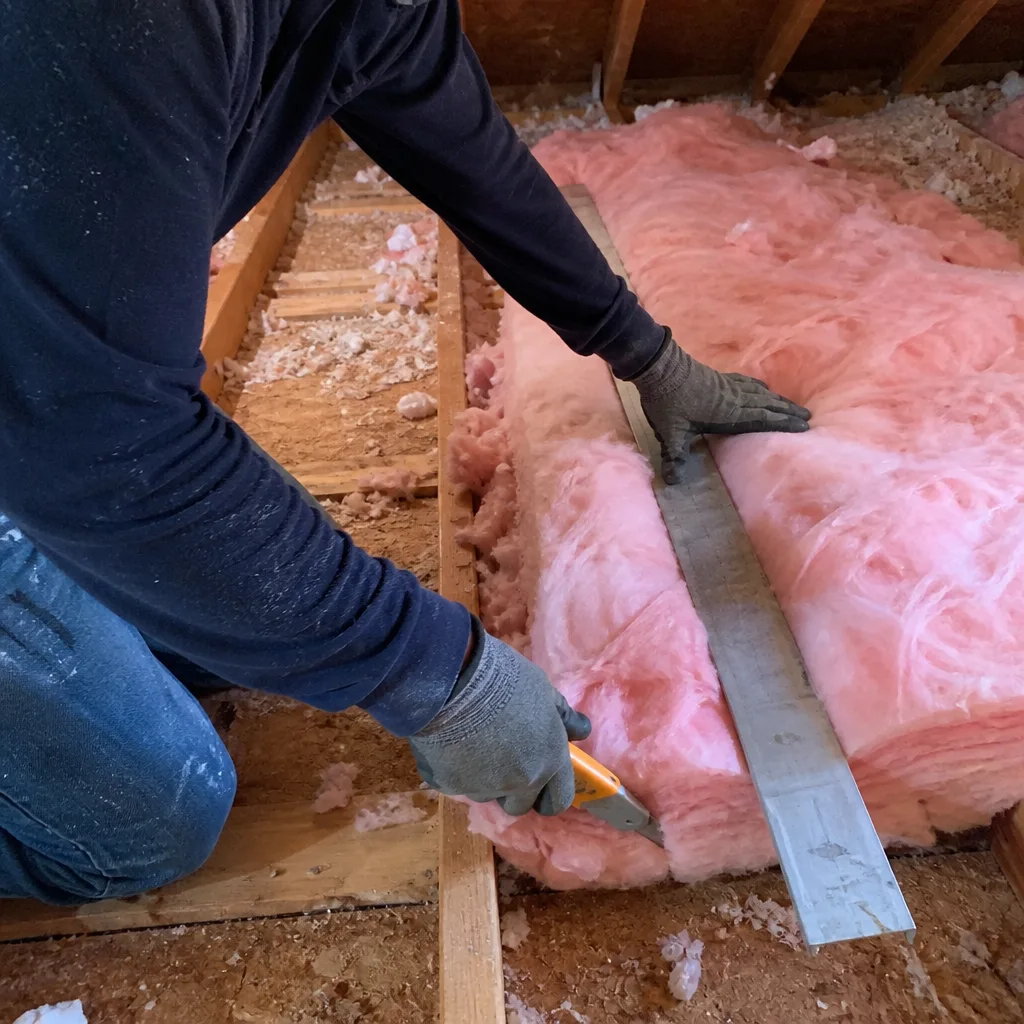
A prepared homeowner with basic tool skills can reasonably add blown-in cellulose or fiberglass over existing insulation in an attic that meets all of these conditions:
- The attic floor is fully accessible without moving HVAC equipment or ductwork
- There is no history of moisture, mold, or roof leaks
- All existing insulation is dry and uncontaminated (no rodent activity)
- No recessed can lights, exhaust fan housings, or other ceiling penetrations penetrate the attic floor
- No knob-and-tube wiring is present
- The attic has permanent flooring or walkboards for safe access
Even in these ideal conditions, the job is physically demanding. Blown cellulose weighs roughly 1.3 pounds per square foot at R-38 depth. A 1,200-square-foot attic needs about 1,560 pounds of material. You’ll carry that up a ladder in 25-pound bags, then feed it into a machine that vibrates aggressively and throws dust. We recommend a P100 respirator, not a paper N95, and sealed goggles. The cellulose dust is non-toxic but extremely irritating to lungs and eyes.
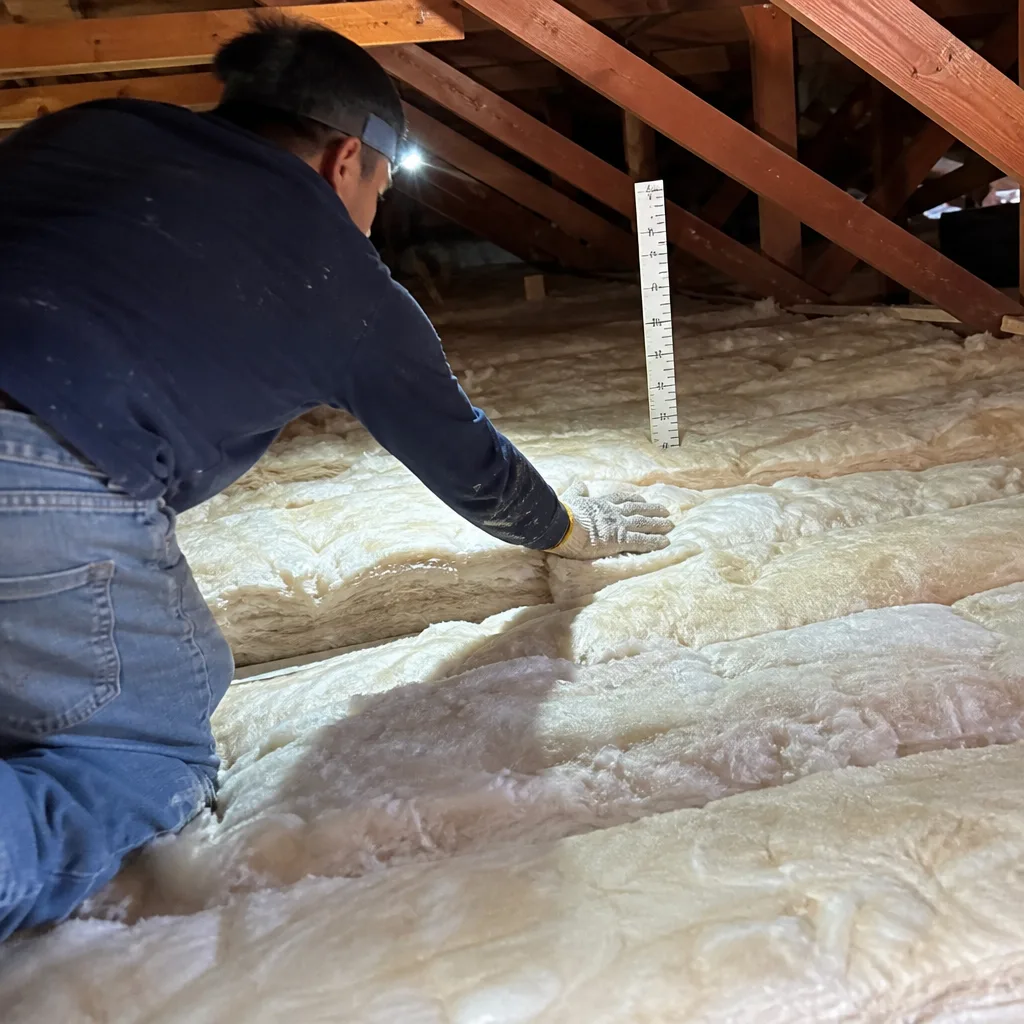
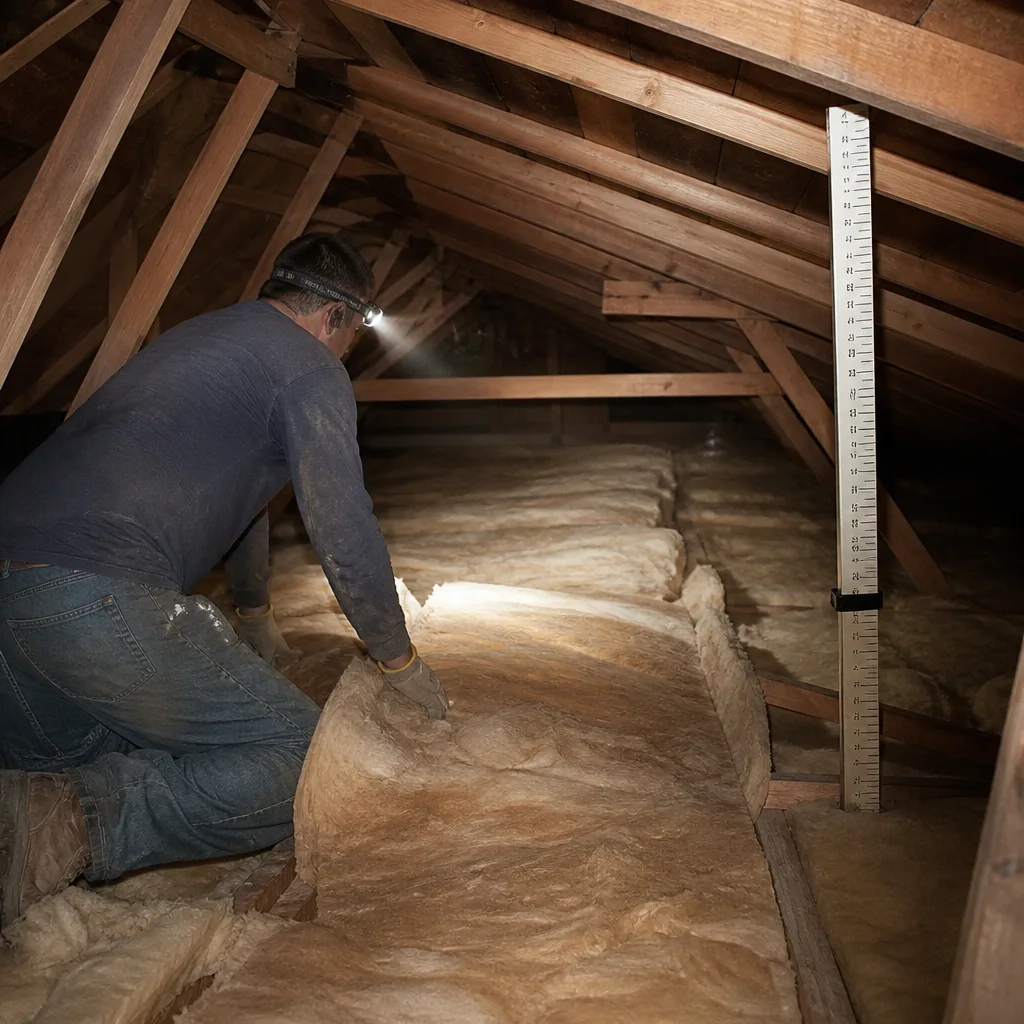
The actual blowing technique matters. You want consistent depth, not fluffy peaks and thin valleys. We use depth markers - cardboard rulers stapled to trusses at 10-foot intervals - and verify with a yardstick after every third bag. Most DIYers skip this step and end up with 8 inches in one corner and 14 inches in another. The R-value follows the thin spots.
If your home is in the older neighborhoods near Amar Road or along Valinda Avenue, built in the 1950s or 1960s, check your attic access hatch size before renting equipment. Many of these homes have 16-by-24-inch openings that won’t accommodate a standard blow-in machine hose. You’ll need to wrestle the hose through the opening or enlarge the hatch, which creates a new air-sealing problem.
What Requires Professional Equipment or Training
This is where the DIY-versus-professional question actually lives. Not in the blowing of insulation, which is laborious but not technically complex. The critical work happens before the insulation goes in, and it requires equipment that costs more than most La Puente homeowners will spend for a one-time project.
Blower-Door-Guided Air Sealing
A blower door is a calibrated fan that mounts in an exterior door frame and depressurizes the house to -50 Pascals, a standard pressure differential. At that pressure, you can feel air leaks with your hand, see them with a smoke pencil, or image them with an infrared camera. Without the blower door running, many leaks are invisible and undetectable.
Here’s what we typically find in La Puente homes built before 1980:
- Top plate gaps - the horizontal framing member where interior walls meet the ceiling - leaking conditioned air into the attic along every wall line
- Recessed can lights, especially older non-IC (insulation contact) housings, acting as chimneys for warm air
- Plumbing and electrical penetrations that were never sealed during original construction
- Dropped soffits over kitchen cabinets and bath vanities that open directly into the attic
- Whole-house fan openings and abandoned chimney chases
We seal these with a combination of fire-rated caulk, expanding foam, rigid foam board, and metal flashing where required by code. The work is guided by real-time blower-door readings: we watch the CFM50 number drop as we seal, which tells us exactly which leaks matter most. A typical La Puente home starts at 3,500-5,000 CFM50 and finishes at 2,000-2,800 after comprehensive air sealing. We’ve never seen a homeowner achieve this without the equipment.
Two-Component Spray Foam at Critical Junctions
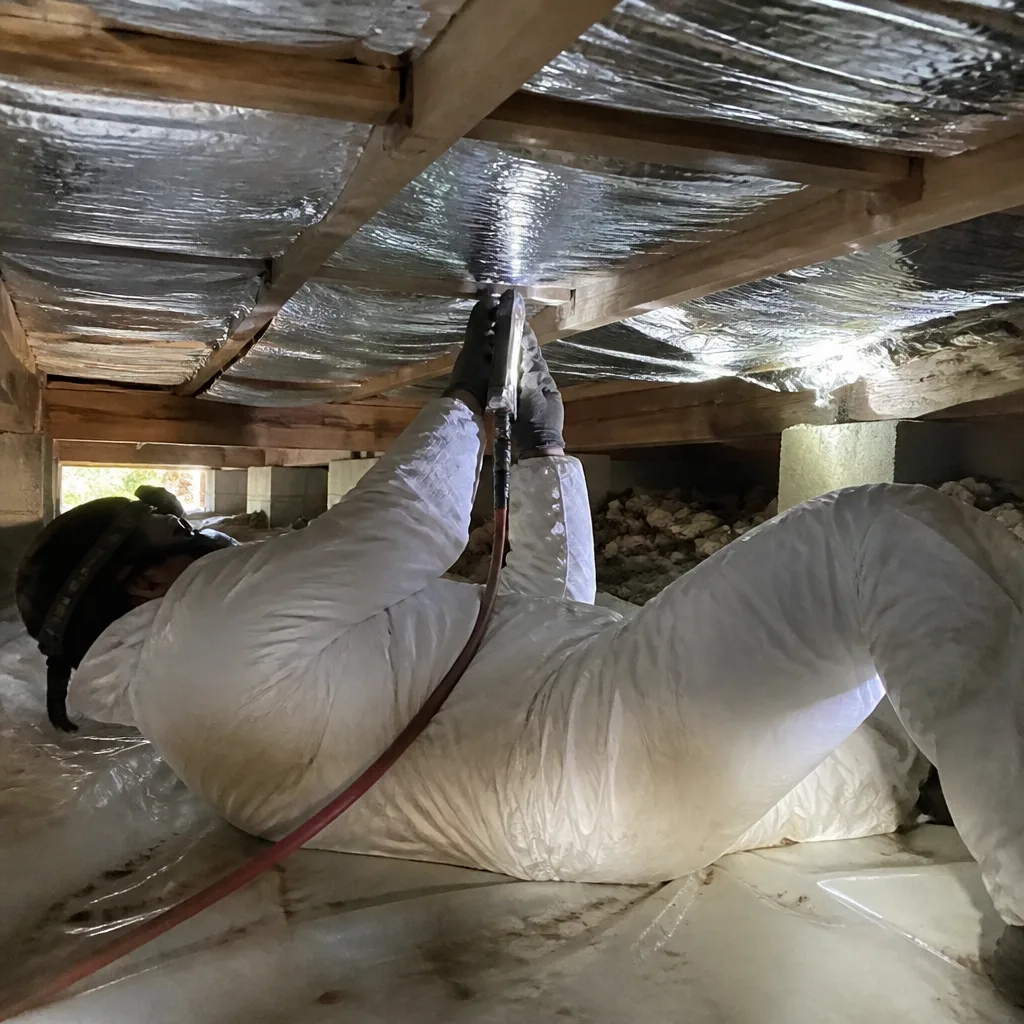
Some leaks are too large or geometrically complex for caulk and canned foam. Top plates with multiple penetrations, irregular soffit drops, and the rim joist area in crawl spaces need closed-cell spray foam applied at the proper thickness and temperature. Two-component kits are available for DIY purchase, but the application requires respirator training, surface preparation knowledge, and an understanding of yield calculations that most homeowners lack. We’ve been called to remove DIY spray foam that was applied too thin to be effective or too thick to cure properly, trapping moisture against framing.
Electrical and Fire Safety
Any work near recessed lighting requires identifying whether the housings are IC-rated (safe to cover with insulation) or non-IC (must remain exposed or be replaced). In La Puente’s older housing stock, we still find non-IC housings with 60-watt incandescent bulbs that can reach 250°F. Covering these with cellulose is a fire hazard. We also encounter knob-and-tube wiring in homes built before 1950, particularly in the unincorporated areas near Bassett and the older sections of Valinda. This wiring cannot be buried in insulation per California Electrical Code and requires evaluation by a licensed electrician before any insulation work proceeds.
Moisture Management and Ventilation
Insulation without proper ventilation traps moisture. In La Puente’s climate, where winter overnight lows dip into the 40s and daytime highs reach the 70s, attic condensation forms when warm, humid interior air hits cold roof sheathing. We calculate ventilation requirements using the 1:300 ratio (1 square foot of net free vent area per 300 square feet of attic floor) and verify that soffit vents aren’t blocked by existing insulation. This assessment requires understanding of building science principles that go beyond the scope of most DIY guides.
California Code and Disclosure Rules for Owner-Builder Work
California allows homeowners to perform their own construction work under an owner-builder permit, but the exemptions are narrower than many realize, and the disclosure obligations are strict - see Insulation Permits, Codes & Inspections in CA: What You Need to Know for the full picture.
Attic insulation work in La Puente falls under the jurisdiction of the Los Angeles County Building Department for unincorporated areas and the City of La Puente Building Division for properties within city limits. A building permit is required when:
- Spray foam insulation is installed (fire-resistance rating and ignition barrier requirements)
- Insulation is removed and replaced in walls or ceilings (triggered by the removal, not just the addition)
- Any electrical work is performed, including moving or extending wiring for lighting or fans
- The work involves a habitable space conversion or change of use
Adding blown-in insulation over existing material in an unfinished attic typically does not require a permit if no electrical or structural work is performed. However, the exemption disappears if you disturb existing insulation that contains asbestos - common in vermiculite installed before 1990 - or if your work affects ventilation in a way that changes the building’s energy compliance.
The more significant issue is disclosure. Under California Civil Code Section 1102, sellers must disclose any material facts affecting the value or desirability of the property. This includes unpermitted work that should have been permitted. When you sell your La Puente home, the Transfer Disclosure Statement asks specifically about room additions, structural changes, and other alterations. A buyer’s inspector will note inconsistent insulation depth, non-IC can lights buried in cellulose, or blocked soffit vents. These findings trigger questions about who performed the work and whether it was permitted.
We’ve been called to inspect DIY insulation work during real estate transactions in La Puente, particularly in the competitive market around Northam Street and the newer developments near Hacienda Boulevard. Buyer’s agents frequently request documentation of insulation work, and “I did it myself over a weekend” without permits or third-party verification becomes a negotiating point. The cost of retroactive permitting, or the price reduction a buyer demands, often exceeds what professional installation would have cost originally.
The True Cost of DIY: A Line-Item Breakdown
The sticker price of materials is only the starting point. For a detailed breakdown, see our Insulation Cost Breakdown: The La Puente Homeowner’s Reference for 2026; here’s how the math actually works for a typical 1,200-square-foot La Puente home needing attic insulation upgraded to R-38.
| Item | DIY Cost | Professional Cost (Typical Range) |
|---|---|---|
| Cellulose insulation (40 bags at ~$14/bag) | $560 | Included in labor |
| Material overage (15% typical for DIY) | $84 | Absorbed by contractor |
| Blow-in machine rental (2 days, including pickup/return) | $300 | Included |
| Respirator, goggles, coveralls, gloves | $75 | Included |
| Air sealing materials (caulk, foam, flashing) | $120 | Included |
| Attic access hatch weatherstripping | $25 | Included |
| Depth markers and verification tools | $20 | Included |
| Blower-door test (rental or hire) | $300-$500 | Included |
| Infrared camera rental (optional but recommended) | $75 | Included |
| Waste disposal (old insulation if removed) | $150 | Included |
| Your labor (16-24 hours at conservative valuation) | $400-$600 | N/A |
| Total DIY Investment | $2,109-$2,509 | $1,800-$3,200 (typical La Puente attic insulation job with air sealing) |
The professional range varies with attic accessibility, existing conditions, and the extent of air sealing required. A straightforward blown-in job over existing insulation in a clean attic runs toward the lower end. A job requiring comprehensive air sealing, can light replacement, and rodent cleanup before insulation goes in runs higher.
The hidden cost is the missed air sealing. If your DIY installation achieves only 40% of theoretical R-value benefit due to unsealed leaks - the Lawrence Berkeley finding - you’re paying for R-38 and getting R-15 performance. Over a 10-year ownership period, the energy cost difference between properly sealed and unsealed insulation in La Puente’s climate is typically $1,800-$2,400 for a home this size, using SCE’s current residential rates.
The Documentation Gap and What It Costs You
This is where professional work separates itself in ways that matter for rebates, resale, and your own understanding of what you actually got.
Every job we complete under The Haven Standard includes:
- A written price before any work starts - flat, with scope and warranty specified
- A Documented Photo Record showing attic conditions before, during, and after installation
- On applicable jobs, before-and-after blower-door readings showing the actual air leakage reduction
- An installed-depth verification log with measurements at multiple attic locations
- A written warranty and the 365-Day Done Right Promise
A DIY job produces none of this. There is no third-party verification that the insulation was installed to the depth claimed. There is no record of pre-existing conditions - the water stain from the 2019 roof leak, the squirrel damage in the northeast corner - that could affect future claims or resale. And there is no documentation for utility rebate programs.
Southern California Edison’s insulation incentive program, which many La Puente homeowners qualify for, requires proof of installed R-value and often requires that the work be performed by a program-participating contractor. DIY installations are explicitly excluded from most utility rebate structures because the programs cannot verify quality or depth without an inspection protocol. The rebate value for a typical La Puente attic insulation upgrade runs $300-$800, which is forfeited with DIY work.
We’ve had homeowners call us after DIY installation, hoping we can “sign off” on their work for rebate purposes. We can’t. The documentation has to come from the installing party, with photo verification and often blower-door testing, submitted through the utility’s quality assurance process. The rebate window is typically 90 days from installation. Miss it, and the money is gone.
La Puente Climate and Neighborhood Factors
La Puente sits at the western edge of the San Gabriel Valley, with a climate that creates specific insulation challenges distinct from coastal Orange County or the high desert.
Summer temperatures regularly exceed 90°F, with attic temperatures reaching 140-160°F on August afternoons. This extreme differential drives heat gain through the ceiling assembly that makes attic insulation the highest-priority envelope upgrade for most local homes. R-38 is the current Title 24 minimum for new construction and major renovations, but many La Puente homes built before 1990 have R-11 or less - often compressed fiberglass batts that have settled to R-8 effective.
Winter conditions are mild but not irrelevant. January overnight lows in the upper 30s to mid-40s, combined with La Puente’s occasional Santa Ana wind events, create stack effect pressure that pulls conditioned air out through ceiling leaks. The air sealing component matters as much in winter as the insulation depth does in summer.
Neighborhood-specific factors we’ve observed:
- Older neighborhoods near Amar Road and Valinda Avenue (1950s-1960s construction): Typically have minimal original insulation, non-IC can lights, and significant top plate leakage. These homes benefit most from comprehensive air sealing before insulation.
- Areas near the 60 Freeway and Hacienda Boulevard (1970s-1980s construction): Often have original blown-in fiberglass that has settled to 4-6 inches. These are good candidates for insulation addition, but we still find duct leakage and disconnected flex duct that should be addressed first.
- Newer developments near Northam Street (1990s-2000s): Usually have adequate insulation depth but poor installation quality - batts with gaps, compressed around wiring, and incomplete coverage at eaves. The fix is often removal and proper reinstallation rather than simple addition.
La Puente’s position in a slight topographic bowl also means higher humidity than the surrounding foothills, particularly in spring and fall. We’ve seen more attic mold issues here than in nearby West Covina or Baldwin Park, usually traced to bathroom exhaust fans venting into the attic rather than through the roof. Any insulation work should include verification that exhaust vents terminate properly.
Making the Decision: A Step-by-Step Framework
Use this sequence to evaluate your specific situation honestly.
- Assess your attic’s condition. Is it clean, dry, and fully accessible? Are there any signs of moisture, mold, or pest activity? Is the existing insulation dry and uncontaminated? If no to any of these, professional evaluation is warranted before any work proceeds.
- Identify all penetrations. Walk the attic floor and count recessed lights, exhaust fans, plumbing vents, electrical junction boxes, and HVAC registers. Any non-IC can lights or knob-and-tube wiring means professional involvement is required for safety and code compliance.
- Check your goals. If you want improved comfort and lower bills with documented results and rebate eligibility, professional work is the practical path. If you simply want to add some insulation depth and don’t care about verification, DIY is physically possible in the right conditions.
- Calculate true DIY cost. Use the line-item table above, including your time at a realistic valuation and the cost of equipment you don’t own. Add the forfeited rebate value if you would otherwise qualify.
- Evaluate your air sealing capability. Can you identify and seal all top plate gaps, can light bypasses, and penetration leaks without a blower door? If not, you’re installing insulation over leaks that will undermine performance.
- Consider future sale timing. If you plan to sell within 5-7 years, professional documentation of envelope work adds defensible value. DIY work without permits or verification becomes a disclosure issue.
We’ve applied this framework with hundreds of La Puente homeowners. The ones who choose DIY successfully are typically tradespeople or very experienced home improvers with proper safety equipment and realistic expectations about performance. Most homeowners who start the DIY path call us partway through, having discovered that the blowing is the easy part and the preparation is where the work actually lives.
Common Mistakes to Avoid
- Installing insulation over unsealed air leaks. This is the most common and most costly error. The insulation becomes a filter for dusty attic air rather than a thermal barrier, and the R-value benefit is cut by more than half.
- Burying non-IC recessed can lights. In La Puente’s older housing stock, these are fire hazards waiting to happen. We’ve found scorched cellulose around buried housings in multiple local inspections.
- Blocking soffit vents with new insulation. This creates moisture problems that can destroy roof sheathing within a few years. Vent baffles - cardboard or foam channels that maintain airflow - are required at every eave.
- Ignoring the attic access hatch. A 1/2-inch plywood hatch with no weatherstripping leaks as much air as a 6-inch hole in the ceiling. We build insulated, gasketed hatch covers as standard practice.
- Using the wrong insulation type for the application. Fiberglass batts in damp crawl spaces absorb moisture and lose R-value. Open-cell spray foam in below-grade applications can wick water. Each zone has appropriate materials.
- Skipping depth verification. Without markers and measurement, blown-in depth varies by 50% or more across a typical attic. The thin spots determine actual performance.
- Underestimating material waste. DIY blown-in jobs typically over-order by 12-18% due to uneven application, machine calibration errors, and spillage. Professional crews factor this precisely based on square footage and target depth.
When to Call a Professional
Call a professional when your attic has any of these conditions: HVAC equipment or ductwork that must be worked around; moisture stains, mold, or pest damage; recessed lighting of unknown IC rating; knob-and-tube or aluminum wiring; a history of ice damming or condensation; or any goal beyond simply adding material depth. If you want documented results, utility rebate eligibility, or warranty protection, professional installation is the only practical path.
Topside Attic Insulation La Puente offers free estimates in La Puente. We’ll walk your attic, identify the conditions that actually matter, and give you a written price before any work starts. Call (626) 509-3237 to schedule.
Frequently Asked Questions
Most attic insulation jobs in a typical La Puente home run between $1,800 and $3,200, depending on accessibility, existing conditions, and the extent of air sealing required. A straightforward blown-in addition over clean existing insulation falls at the lower end; jobs requiring comprehensive air sealing, can light replacement, or insulation removal and replacement run higher. Call (626) 509-3237 for a written estimate specific to your home - estimates are free and include attic inspection.
Two-component spray foam kits are available for DIY purchase, but we do not recommend self-application for most homeowners. Proper installation requires respirator training, precise surface temperature and humidity control, and understanding of yield calculations and cure times. We’ve removed DIY spray foam that was applied too thin to be effective, too thick to cure properly, or in locations where moisture trapping created rot. Professional application with products like Icynene or Demilec spray foam in La Puente includes proper equipment, training, and warranty coverage.
Unpermitted owner-builder work must be disclosed on the Transfer Disclosure Statement, and buyer’s inspectors will flag installation quality issues. In La Puente’s competitive market, undocumented insulation work often becomes a negotiation point, with buyers requesting professional verification or price reductions. The cost of retroactive permitting or price concessions frequently exceeds what professional installation would have cost originally.
No. Southern California Edison’s insulation incentive program requires proof of installed R-value and typically requires work performed by a program-participating contractor. DIY installations are excluded because the utility cannot verify quality or depth without an inspection protocol. The rebate value for a typical La Puente attic upgrade is $300-$800, which is forfeited with DIY work.
Current Title 24 standards call for R-38 in attics for new construction and major renovations in Climate Zone 10, which includes La Puente. Many local homes built before 1990 have R-11 or less. We typically recommend R-38 to R-49 for attic additions, depending on budget and whether comprehensive air sealing is performed simultaneously. Higher R-value without air sealing produces diminishing returns.
Look for an “IC” (Insulation Contact) rating stamped on the housing inside the attic. Non-IC housings cannot be covered and require replacement or protective covers before insulation is added. In La Puente’s older housing stock, we still find non-IC housings with 60-watt incandescent bulbs that reach 250°F - a genuine fire hazard if buried in cellulose. If you cannot clearly identify the rating, assume non-IC and call a professional.
Air sealing before insulation. Lawrence Berkeley National Laboratory field studies show that insulation over unsealed leaks delivers roughly 40% of theoretical R-value benefit. The blower-door-guided sealing of top plates, can lights, and penetrations is the work that determines whether your insulation actually performs, and it requires equipment and training that most homeowners don’t have.
The Bottom Line
The DIY-versus-professional question for insulation is not about whether you can carry bags up a ladder and feed a machine. Most La Puente homeowners physically can. The question is whether you can find and seal the air leaks that determine whether that insulation works, and whether you can document the result in a way that protects your investment, qualifies for rebates, and holds up at resale. For more guides & resources on getting this right, explore our blog.
Professional installation costs more upfront in some scenarios, less in others when true costs are calculated. The critical difference is verified performance: a blower-door number that proves the envelope was tightened, a photo record that shows what was done, and a warranty that means something if problems emerge. For most La Puente homeowners, particularly those in older housing stock with the leakage patterns we’ve described, professional work is the sounder investment.
Written by Wes Okafor, Owner at Topside Attic Insulation La Puente, serving La Puente since 2016.