
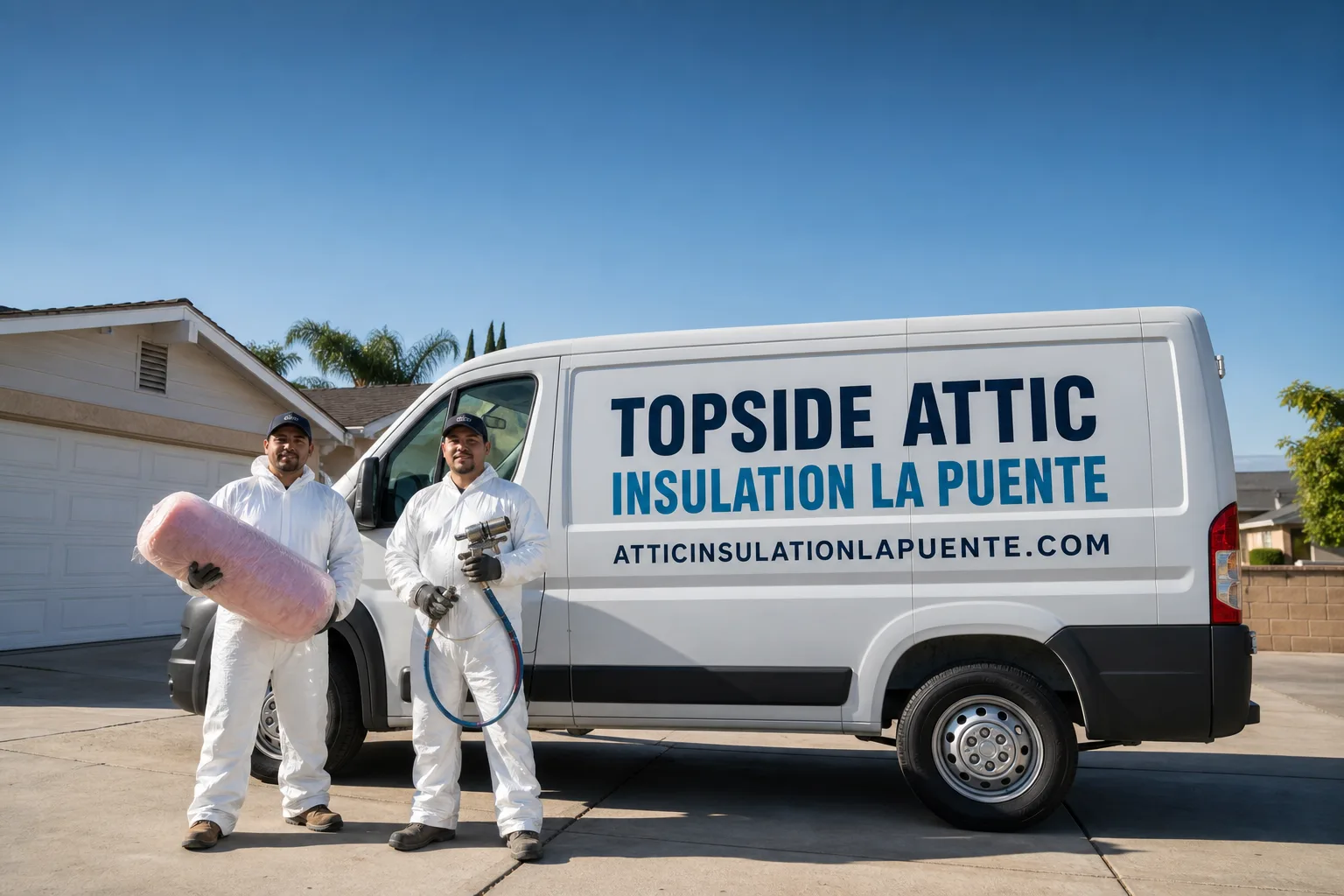
How Much Does Blown-In Insulation Cost in La Puente?
Blown-In Insulation services in La Puente, CA typically cost between $1,400 and $3,800 for a standard attic, with most single-story homes in the 1,200-to-2,000-square-foot range landing between $1,600 and $2,600 when proper air sealing is completed first. The final number depends on your current R-value, attic access conditions, and whether penetrations and top plates need to be sealed before any insulation goes in – and at Envelope Insulation Co., that sealing step is never skipped. You’ll have a written price before anyone climbs into your attic.
Blown-In Insulation Cost Breakdown (2026)
The table below reflects what homeowners in La Puente are actually paying in 2026, based on jobs Wes Okafor and the Envelope Insulation Co. crew have completed in the San Gabriel Valley. These are flat-rate ranges, not ballpark guesses padded for negotiation.
| Service / Scope | Typical Price Range (La Puente, 2026) |
|---|---|
| Attic air sealing only (top plates, can lights, penetrations) | $450 – $950 |
| Blown-in insulation only (attic floor, existing home, 1,200 sq ft) | $900 – $1,400 |
| Air sealing + blown-in insulation (1,200 sq ft attic) | $1,400 – $2,200 |
| Air sealing + blown-in insulation (1,500 – 2,000 sq ft attic) | $1,800 – $2,900 |
| Air sealing + blown-in insulation (2,000 – 2,600 sq ft attic) | $2,400 – $3,800 |
| Insulation removal + air sealing + re-insulation (1,500 sq ft) | $2,800 – $4,500 |
| Blown-in wall insulation (per linear foot of wall, retrofit) | $3.50 – $6.50/linear ft |
| Blower-door test (standalone, before/after air sealing) | $250 – $450 |
A few things worth understanding about these numbers. First, the ranges are wide because attics in La Puente are genuinely variable – older homes near Hacienda Boulevard often have knee-wall cavities, recessed lighting from the 1970s and 1980s that was never air-sealed, and attic hatches that open into the conditioned space without any weather stripping. Those details add labor time. Newer construction on the east side of La Puente toward Valinda tends to have cleaner attic floors but sometimes inadequate original insulation depths, which is a faster, lower-cost fix.
Second, the air sealing line is listed separately because it is a separate step – not an upsell, not an optional add-on. Blowing cellulose or fiberglass on top of an attic floor that has open top plates and unboxed recessed cans is like filling a bathtub with the drain open. The insulation will slow heat transfer, but the conditioned air your HVAC system conditions will keep escaping through the same gaps it always did. Envelope Insulation Co. has operated under The Haven Standard since 2016, and the first principle of that standard is straightforward: seal first, then insulate – in that order, every time.
Materials sourced for La Puente jobs include Owens Corning and Johns Manville fiberglass batts and blown-in products, GreenFiber cellulose, and Knauf insulation. The written scope you receive before any work starts will name the specific material, the target R-value, and the depth that achieves it.
What Affects Blown-In Insulation Pricing in La Puente
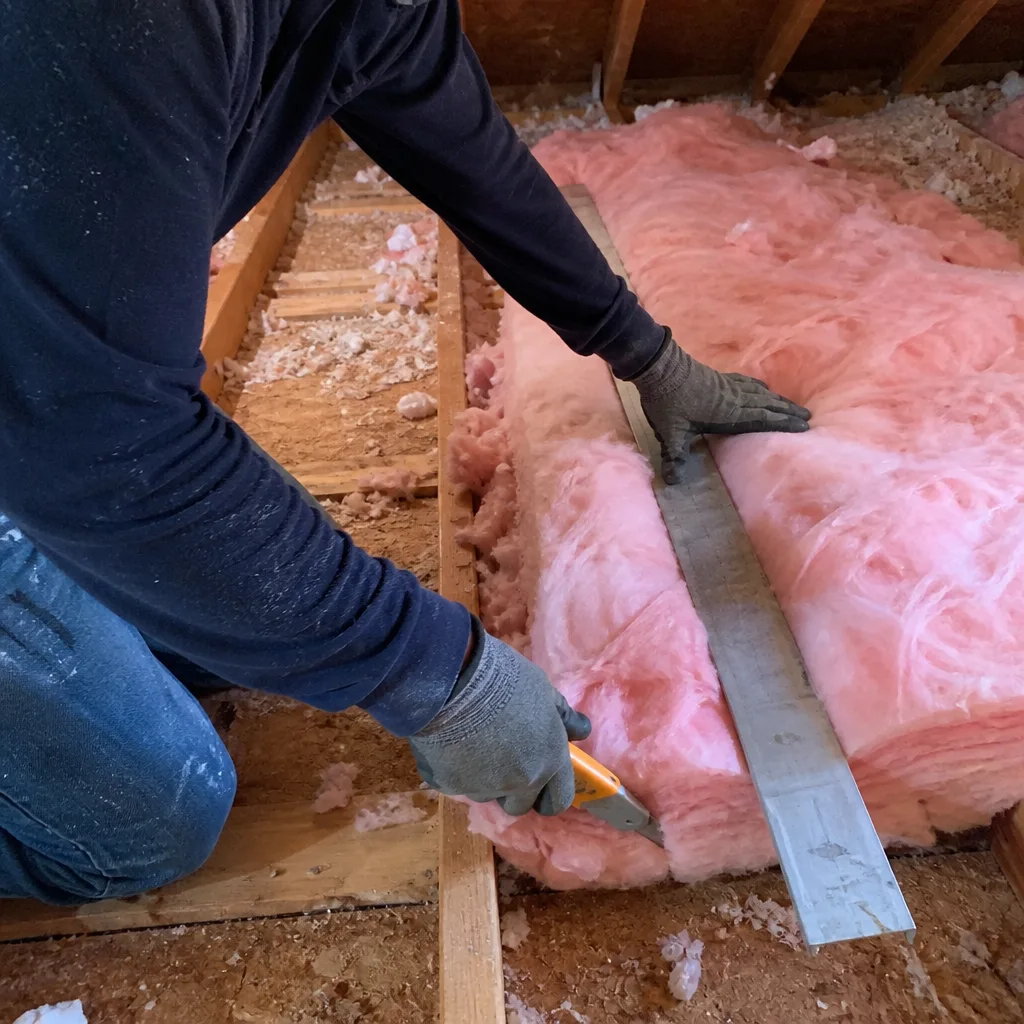
- Attic square footage and geometry: A straightforward gable attic over a 1,400-square-foot La Puente ranch home is priced differently than a hip-roof attic with multiple valleys and low-slope sections near the eaves. Hip roofs are common in the older tracts south of Valley Boulevard, and they require more crew time to insulate evenly because the corners drop quickly and access is tighter.
- Current R-value and depth: California Title 24 calls for R-38 in climate zone 10, which covers La Puente. Many homes built before 1990 have R-11 to R-19 in the attic – sometimes just a few inches of compressed batts that have settled over the decades. The farther you are from the target depth, the more material and time the job requires. Homes that already have R-30 or better may only need a top-up, which can bring the job in well under $1,000.
- Air sealing scope before insulation: The number of penetrations, recessed fixtures, and open top-plate cavities in your attic determines how long the sealing phase takes. La Puente homes from the 1960s and 1970s – particularly in the blocks between Hacienda and Peck Road – frequently have dozens of unsealed top-plate gaps because construction practices at that time didn’t treat the attic floor as part of the air barrier. More gaps mean more sealing time, and the sealing time drives more of the final cost than the material weight does.
- Attic access conditions: A scuttle hole in a closet is slower to work through than a full pull-down stair. If existing insulation or stored items are blocking the floor, there’s staging time. Some homes in La Puente have attic access only through a garage ceiling hatch, which changes how equipment is set up and adds time. None of this is a hidden cost – it shows up in the written price before work starts.
- Insulation removal: If the existing insulation has rodent contamination, moisture damage from a slow roof leak, or vermiculite (which requires testing for asbestos before removal), the job scope changes substantially. Removal in La Puente runs $1.00 to $2.50 per square foot depending on material type, depth, and contamination level, and that cost is in addition to the new installation. Full removal and reinstallation is a larger project but also the right call when what’s up there is no longer doing its job.
- Material choice – cellulose vs. fiberglass blown-in: Cellulose, made from recycled paper fiber and treated for fire resistance, typically runs slightly lower per bag than comparable fiberglass blown-in products from Owens Corning or Johns Manville. In La Puente’s climate – hot, dry summers with occasional Santa Ana wind events – both materials perform well on the attic floor. Cellulose settles slightly over time and is often installed at a higher initial depth to account for that. The written scope will name the material, the installed depth, and the settled R-value so the comparison is apples to apples.
La Puente Climate and Why Your Attic Works Harder Than You Think
La Puente sits in the eastern San Gabriel Valley at roughly 300 feet of elevation, in California’s climate zone 10. Summer afternoons regularly reach 95 to 102 degrees Fahrenheit, and an unshaded roof deck in those conditions can hit 150 degrees or more. The attic space between the deck and the insulated floor becomes a heat battery – all of that radiant energy radiates downward into the living space for hours after sunset.
A few things make La Puente attics specifically challenging. The valley geography traps heat later into the evening than coastal communities. Santa Ana wind events push dry, hot air across the region in fall and winter, which reverses the typical heat-flow direction: now heat is moving from outside into the home even at night, and an under-insulated attic gives it a direct path. Homes near the Puente Hills – particularly in the Bassett and Valinda areas – see slightly higher wind exposure, which increases the air infiltration penalty for every gap in the attic floor.
All of this means that a La Puente home with inadequate attic insulation isn’t just paying too much in July. It’s paying too much in November. The blower-door test – a pressurization reading that shows, in one number, how much air the building envelope is losing – makes this visible. On applicable jobs, Envelope Insulation Co. documents the reading before and after sealing so the homeowner can see what changed. The number doesn’t lie, and it’s included in the job record, not available on request.
If you want a starting point for what proper attic insulation can do in this climate, the Blown-In Insulation in La Puente service page walks through the process in detail, including what the crew actually does from arrival through documentation.
How to Save on Blown-In Insulation in La Puente
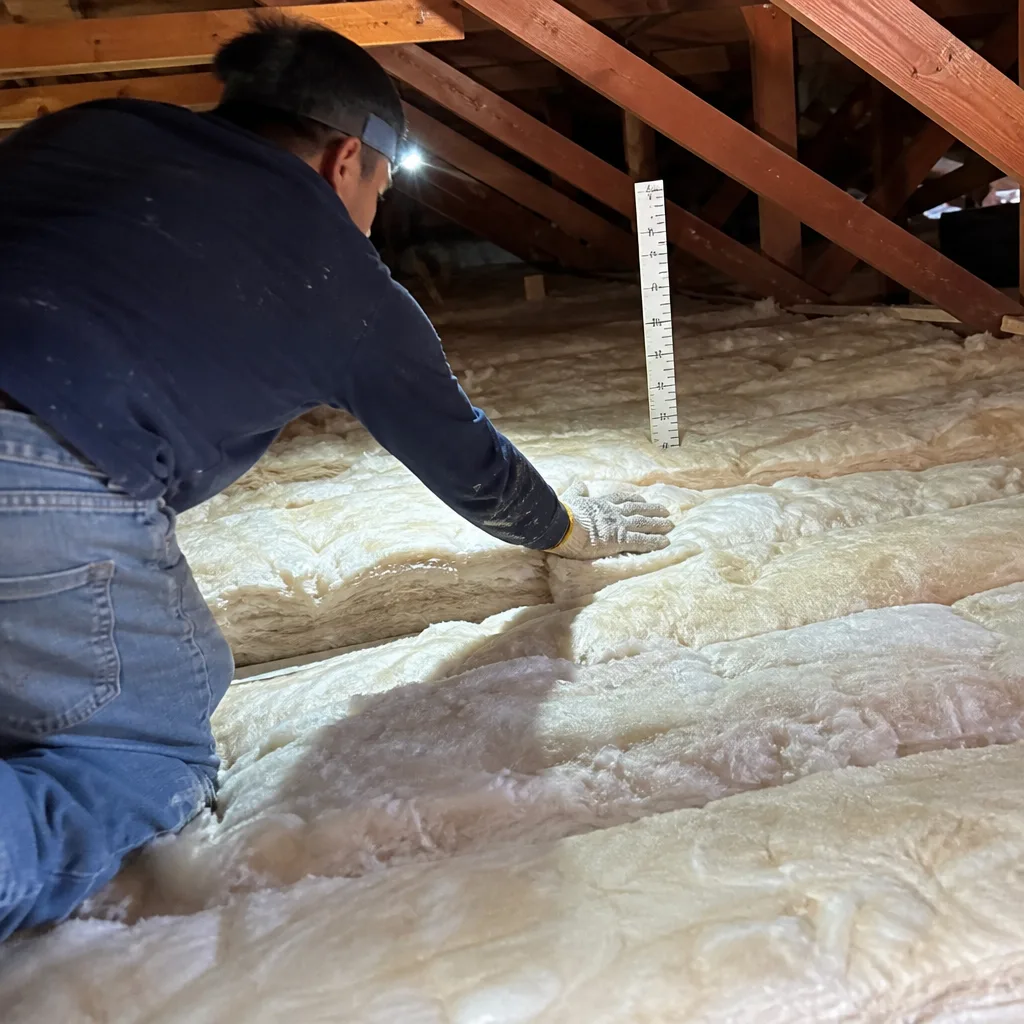
Check for Southern California Gas and SCE Rebates First
SoCalGas and Southern California Edison both run rebate programs for residential insulation upgrades, and La Puente homes are within their service territories. For 2026, insulation rebates have been available in the range of $0.10 to $0.20 per square foot for qualifying upgrades to R-38, with some income-qualified programs offering deeper incentives. These numbers shift with program funding, so the practical move is to check the SoCalGas and SCE websites directly before your project starts – or ask for the current rebate schedule when you get your written estimate. Rebates don’t reduce the upfront price, but they do reduce the net cost after the job is done.
Don’t Skip Air Sealing to Save Money
It sounds counterintuitive, but skipping the sealing step and only doing the blown-in insulation will cost you more over five years than doing both correctly the first time. Insulation slows conductive heat transfer. It does almost nothing for convective air loss – the conditioned air that escapes through open top plates and around can lights. If you pay for blown-in insulation without sealing, your HVAC system will keep working overtime to replace the air that’s leaking out. The energy savings you expected won’t materialize at the level you anticipated, and you’ll have spent the money once already. Do it in the right order: seal, then insulate.
Bundle with a Home Energy Audit if You’re Not Sure Where to Start
If you’re not certain whether the attic is your biggest energy loss – maybe you’ve also noticed drafts around windows or high bills that seem disproportionate to how you use the home – a home energy audit gives you a documented map of where air and heat are escaping before you spend a dollar on materials. Knowing the priority order means you spend on what will move the needle most first. Envelope Insulation Co. offers home energy audits as a standalone service, and the blower-door reading from that audit becomes the before number if you proceed with air sealing.
Get a Second Opinion on Any Competing Estimate You’ve Already Received
Under Haven Standard: a Free Second Opinion on any written estimate is included, no strings. If you’ve already collected a quote from another contractor, bring it in or read it over the phone and we’ll tell you whether the scope covers what it needs to cover – specifically, whether air sealing is included before the insulation goes in, and whether the R-value target meets California Title 24 for climate zone 10. A quote that looks lower because it omits air sealing isn’t actually lower over time.
Schedule During Off-Peak Windows if Timing Is Flexible
Demand for attic insulation in La Puente spikes in late spring (April through June) as homeowners prepare for summer heat, and again in October when the first high energy bills of the year arrive. If your schedule is flexible, the late winter months – January through early March – tend to have shorter lead times, which means the crew can often get to your project faster. Pricing doesn’t change by season, but availability does.
To get a written price specific to your home’s square footage and current conditions, call (626) 509-3237. There’s no estimate fee, no obligation, and a live person answers – no voicemail loops, no callback windows measured in days.
What the Job Looks Like, Start to Finish
One of the clearest things Wes Okafor and the Envelope Insulation Co. crew can do is describe exactly what a customer receives before, during, and after a blown-in insulation job in La Puente. The Haven Standard was built on the idea that documentation replaces trust-me promises.
Before work starts: You receive a written price with a flat number, a written scope that names the material, target R-value, installed depth, and the air sealing locations to be addressed. You also receive a written warranty. Nothing starts until those three documents are in your hands.
During the job: The technician – background-checked, uniformed, named before arrival with a text when they’re on the way – completes all air sealing of top plates, can light boxes, plumbing penetrations, and attic hatch perimeters before the blower runs. On applicable jobs, a blower-door test is conducted before and after sealing to document the air change. Then insulation is blown in to the specified depth and R-value.
When the crew leaves: You receive a Documented Photo Record of the completed work – the sealed penetrations, the final insulation depth at multiple measurement points, and on applicable jobs, the before-and-after blower-door readings. This isn’t available on request; it’s part of what leaving looks like. The 365-Day Done Right Promise covers all completed work: if it’s not done right, we make it right – and that’s in writing too.
Repair vs. Full Replacement: When Does Each Make Sense?
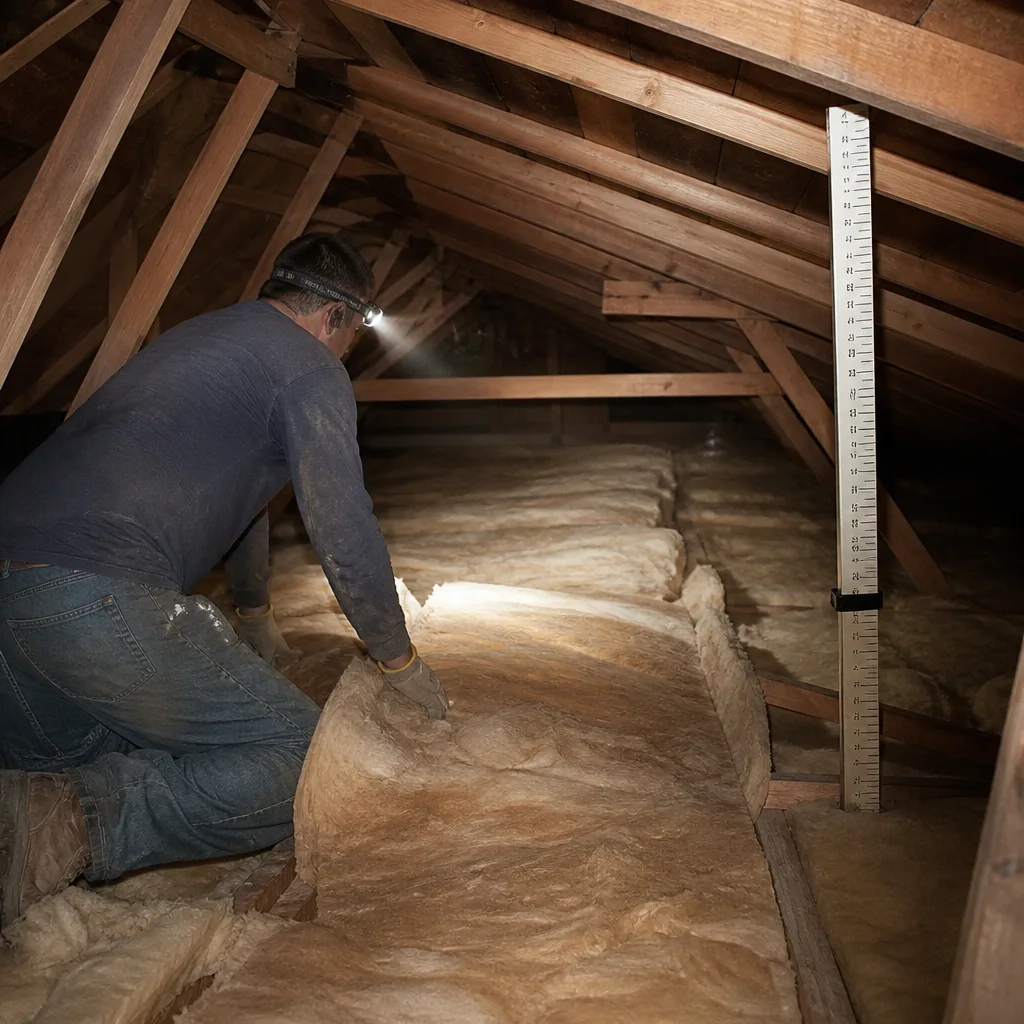
A common question from La Puente homeowners who’ve had their attic assessed: do I need everything removed and replaced, or can I just add depth on top of what’s there?
The answer depends on the condition of what’s already up there, not just its depth. Adding blown-in insulation on top of existing material is appropriate when the existing insulation is dry, uncontaminated, and not compressed flat. Many homes in La Puente built in the 1980s have fiberglass batts that are still structurally intact but have settled to an R-11 or R-13 equivalent – a top-up to R-38 with blown-in cellulose or fiberglass over that is a straightforward, cost-effective solution.
Full removal and replacement makes sense when the existing insulation has moisture damage from a roof leak, rodent activity (droppings, nesting material, urine saturation), or vermiculite that tests positive for asbestos. In La Puente’s older housing stock – particularly homes built before 1978 in the areas closest to Hacienda Heights – vermiculite is worth having tested before any removal work begins. That test is a separate step, and it’s worth doing before the crew starts, not after.
If you’re on the home page trying to figure out where to start, the clearest first step is a written assessment of what’s currently in the attic and what it would take to bring it to current code and performance standards. That assessment costs nothing and comes with no obligation.
FAQs – Blown-In Insulation Cost in La Puente
How much does blown-in insulation cost per square foot in La Puente?
Blown-in insulation in La Puente runs $0.90 to $1.60 per square foot for insulation material and labor alone, when installed over an already-sealed attic floor. When air sealing is included – which it should be – the combined cost runs $1.20 to $2.20 per square foot depending on how many penetrations need to be addressed. These figures apply to attic floor applications targeting R-38, which is the California Title 24 requirement for La Puente’s climate zone 10. For a free written price specific to your home’s square footage, call (626) 509-3237.
Is blown-in insulation worth it in La Puente’s climate?
Yes, and the return on a properly sealed and insulated attic in La Puente’s climate zone 10 is measurable, not theoretical. Summer attic temperatures in the San Gabriel Valley regularly exceed 140 degrees Fahrenheit on unshaded roof decks, and that heat radiates into the living space continuously. Homes that complete the air sealing plus R-38 blown-in combination consistently show a reduction in HVAC runtime because the building envelope is no longer leaking conditioned air through the same gaps it always did. The blower-door reading before and after air sealing documents the change in air infiltration; the energy bill is what documents it over the following 12 months. Call (626) 509-3237 to get a written estimate with specific numbers for your home.
How long does blown-in insulation installation take in a typical La Puente home?
A typical La Puente attic job – air sealing plus blown-in insulation on a 1,400 to 1,800-square-foot home – takes one full day, usually 5 to 8 hours including setup and cleanup. Larger homes, homes with complex attic geometry (hip roofs are common in La Puente’s older tracts), or homes requiring significant air sealing work may run into a second day. The written scope delivered before work starts will tell you the estimated time frame so there are no surprises. If your home needs insulation removal first, plan for that as a separate preceding day.
Does blown-in insulation in La Puente qualify for rebates or tax credits?
In 2026, La Puente homeowners can potentially access SoCalGas and Southern California Edison rebates for qualifying insulation upgrades, plus the federal 25C energy efficiency tax credit – which covers 30% of qualifying insulation costs up to a $1,200 annual credit limit. The 25C credit applies to materials and installation costs for insulation that meets IECC standards, which R-38 blown-in does. Rebate eligibility depends on current program funding and your utility account, so the most accurate step is to check directly with SCE and SoCalGas before the job, or ask when you receive your written estimate. Call (626) 509-3237 and we’ll walk through what’s currently available in La Puente.
Is it cheaper to repair or fully replace attic insulation in La Puente?
A top-up (adding blown-in material over existing clean insulation) costs $900 to $1,800 for a typical La Puente attic and is the right call when what’s already there is dry and uncontaminated. Full removal and replacement runs $2,800 to $4,500 or more and is warranted when the existing material has rodent damage, moisture saturation, or is a material type (like deteriorated vermiculite) that can’t safely stay in place. The cost difference is real, but so is the risk of trapping contaminated material under new insulation and not finding out until the problem is larger. The written assessment before any work starts is what tells you which path makes sense – and that assessment is free. Call (626) 509-3237 to schedule it.
Do I need to be home during blown-in insulation installation?
You don’t need to be present throughout the job, but we ask that someone is available at the start so the technician can walk through the attic access point, confirm the scope, and answer any questions before work begins. Under Haven Standard, you’ll know the technician’s name before they arrive, and you’ll receive a text when they’re on the way. The Documented Photo Record delivered at job completion means you can see exactly what was done even if you weren’t there for every hour of it. Call (626) 509-3237 if you have scheduling constraints – we’ll work out the logistics in advance, in writing.
Key Takeaways
- Most blown-in insulation jobs in La Puente (air sealing + insulation) run $1,400 to $3,800, with the majority of single-story homes landing between $1,600 and $2,600.
- California Title 24 requires R-38 in climate zone 10, which covers La Puente. Many pre-1990 homes are well below that.
- Air sealing of top plates, can lights, and penetrations must be completed before insulation is blown in – not after, not skipped.
- Rebates from SoCalGas and SCE plus the federal 25C tax credit (30%, up to $1,200) can reduce the net cost meaningfully.
- You receive a written price, written scope, and written warranty before any work starts. The 365-Day Done Right Promise covers the completed job.
- Before-and-after blower-door readings are documented on applicable jobs – a pressurization test that shows, in one number, how much air the envelope was losing before and after sealing.
- Envelope Insulation Co. has completed 9,000+ jobs since 2016, every one with a written price before work started and a photo record when the crew left.
Ready for a Written Price on Your La Puente Home?
Wes Okafor and the Envelope Insulation Co. crew serve La Puente and the broader San Gabriel Valley. Every job starts with a written price, a named technician, and a clear scope – no vague estimates, no work without your signature on a flat number first. If you’ve already received a competing quote, we’ll read it with you under our Free Second Opinion offer and tell you exactly what it does and doesn’t include.
Call (626) 509-3237 to schedule a free estimate. A live person answers – not a voicemail, not a form that goes somewhere. If your attic needs attention before La Puente’s next hot stretch, the written price is the first step.
Written by Wes Okafor, Owner at Envelope Insulation Co. (operating as Topside Attic Insulation La Puente), serving La Puente, CA since 2016.
Pricing reflects the La Puente market as of 2026. Topside Attic Insulation La Puente offers free estimates – call (626) 509-3237.
What Our Customers Say
"They air-sealed the attic floor before insulating and showed me the blower-door number before and after. The upstairs is finally the same temperature as downstairs."
- Marisol D."Crawl space encapsulation done properly. Photographs of the vapour barrier at every seam, and the damp smell in the hallway is gone."
- Ainsley P."They photographed rodent damage in the old insulation that we had no idea about, and priced the exclusion work separately so we could decide."
- Harriet N.