
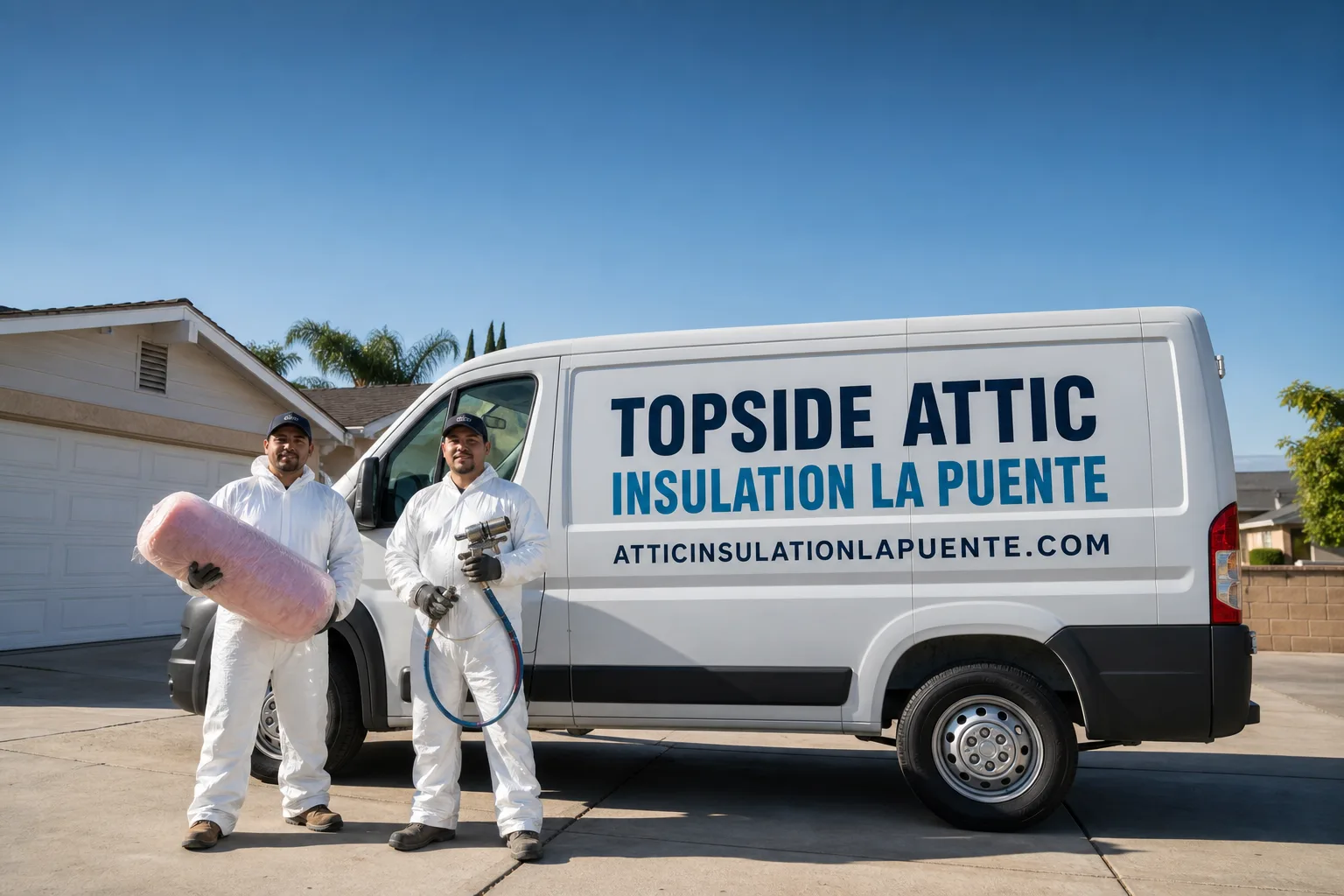
Fast, Reliable Blown-In Insulation Across Temple City
Blown-in insulation in Temple City typically runs $1.80-$3.20 per square foot of attic floor, with most complete attic jobs landing between $2,400 and $4,800 depending on whether air sealing and existing removal are needed. We dispatch crews to Temple City daily from our Los Angeles office, and most homeowners get a written price the same day we inspect the attic. Call (626) 509-3237 for a free estimate with no voicemail loops.
We know Temple City’s housing stock because we’ve crawled through enough of it. The grid of stucco ranches between Las Tunas Drive and Lower Azusa Road, the split-levels near Longden Avenue, the room additions creeping up toward the San Gabriel Mountains - we’ve blown insulation into attics and dense-packed walls in all of it. That matters because a contractor who treats your 1964 ranch like a new-build in Irvine will miss the air leaks, the settled batts, and the uninsulated addition walls that define retrofit work here.
Why Topside Attic Insulation La Puente Is Temple City’s Preferred Blown-In Insulation Company
We’ve sealed and insulated over 9,000 homes since 2016, and a significant share of those have been in the San Gabriel Valley corridor that includes Temple City. Our reviews from Temple City homeowners consistently cite two things: the blower-door numbers we leave behind, and the fact that we actually found the uninsulated walls their previous contractor walked past. We don’t ask you to trust us because we’ve been around a while - we document what we find, photograph it, and show you the pressurization reading before and after.
Response time to Temple City is typically same-day or next-day for estimates, with crews often available to start within 48 hours of written approval. Our scheduling is coordinated from the Los Angeles office, but the technicians who arrive at your door live and work in the SGV, not commuting from Orange County or the Inland Empire.
Local knowledge that actually changes the scope: we know which Temple City neighborhoods built out in the 1950s have original knob-and-tube wiring still active in attics, which means we coordinate with electricians before blowing cellulose. We know the 1980s garage conversions near Encinita Avenue that were permitted as “storage” but finished as living space, often with zero wall insulation. And we know that Temple City’s inland valley position - no marine layer, summer highs 100-105°F - means R-38 in the attic is a practical floor, not a ceiling.
Our Blown-In Insulation Services in Temple City
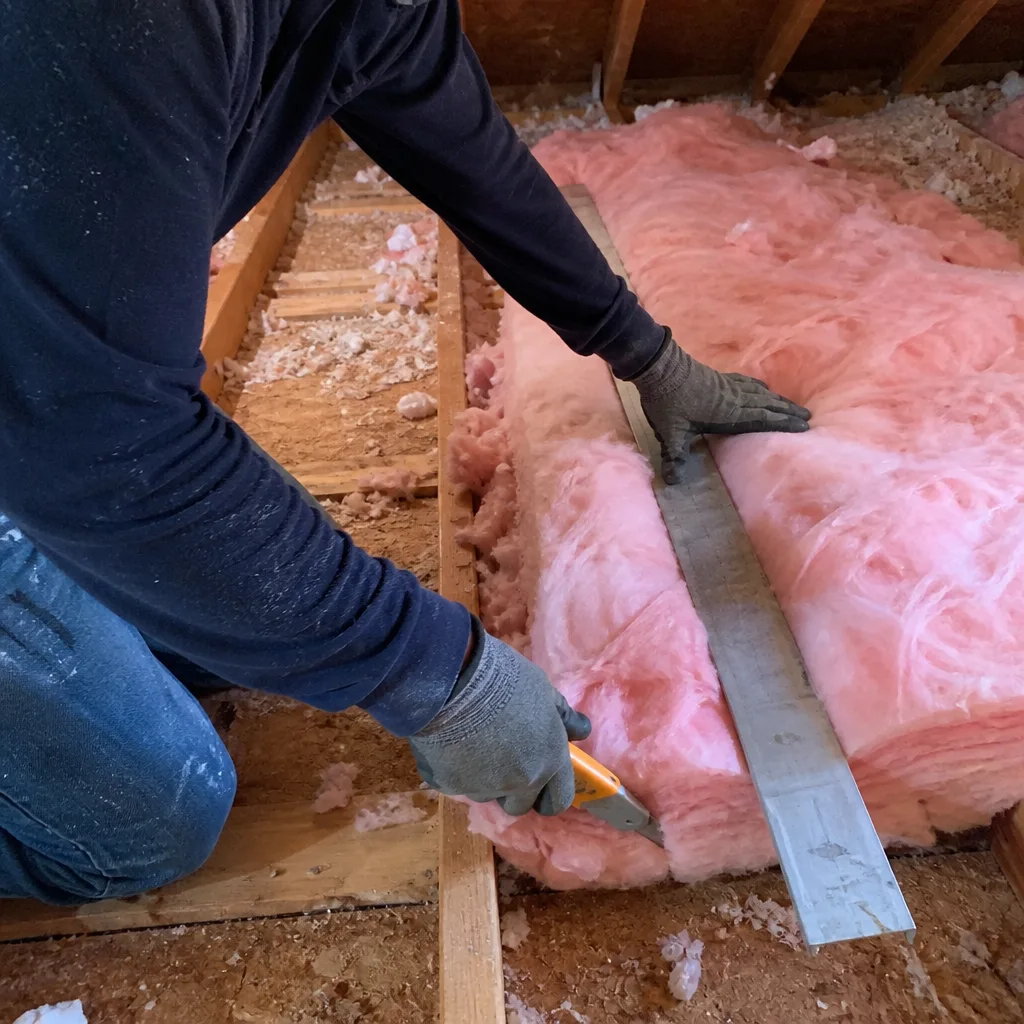
Blown-In Cellulose
For Temple City’s 1950s-1960s ranches with settled original insulation, we typically recommend GreenFiber cellulose blown to R-38 across the attic floor. Cellulose handles the SGV’s 30°F+ diurnal temperature swings better than fiberglass in older stucco construction because it packs tighter around irregular framing and top plates. On that 1962 stucco ranch off Live Oak Avenue, our tech found the original attic insulation compressed to about 3 inches and the 1980s rear room addition built with completely bare exterior walls - a common find in Temple City’s permissive-era add-ons. We blew in GreenFiber cellulose to R-38 across the main attic, then dense-packed the uninsulated addition walls with Johns Manville fiberglass so the back rooms stopped cooking past 85°F by mid-afternoon even with the AC running. The blower-door test read 4,200 CFM50 before sealing and 2,100 after.
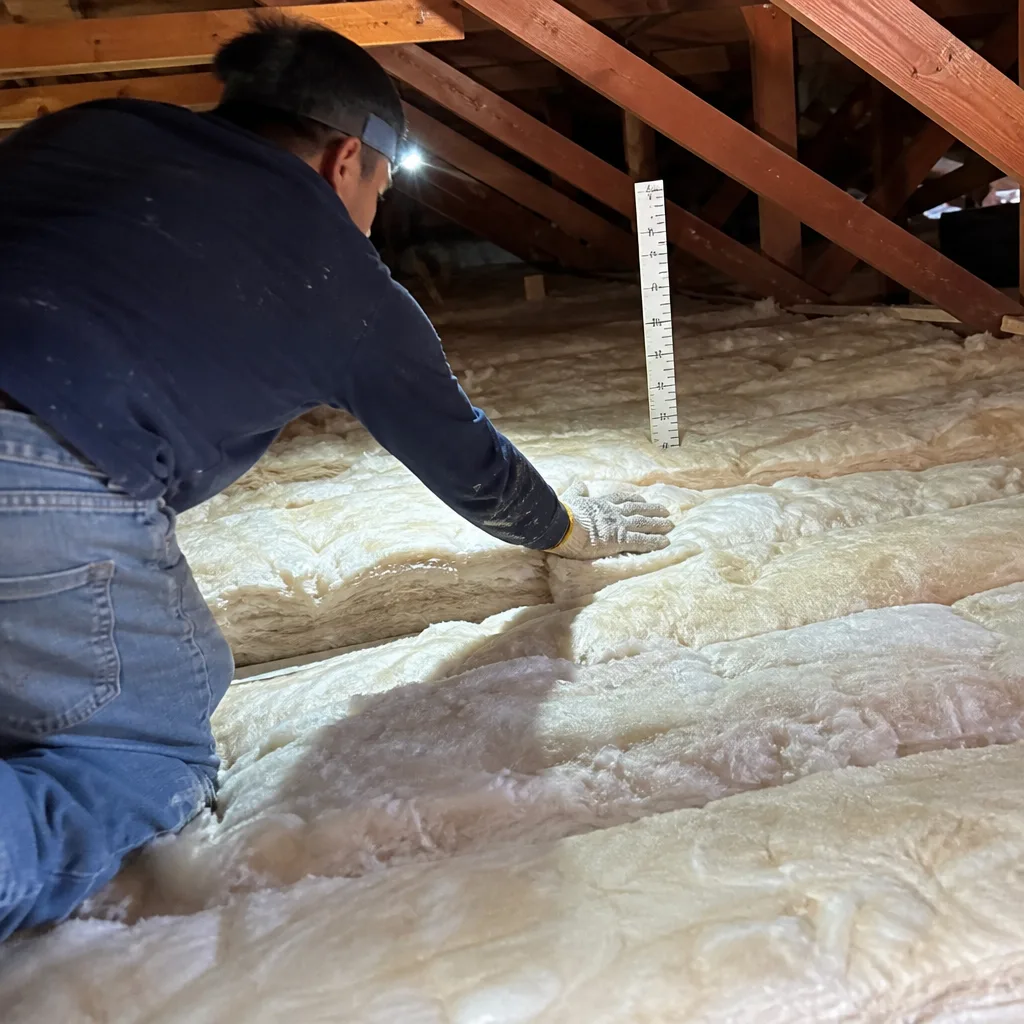
Blown-In Fiberglass
We stock Knauf and CertainTeed fiberglass for Temple City homeowners who prefer synthetic material or have moisture concerns in their attic. Fiberglass works well in vented attics with good air sealing already completed, and it’s the standard for new additions that need to match existing insulation type. We rarely recommend fiberglass as a standalone solution in Temple City’s older ranches because it doesn’t air-seal as it installs - and air sealing is our hard prerequisite.
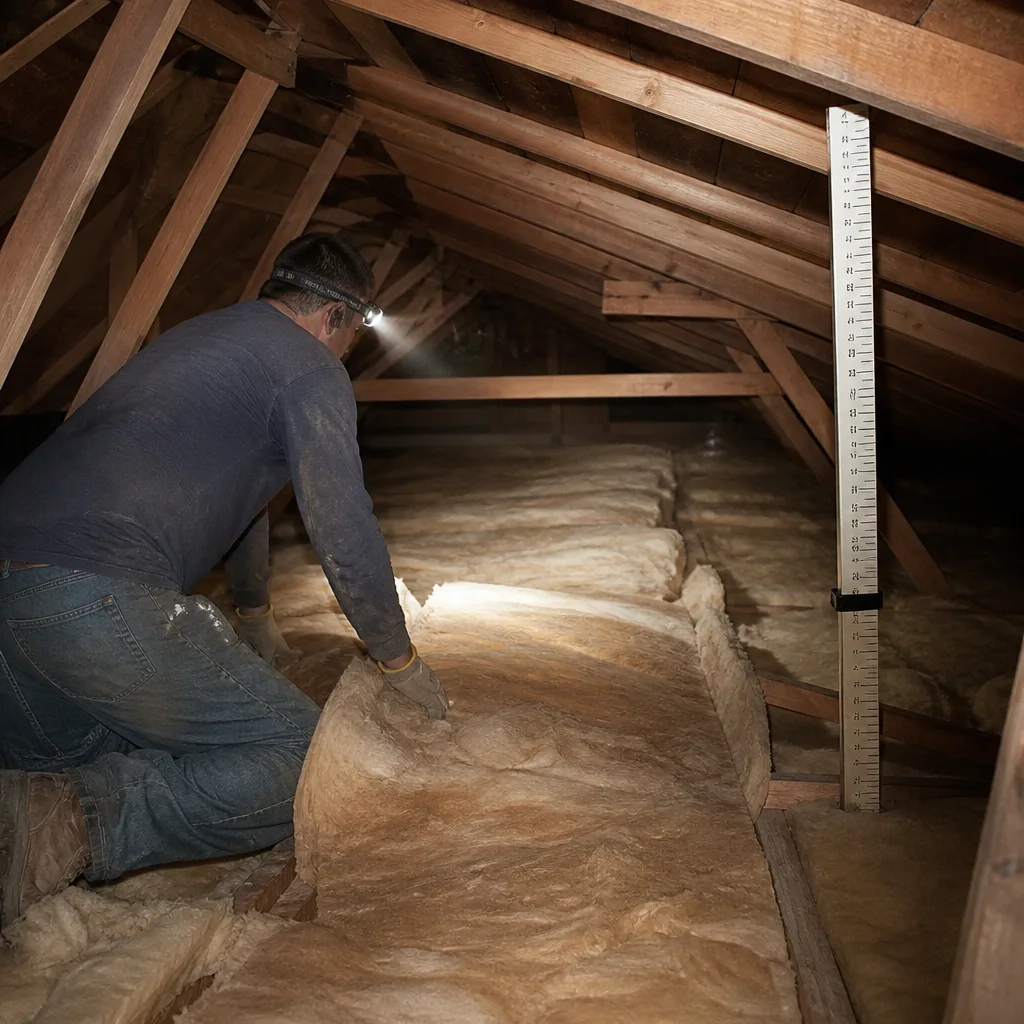
Dense-Pack Wall Insulation
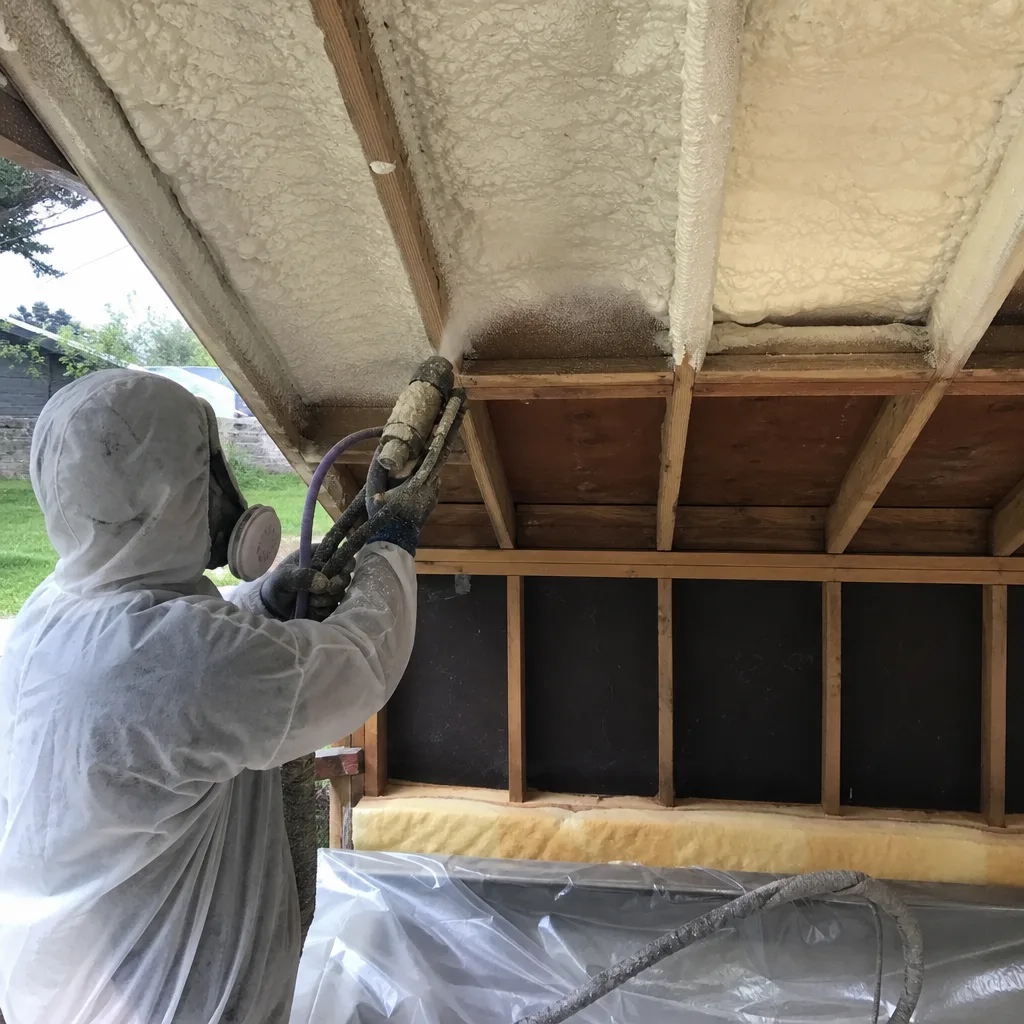
This is where we diverge from most Temple City contractors. Dense-pack wall insulation - blowing cellulose or fiberglass into closed wall cavities at 3.5 pounds per cubic foot - is the only way to insulate 1970s-1980s room additions and garage conversions without tearing out drywall. Local contractors frequently discover that this era’s work was built with no wall insulation at all under minimal SGV enforcement, so energy audits on otherwise ordinary-looking homes routinely turn up entirely uninsulated exterior walls in the added square footage. We dense-pack with Johns Manville fiberglass or GreenFiber cellulose, depending on the cavity condition and existing vapor management. For Temple City’s stucco ranches, we always assess whether the wall assembly can handle the added density without trapping moisture.
Blown-In Top-Up
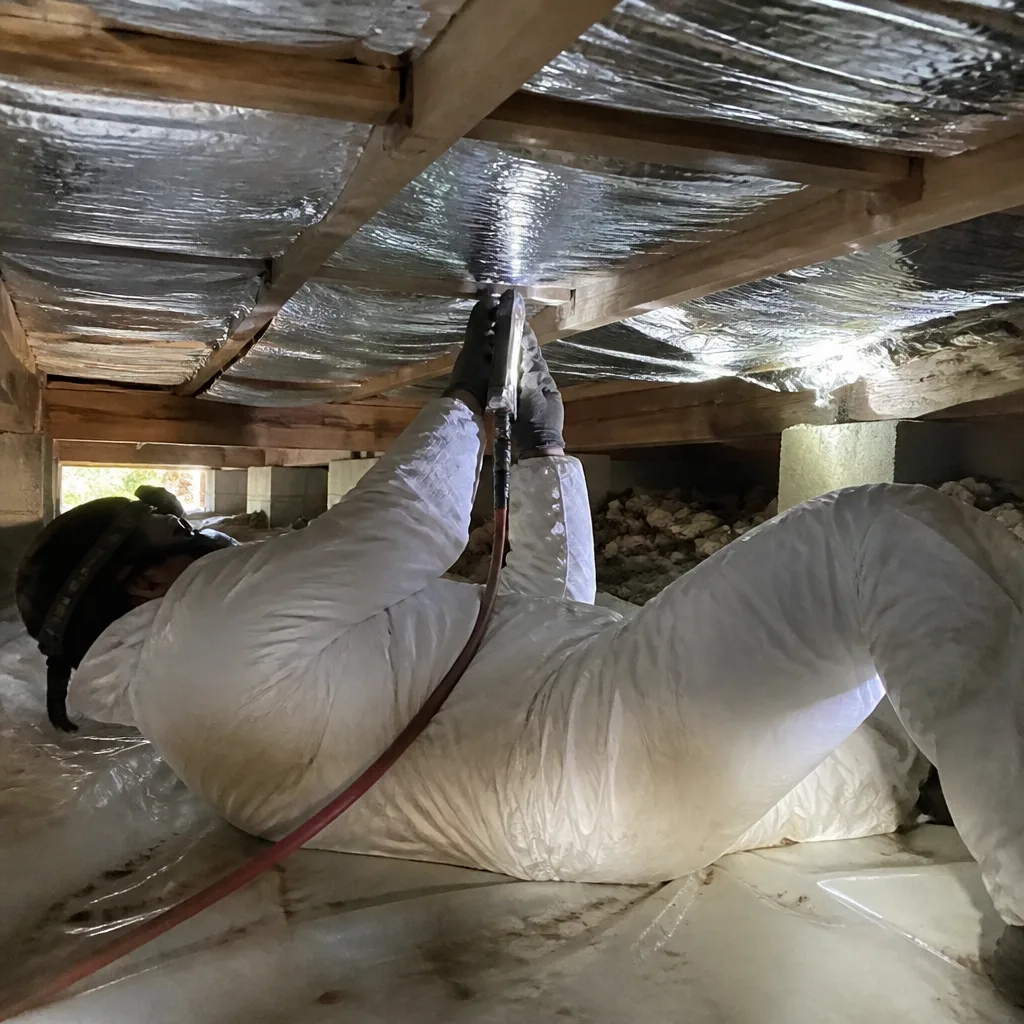
The most common call we get in Temple City: “My attic has insulation, but the house still won’t cool below 80°F.” What we find is original 1950s-60s attic insulation compressed to 3-4 inches, losing most of its rated R-value while still looking “present” to a homeowner. A blown-in top-up - adding 6-10 inches of new material over the settled layer - is often the most cost-effective improvement, but only after we’ve sealed the top plates, can lights, and plumbing penetrations. We never blow new insulation over an unsealed attic floor. That’s Haven Standard, not an upsell.
What happens when you call
- 1
A real person answersNo phone trees - you reach a local pro.
- 2
You get an upfront price rangeHonest numbers before anyone is dispatched.
- 3
A background-checked tech heads outLicensed & insured, dispatched right away.
- 4
You approve before work beginsNothing starts until you say go.
Trusted Brands We Service in Temple City
We source materials from Johns Manville, Knauf, Rockwool, and CertainTeed - no proprietary product lock-in, so we match the right material to your specific assembly rather than pushing what our warehouse needs to move. For Temple City’s high-heat-gain climate, we frequently specify Johns Manville fiberglass for dense-pack wall work and GreenFiber cellulose for attic floors, but the final spec comes after we inspect your attic, measure your existing insulation depth, and run the blower-door test. We keep common densities and blower configurations in stock at our Los Angeles office, so most Temple City jobs don’t wait on material delivery.
Common Blown-In Insulation Problems We See in Temple City Homes
- Settled original insulation masquerading as adequate. That 4-inch layer of 1960s fiberglass in your Temple City ranch attic might have been R-19 when installed; after 60 years of compression and dust loading, it’s performing closer to R-8. It looks like insulation. It isn’t doing the job.
- Uninsulated addition walls hidden behind finished drywall. The 1970s-1980s room additions across Temple City were often built with zero wall insulation under minimal SGV enforcement. Homeowners spend thousands on attic top-ups while the actual heat gain pours through uninsulated family room walls.
- Degraded fiberglass from decades of 100°F+ attic cycling. Inland valley attic temperatures spike with summer highs that degrade blown-in fiberglass over decades, breaking it down into dust that settles and loses loft. Stucco ranch walls rarely have the vapor management needed for a careless dense-pack, so we test before we fill.
- Insulation added before air sealing - the most expensive mistake. We’ve pulled back new blown-in insulation in Temple City attics to find can lights still leaking, top plates unsealed, and duct boots pulling conditioned air directly into the vented attic. The insulation looked professional. The performance was negligible.
Pricing for Blown-In Insulation in Temple City, CA
Most blown-in insulation jobs in Temple City fall into these ranges, based on 2024-2025 material costs and typical SGV labor rates:
| Service | Typical Range (Temple City) |
|---|---|
| Blown-in cellulose attic fill to R-38 (1,200 sq ft attic) | $2,400 - $3,600 |
| Blown-in fiberglass attic fill to R-38 (1,200 sq ft attic) | $2,200 - $3,400 |
| Attic air sealing + blown-in top-up (existing insulation remains) | $1,800 - $3,200 |
| Dense-pack wall insulation (per 100 sq ft of wall) | $800 - $1,400 |
| Complete removal + replacement with air sealing | $4,200 - $6,800 |
What moves the number: attic accessibility (cathedral ceilings cost more), whether we need to remove degraded material first, the extent of air sealing required, and whether we hit uninsulated walls that weren’t in the original scope. We give you a written price before any work starts - Haven Standard Clause 1 - and we offer a Free Second Opinion on any written estimate from another contractor. Call (626) 509-3237 for an exact quote; estimates are free.
We Also Serve Cities Near Temple City
Our crews work throughout the San Gabriel Valley, including Temple City neighbors in El Monte, Rosemead, Baldwin Park, and Pasadena. Dispatch and scheduling are coordinated from our Los Angeles office, but the technicians serving your area live local and know the SGV housing stock. Whether you need Blown-In Insulation for a 1950s ranch or a dense-pack upgrade for a converted garage, the same written-price, documented-record process applies.
Serving Temple City, CA - Our Local Coverage Area
We’re based in the Temple City area and know this community well. Use the map below to see our service coverage - if you’re nearby, we can almost certainly help.
FAQs - Blown-In Insulation in Temple City
Probably, if your summer cooling bills are high and the house won’t stay below 80°F. Original 1960s insulation in Temple City has typically compressed to 3-4 inches and lost most of its R-value; it looks present but performs like R-8 or less. We measure actual depth and condition during our free estimate, and we’ll show you photos of what we find. Call (626) 509-3237 to schedule.
Yes, through dense-pack wall insulation. We drill 2-inch access holes at the top of each stud bay, blow cellulose or fiberglass to 3.5 pounds per cubic foot, then patch and texture-match. This is standard for Temple City’s 1970s-1980s additions that were built with zero wall insulation. The process takes one to two days for a typical family room addition.
Cellulose usually wins for Temple City’s older ranches because it air-seals better as it installs and handles the SGV’s temperature swings without settling as severely. Fiberglass is viable if your attic is already well-sealed and vented. We test and recommend based on your specific assembly, not a default spec.
Temple City’s inland position - no marine layer, summer highs 100-105°F - means you need more attic R-value than coastal LA, not less. The heat gain through an under-insulated roof is substantially higher here. We typically specify R-38 as a practical minimum for Temple City attics, where R-30 might suffice closer to the beach.
If your project includes a room addition, ADU conversion, or significant remodel, California Title 24 energy-code compliance will require minimum insulation levels that often exceed what’s currently in your home. Even without a permit trigger, the ROI argument is unusually strong in Temple City because of the inland heat and the pre-code housing stock. We document R-values and installation quality for any future permit application.
Written by Wes Okafor, Owner at Topside Attic Insulation La Puente, serving Temple City since 2016 under The Haven Standard.