
Demilec Attic Insulation: The La Puente Owner’s Guide
Demilec spray foam and blown-in attic insulation systems in La Puente typically run $2.80-$4.20 per square foot installed, and most retrofits on a standard 1,200-square-foot attic floor are completed in one day. We stock Demilec-compatible open-cell and closed-cell foam sets, plus the ignition-barrier coatings required by California Title 24 for habitable attic conversions. If you’re noticing hot second-floor rooms, spiking summer AC bills, or finding degraded foam near your roof deck, the material has likely compressed, off-gassed beyond its effective life, or was installed without proper air sealing beneath it.
Which Demilec Models This Applies To
Demilec’s residential line breaks into three families you’re likely to find in La Puente tract homes built between 1985 and 2010: the Heatlok HFO series (closed-cell, 2.0 lb density), the Sealection 500 open-cell system (0.5 lb density), and the Eco-Pur line used in hybrid attic jobs where blown-in tops off foam at the roof deck. The product label is usually on a strut near the attic hatch or spray-applied directly onto the foam itself in 2-inch lift markings. Heatlok HFO is identifiable by its light yellow color and the “HFO” stamp in the foam surface; Sealection 500 cures to a cream-white and feels softer, like stiff bread dough.
We do not source proprietary Demilec-only formulations. Our materials come from Demilec, Icynene, and Owens Corning, and we match the density and R-value per inch of your existing system rather than selling you a brand name. The gotcha in La Puente’s climate: closed-cell foam installed before 2015 was often specified at 2 inches on the roof deck, which hits only R-12 to R-14. Current Title 24 wants R-30 to R-38 in our climate zone. Adding blown cellulose or fiberglass on the attic floor is usually the correct retrofit, not more foam on the roof.
Signs Your Demilec Attic Insulation Is Failing
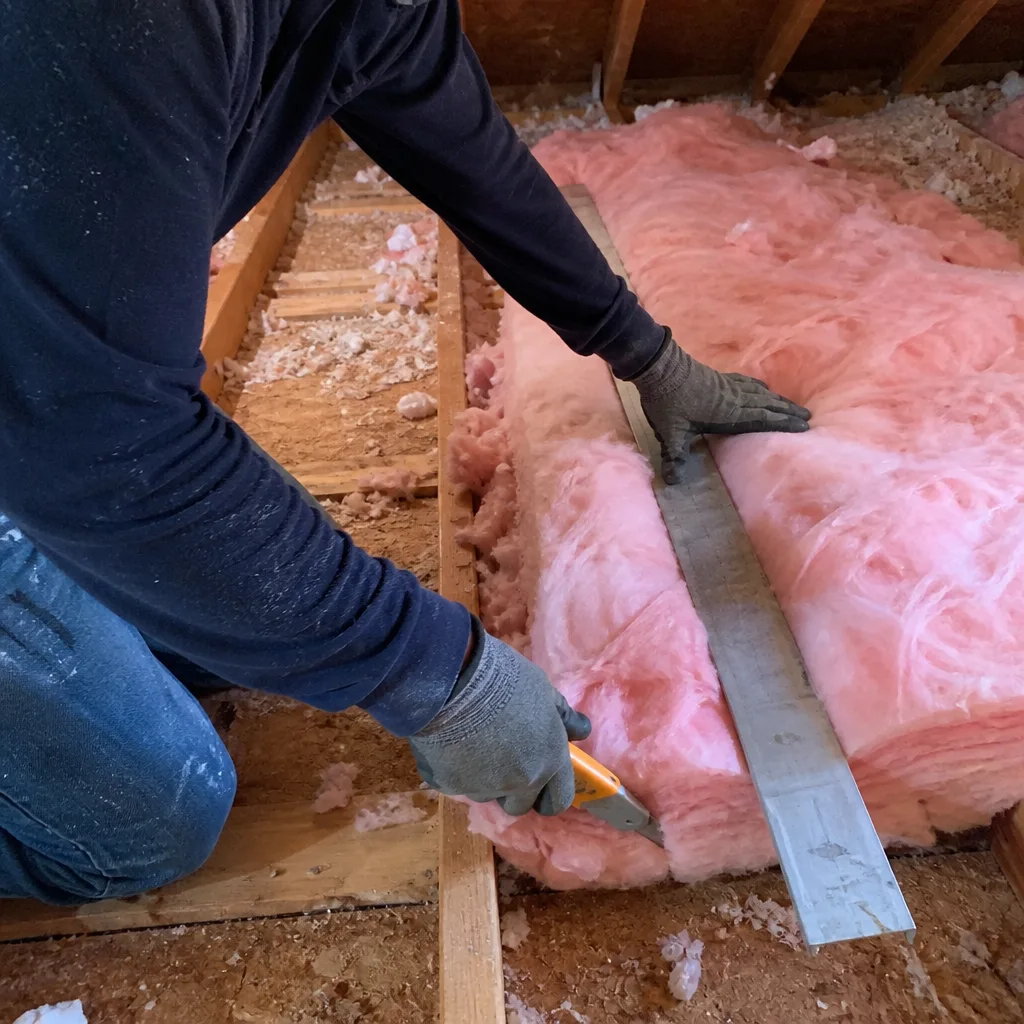
- Uneven room temperatures upstairs. When Demilec open-cell foam shrinks or pulls away from rafter bays, it creates thermal bypass channels. Conditioned air leaks out, and the rooms beneath those gaps run 4-8 degrees warmer in July and August.
- Musty or chemical odor returning after years of dormancy. Off-gassing from improperly mixed foam, or foam that got wet from a roof leak, will release amines and isocyanates again. If you smell something sharp near the attic hatch, the material has likely degraded.
- Visible yellowing, crumbling, or powder on the foam surface. UV exposure through gable vents or a missing hatch seal degrades the top layer of Demilec foam. What looks like surface dust is often oxidized polymer, and it means the protective coating or ignition barrier has failed.
- Ice-cold ductwork in summer or sweating ducts. Demilec foam that was sprayed directly onto duct jackets without a thermal break can create condensation when the attic temperature swings. In La Puente, we see this most in homes north of Hacienda Boulevard where afternoon attic temps hit 140°F.
- Energy bills climbing year-over-year with no rate change. Compressed or settled blown-in that was installed over Demilec base foam loses R-value predictably. A 20% spike in kWh usage is often the first measurable sign that the insulation sandwich has failed.
Replacement Cost & What’s Included
| Scope | Typical Range in La Puente |
|---|---|
| Air sealing + blown-in cellulose over existing Demilec foam (attic floor) | $1,800 - $3,400 |
| Demilec closed-cell removal + replacement with new foam (roof deck, 1,200 sq ft) | $4,200 - $6,800 |
| Hybrid: new open-cell at roof deck + blown cellulose at floor | $3,600 - $5,400 |
| Ignition barrier coating (required for habitable attic) | $800 - $1,400 |
What drives the range: accessibility (cathedral ceilings cost more), existing foam condition (removal adds labor), and whether the attic floor needs new baffles at the eaves. Every job gets a written price before work starts, per Haven Standard Clause 1. We also publish before-and-after blower-door numbers on applicable jobs so you can verify the air-sealing result in a single figure.
DIY or Call Us?
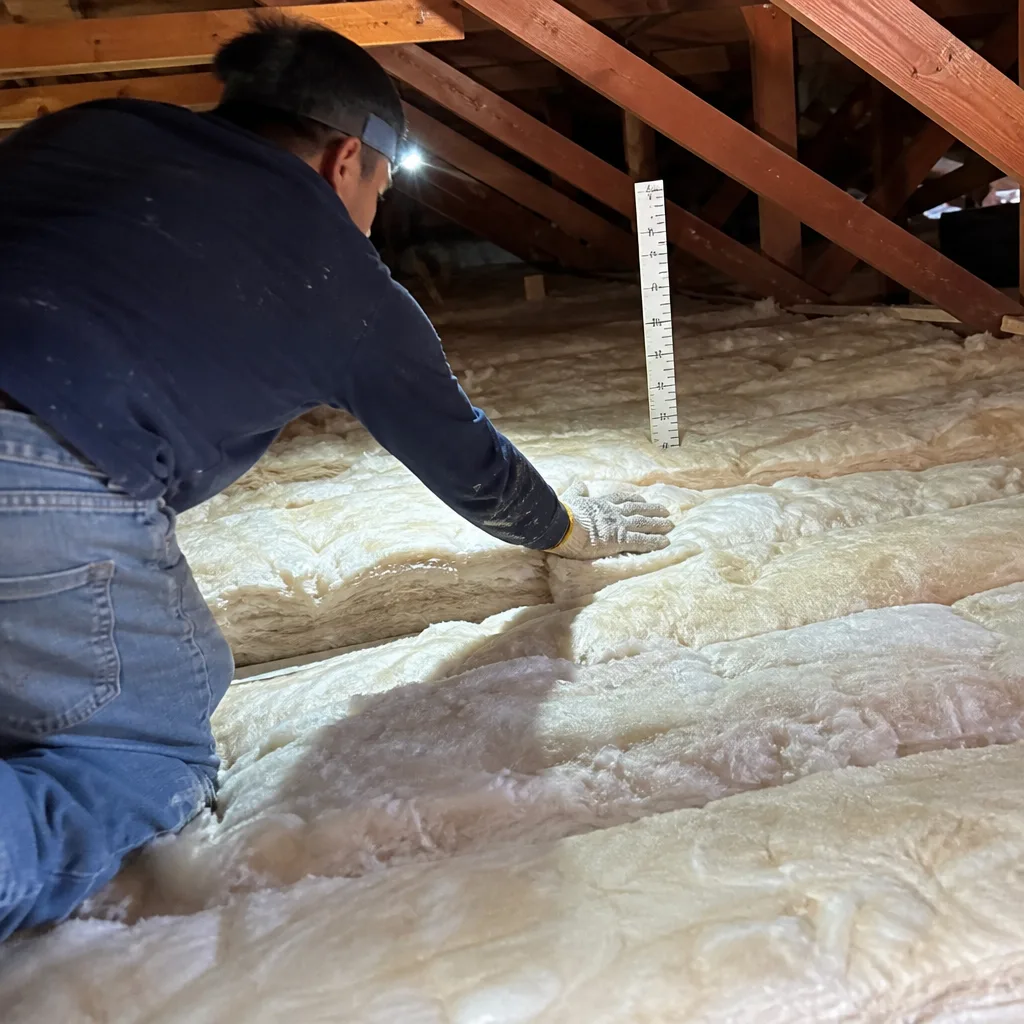
Here’s what you can safely check yourself: read the foam label for density and date, measure attic floor depth with a ruler, and look for obvious gaps at light fixtures or around the chimney chase. Do not attempt to remove or cut Demilec foam yourself. The material contains isocyanates that require respirator protection, and disturbing degraded foam releases particulates you do not want in your HVAC system. Closed-cell removal also involves scraping adhered foam from structural members, which damages roof decking when done without heat-control tools.
Seal the leaks first. The insulation is just the last layer, not the fix. Call (626) 509-3237 and we’ll walk through what you’re seeing. Estimates are free, and we stock the replacement materials on our trucks.
FAQs
Properly installed Demilec closed-cell foam lasts 20-30 years, but open-cell in a vented attic degrades faster, often showing shrinkage or off-gassing by year 12-15 in our dry heat. The key variable is whether the attic was air-sealed first; foam sprayed over a leaky ceiling will perform poorly regardless of age. Call (626) 509-3237 for a free assessment of your specific installation.
Localized shrinkage or gaps can be patched with compatible foam if the surrounding material is sound. Widespread degradation, moisture intrusion, or pre-2010 installations with insufficient depth usually warrant removal and redo. We do not patch over wet or chemically failed foam; it traps the problem. Bring us a photo and we’ll tell you which category you’re in.
Most attic-floor retrofits with air sealing and blown-in topping are one day. Full roof-deck removal and respray is two to three days, including cure time before occupancy. We deliver a written scope with the timeline before anyone lifts a tool.
We stock Demilec-compatible open-cell and closed-cell foam sets, ignition-barrier coatings, and blown-in cellulose on our La Puente trucks. Same-day starts are available for standard attic-floor jobs. Roof-deck foam jobs require a day to stage materials for your specific square footage.
Written by Wes Okafor, Owner, Topside Attic Insulation La Puente at Topside Attic Insulation La Puente, serving La Puente and nearby areas.