
Demilec Radiant Barrier Installation: The La Puente Owner’s Guide
Demilec radiant barrier installation in La Puente typically runs $2,400-$4,800 for a complete attic application in a 1,200-2,000 square foot home, and we stock Demilec-compatible rolls and spray-applied foil systems for same-day starts on most jobs. Most homeowners discover their existing radiant barrier has failed when their summer AC runs continuously past 7 p.m. or their upstairs bedrooms stay 8-12 degrees hotter than the thermostat setting despite new ductwork. Wes Okafor and our crew have measured attic temperatures above 140°F in La Puente tract homes where the original radiant barrier had degraded to dust or was never installed at all.
Which Demilec Models This Applies To
Demilec does not sell radiant barrier as a standalone branded product line like Reflectix does. Instead, Demilec’s building envelope systems in La Puente homes typically pair their Heatlok HFO or Sealection 500 spray foam installations with a radiant barrier substrate, either foil-faced polyiso board or a loose radiant barrier draped over purlins before foam application. The compatibility question is not “which Demilec model” but which assembly your home received: open-cell foam with a separate radiant barrier layer, or closed-cell foam applied directly to a foil-faced substrate.
To identify what you have, check your attic for two things: a stamped label on any rigid foam board (Demilec-labeled foil-faced polyiso will show a lot number and R-value stamp), or a thin, reflective sheet draped between rafters with visible Demilec overspray along the edges. Measure the existing material’s width - 48-inch rolls are standard for retrofit, but 60-inch was used in some 2018-2021 La Puente builds to reduce seams. We stock both widths, plus the 1/4-inch foil-faced polyiso for hybrid assemblies where the original substrate has delaminated. Aftermarket equivalents from Johns Manville and Owens Corning match Demilec’s thermal performance specs, though we always verify the existing foam’s open-versus-closed-cell chemistry before specifying a barrier that needs to bond to it.
Signs Your Demilec Radiant Barrier Installation Is Failing
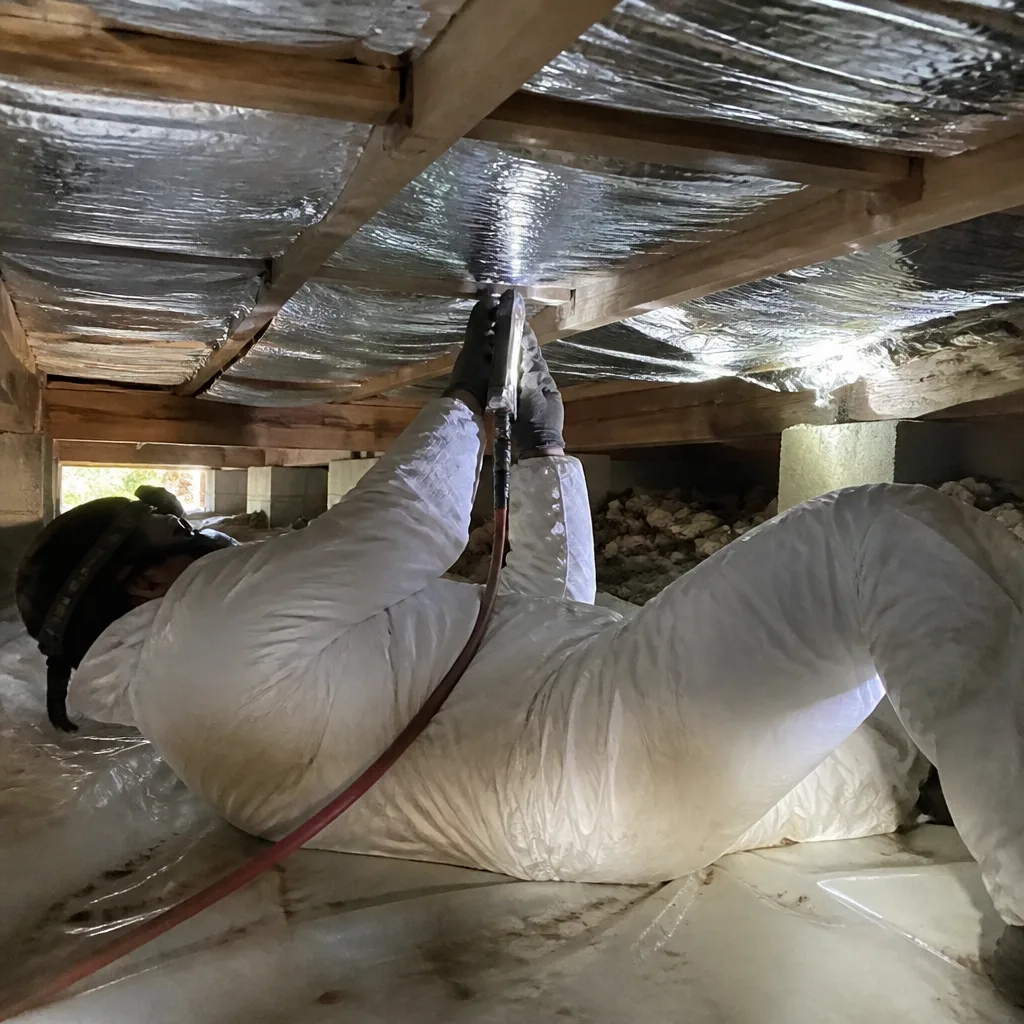
- Attic floor insulation is saturated with dust. A functioning radiant barrier reflects heat upward, keeping the attic floor cooler and reducing convection currents that pull dust through ceiling penetrations. When the barrier tears or oxidizes, attic air movement increases dramatically, and you’ll find thick dust accumulation on top of your blown-in insulation within two to three years of what should be a decade-long clean period.
- Summer electric bills spike $80-$150 above your five-year average. In La Puente’s inland climate, a degraded radiant barrier forces your AC to compensate for radiant heat gain through the roof deck. We’ve tracked this exact pattern in homes south of Hacienda Boulevard where original kraft-faced barriers installed in the early 2010s have turned brittle and translucent.
- Hot spots on your ceiling during afternoon hours. Use an infrared thermometer or the back of your hand near ceiling drywall between 3 and 5 p.m. in July. Temperature variations of 5°F or more between ceiling sections usually trace to gaps, tears, or missing sections of radiant barrier where the roof deck radiates directly through.
- Visible tears, oxidation, or rodent damage on the barrier surface. Demilec-compatible foil barriers in La Puente attics typically show white oxidation streaks after 8-12 years of summer heat cycling above 130°F. Rodents also favor the creased areas near eaves for nesting material, and we’ve replaced barriers in Valinda and Bassett homes where 15-20% of the surface was shredded.
- Spray foam has separated from the radiant barrier substrate. In hybrid assemblies where Demilec foam was sprayed directly to foil-faced board, delamination sounds like a hollow drum when tapped and shows a visible gap at the foam-to-foil interface. This is a thermal bypass - an uninsulated air path that negates both the foam’s R-value and the barrier’s reflectivity.
Replacement Cost & What’s Included
For a typical La Puente home between 1,200 and 2,000 square feet of attic floor, complete Demilec-compatible radiant barrier installation runs $2,400-$4,800 installed. The lower end covers loose radiant barrier draped over existing rafters with basic air sealing of top plates and penetrations; the upper end includes foil-faced polyiso board replacement, full attic air sealing to blower-door specification, and integration with existing Demilec foam where present.
| Component | Price Range |
|---|---|
| Loose radiant barrier material (48″ or 60″ rolls, 1,500-2,500 sq ft) | $680-$1,200 |
| Foil-faced polyiso board (1/4″, 4×8 sheets, 30-50 sheets) | $840-$1,600 |
| Attic air sealing (top plates, can lights, penetrations) | $580-$1,100 |
| Labor and installation | $1,100-$2,400 |
| Before-and-after blower-door test (included on applicable jobs) | $0 |
What drives the range: roof pitch (steeper = more material and slower work), existing insulation that must be temporarily moved and replaced, and whether the original barrier was attached with staples that have rusted through the roof deck (common in pre-2010 La Puente builds). Every job gets a Written Price Before Any Work Starts under Haven Standard Clause 1, and our 365-Day Done Right Promise covers the installation. We also provide a Documented Photo Record of the attic condition before and after, plus pre- and post-job blower-door numbers on air-sealing-inclusive work so you can verify the envelope performance change.
DIY or Call Us?
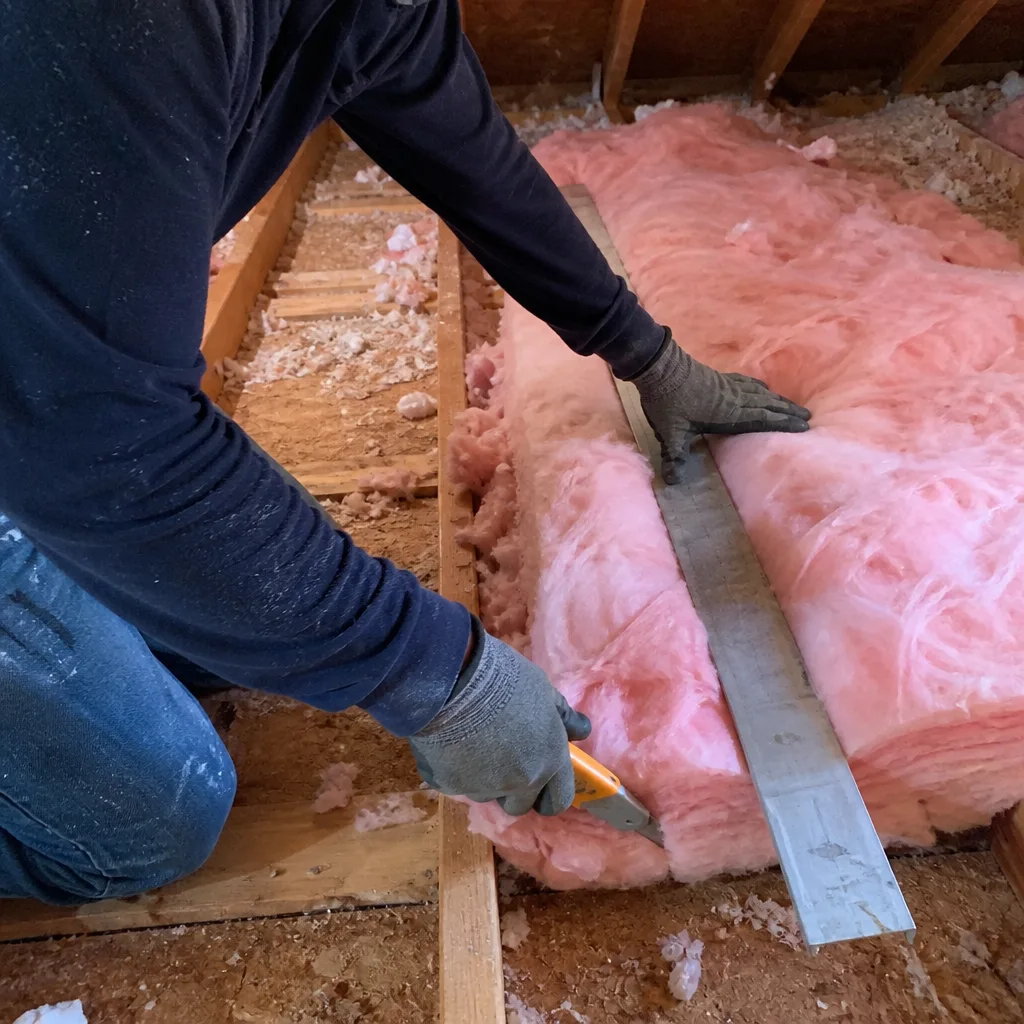
There’s no high-tension spring or electrical hazard in radiant barrier work, but there are two honest limits to what a homeowner should attempt. First, La Puente attics in summer are dangerous environments - we’ve measured ambient temperatures above 140°F at 10 a.m. in July, and heat exhaustion arrives faster than most people expect. Second, installing radiant barrier without first air-sealing the attic floor is the most common mistake we correct: you’re reflecting heat back toward the roof deck while conditioned air still escapes through every ceiling penetration, which is why we seal first, then install the barrier.
What you can safely check: verify whether you have any radiant barrier at all (many La Puente homes from the 2005-2015 building boom were sold with “energy-efficient” labels and no actual barrier), photograph any labels or stamps you find, and note the month your electric bill spikes. What we handle: measuring the exact assembly type, specifying material that integrates with your existing Demilec foam if present, and sequencing the work so air sealing happens before the barrier goes up. Call (626) 509-3237 for a free estimate - we’ll read your attic with you, show you what we find, and give you a written price before any work starts.
FAQs
In La Puente’s inland Southern California climate, a properly installed radiant barrier lasts 15-25 years for foil-faced polyiso board and 10-15 years for loose draped foil, with degradation accelerated by attic temperatures that regularly exceed 130°F in summer. The 140°F-plus peaks we measure in unventilated attics south of the 60 Freeway are the primary aging factor, not the material itself. Call (626) 509-3237 for an attic assessment - estimates are free.
Spot repairs work only for isolated tears or small rodent-damaged sections where the surrounding barrier is still fully reflective and properly attached. Once oxidation has dulled more than 20% of the surface or delamination has occurred at the foam-to-foil interface, partial repairs create thermal bypasses that defeat the purpose. We evaluate this on every job and will tell you honestly if a repair is viable. Call (626) 509-3237 for a written scope and price.
Most La Puente homes in the 1,200-2,000 square foot range take one to two days: half a day for air sealing and preparation, half to one day for barrier installation, plus blower-door testing on completion. Homes with steep pitches, existing insulation that must be removed and replaced, or integrated Demilec foam repairs may extend to a third day. We schedule starts with material on the truck so there’s no waiting for delivery. Call (626) 509-3237 to check this week’s availability.
We stock 48-inch and 60-inch foil rolls, 1/4-inch foil-faced polyiso board, and Demilec-compatible spray foam for substrate repairs on every La Puente service truck. Same-day starts are available for most jobs booked before noon, and we do not start work without the correct material in hand. That’s Haven Standard Clause 1: written price, confirmed material, then the crew arrives. Call (626) 509-3237 to confirm stock for your specific assembly type.
Seal the leaks first. The insulation is just the last layer, not the fix.
Written by Wes Okafor, Owner, Topside Attic Insulation La Puente at Topside Attic Insulation La Puente, serving La Puente and nearby areas.