
GreenFiber Attic Insulation: The La Puente Owner’s Guide
GreenFiber blown-in cellulose attic insulation in La Puente typically runs $1.80 to $2.40 per square foot installed for open attic floors, with most complete retrofits in a 1,200-square-foot attic falling between $2,200 and $3,400 including air sealing of top plates and penetrations. We stock GreenFiber loose-fill cellulose on every truck and can usually schedule installation within 48 hours, same-day for failed insulation removal after rodent damage or water intrusion. Most La Puente homeowners discover their GreenFiber insulation is compromised when rooms stay hot past 7 p.m. despite the AC running, or when they find compressed, stained material near recessed can lights or HVAC penetrations during a storage trip to the attic.
Which GreenFiber Models This Applies To
GreenFiber manufactures loose-fill cellulose insulation, not a discrete part with a model number, so matching the product means identifying the original install spec and current depth. Look for the faded specification card stapled to a rafter or the original permit documentation; GreenFiber products sold in Southern California are typically the Low Dust or Sanctuary lines, both labeled with a fire-retardant borate treatment and an R-value of 3.7 per inch. The bag count and original depth determine what you’re working with: a 2008 install might have been blown to R-30 (about 8 inches), while current Title 24 standards in La Puente’s climate zone call for R-38 to R-49 (10 to 13 inches) for attic floors.
We do not use proprietary product lock-in. GreenFiber cellulose is what we install when a homeowner requests it specifically, but we also stock Owens Corning AttiCat fiberglass, Johns Manville Climate Pro, and Rockwool Comfortbatt for homeowners who want to compare thermal performance and settling rates. If your existing GreenFiber has compressed below its labeled depth by more than 20 percent, the R-value has dropped proportionally and topping up with the same product is usually the right match. Switching to fiberglass on top of cellulose creates a layered density issue that can trap moisture at the interface, so we note the existing material before quoting.
Topside Attic Insulation La Puente is an independent service provider and is not affiliated with GreenFiber.
Signs Your GreenFiber Attic Insulation Is Failing
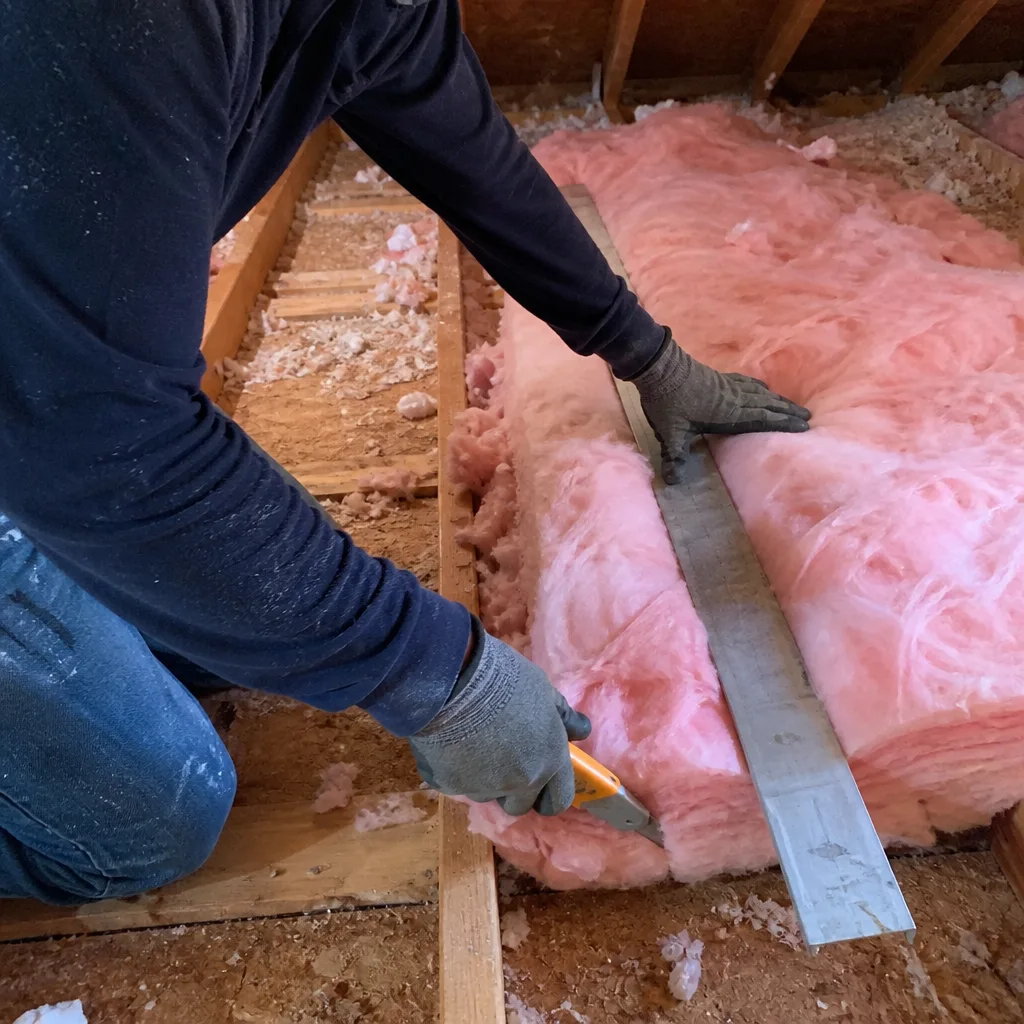
- Uneven temperatures room-to-room. GreenFiber settles over time, but uneven settling usually means air movement through the attic floor is washing the insulation aside at eaves, top plates, or around duct boots. We find this most often in La Puente’s 1950s and 1960s tract homes near Hacienda Boulevard, where original baffles were never installed and wind through soffit vents pushes cellulose back from the edges.
- Visible compression or water staining. Cellulose wicks moisture when roof leaks or condensation from poorly sealed ductwork saturate it. Once the borate fire retardant has been leached or the material has matted to half its original depth, it will not recover and becomes a mold substrate. The stain pattern usually points to the leak source.
- Dust or insulation particles in living spaces. GreenFiber is treated for low dust, so visible particles settling on ceiling fixtures or around register grilles mean air is moving from attic to house through a bypass we can locate with a blower-door test - a pressurization reading that shows, in one number, how much air your building envelope is losing.
- Rodent nesting material or droppings. Cellulose is paper-based and attractive to roof rats once they gain access. Contaminated insulation must be removed, not covered, and the entry points sealed before new material goes in. We document the contamination with photos and provide a written scope for removal, sanitization, and reinstallation.
- Energy bills rising year-over-year with no rate change. When GreenFiber settles below R-30 in La Puente’s inland climate, attic temperatures in July regularly hit 140°F and conductive heat gain overwhelms the cooling system. The insulation has not failed structurally; it has simply fallen below the thermal threshold for the house as built.
Replacement Cost & What’s Included
Most GreenFiber attic insulation jobs in La Puente run between $2,200 and $3,400 for a complete removal and replacement in a 1,200-square-foot attic, or $1.40 to $1.90 per square foot for a top-up of existing material in good condition. The range depends on three factors: whether removal of old material is required, the linear footage of air sealing at top plates and penetrations, and the final R-value target.
| Component | Price Range |
|---|---|
| GreenFiber cellulose (installed, open attic) | $1.80-$2.40 / sq ft |
| Removal of existing contaminated insulation | $0.80-$1.20 / sq ft |
| Attic air sealing (top plates, can lights, penetrations) | $450-$890 flat |
| Blower-door test with documented before/after readings | Included on applicable jobs |
Every job closes with a written depth log showing R-value achieved and a Documented Photo Record of air-sealing work completed before the insulation went in. The 365-Day Done Right Promise applies: if it’s not done right, we make it right. We also provide a Free Second Opinion on any written estimate you bring us.
DIY or Call Us?
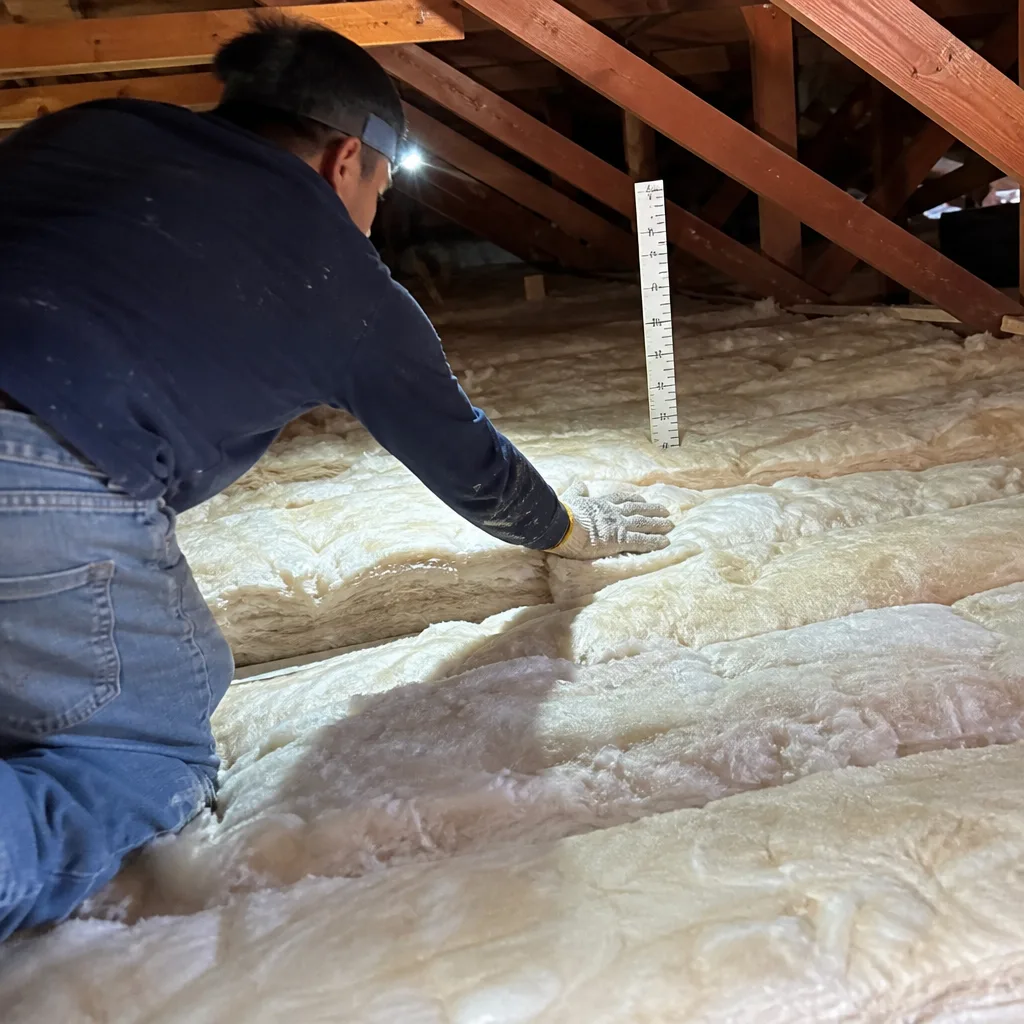
What you can safely check: measure your current insulation depth with a ruler at three points (center, eave, near any HVAC penetration), photograph any staining or compression, and verify your attic has working soffit vents that are not blocked by insulation. Do not disturb material you suspect contains rodent droppings without an N95 respirator; hantavirus is documented in Los Angeles County.
Where DIY goes wrong: blowing cellulose over an unsealed attic floor buries the leaks and makes them impossible to find later. The GreenFiber blower is a two-person operation with specific hose pressure settings; too high and you over-density the material, too low and you get uneven coverage with thermal voids. And without a blower-door test, you cannot verify whether the air sealing you skipped is costing you 30 percent of your heating and cooling load. Seal the leaks first. The insulation is just the last layer, not the fix.
Call (626) 509-3237 for a written price before any work starts. Estimates are free, and we answer live 24/7.
FAQs
GreenFiber cellulose lasts 20 to 30 years when kept dry and undisturbed, but in La Puente’s climate it typically settles 20 percent in the first five years and may need a top-up at year 10 to maintain R-38. Roof leaks, rodent activity, or storage traffic in the attic will shorten that timeline significantly. Call (626) 509-3237 and we can measure your current depth against the original spec.
Spot repair is possible for localized compression or thin areas, but contaminated, wet, or severely settled material must be removed. Adding new GreenFiber on top of old matted cellulose creates a density gradient that traps moisture and reduces the effective R-value of the new material. We assess this on every job and tell you which approach the building science actually supports.
A standard removal and replacement in a 1,200-square-foot La Puente attic takes one full day: morning for removal and air sealing, afternoon for blower-door verification and insulation installation. Larger attics or jobs requiring extensive rodent proofing may run into a second day. We give you a written schedule with your price.
Yes. We carry GreenFiber loose-fill cellulose, Owens Corning AttiCat fiberglass, and Rockwool on every vehicle, so we can match your existing material or discuss alternatives on the spot. We do not require you to wait for a special order. Call (626) 509-3237 to confirm availability for your target date.
Written by Wes Okafor, Owner, Topside Attic Insulation La Puente at Topside Attic Insulation La Puente, serving La Puente and nearby areas.