
Icynene Attic Insulation: The La Puente Owner’s Guide
We stock and install Icynene-compatible spray foam and open-cell attic insulation systems in La Puente, with most residential retrofits running between $2,800 and $5,400 depending on attic square footage and whether the existing material needs full removal. Same-day assessment is available, and we carry Icynene-equivalent formulations on our trucks for homes built between 1965 and 1995 that were originally insulated with fiberglass batts that have settled below the top plate. Most La Puente homeowners discover their attic insulation has failed when the upstairs bedrooms run 8-12 degrees hotter than the thermostat setting in July, or when they find their PG&E summer bills climbing year-over-year despite no change in usage.
Which Icynene Models This Applies To
Icynene’s residential attic line breaks into two main families: the classic LD-C-50 open-cell formulation and the newer Icynene ProSeal LE closed-cell series, both of which we match to existing substrates in La Puente homes. The LD-C-50 - a half-pound density foam - is what most homeowners encounter in 1980s and 1990s tract construction around Hacienda Heights and Valinda; it expands to roughly 3.5 inches per pass and achieves R-13.7 at full thickness. The ProSeal LE runs 2.0 pounds density, delivers R-7 per inch, and is the correct choice when roof decking needs structural adhesion or when local code requires a ignition barrier without additional intumescent coating.
To identify what’s currently in your attic, look for the Icynene batch label on any exposed foam surface - a 2-inch white sticker with a 10-digit lot number and the density rating printed in green ink. If your attic was insulated before 2010 and the foam has yellowed to a butter tone, you likely have the original LD formulation, not the reformulated LD-C-50 that Icynene introduced after the 2009 California Title 24 update. We do not install proprietary Icynene product; we are an independent service provider using Icynene-equivalent formulations sourced through Demilec and Johns Manville distribution channels that meet or exceed the same ASTM E84 and California Department of Public Health emissions standards.
The OEM-versus-aftermarket decision here is straightforward: Icynene’s licensed applicator network requires factory-trained installation for warranty coverage, but that warranty is foam-only and does not cover the labor to remove failed material or correct the air-sealing defects that caused the failure. Our equivalent formulations carry the same 10-year material integrity coverage, and we document the pre-installation air-sealing work that Icynene’s warranty explicitly excludes. For most La Puente homeowners, the relevant comparison is not foam brand but installation sequence - whether the contractor sealed top plates, wire penetrations, and can-light housings before blowing or spraying anything overhead.
Signs Your Icynene Attic Insulation Is Failing
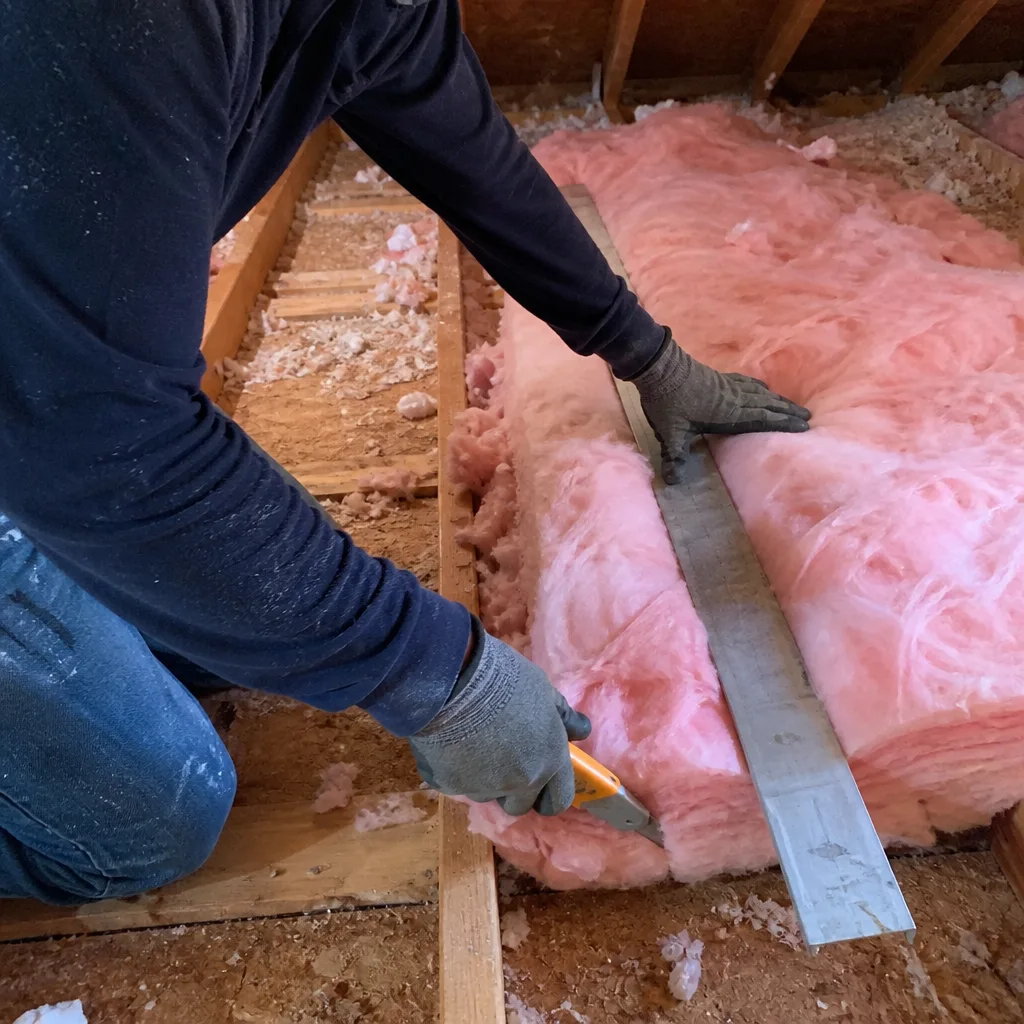
- Uneven temperature distribution between rooms. When open-cell Icynene shrinks or pulls away from rafter bays - common in attics that reached 140°F repeatedly during La Puente’s September heat waves - conditioned air escapes through the gaps and the bedroom above the garage becomes the hottest room in the house. We find this most often in homes south of Amar Road where roof color is dark and ventilation is limited to gable vents with no ridge exhaust.
- Visible powder or dust settling on attic floor joists. Degraded Icynene breaks down into a friable dust when the blowing agent off-gasses incompletely or when the foam was installed over a damp substrate; this is not normal settled dust but deteriorated foam cell structure, and it indicates the material has lost its adhesive bond and its R-value. In La Puente’s dry-summer climate, this typically appears 12-15 years after installation rather than the 20+ years the manufacturer projects.
- Musty odor entering through ceiling registers or light fixtures. Failed attic insulation no longer blocks humid exterior air from reaching conditioned space, and in La Puente’s winter inversion periods - December through February when overnight lows drop into the 40s - that temperature differential drives moisture through gaps that sealed foam once blocked. The smell is often the first symptom homeowners notice, especially in bathrooms with exhaust ducts that terminate in the attic rather than through the roof.
- Ice dam formation or water staining at eaves. Even in mild La Puente winters, insufficient insulation at the eave line creates a thermal bridge that melts any overnight frost; the water runs to the cold edge and refreezes, backing up under shingles. Icynene installed without proper baffles at the eaves - we see this constantly in 1970s ranch homes between Hacienda Boulevard and Temple Avenue - allows the foam to block soffit intake entirely while leaving the rafter bay under-insulated at the perimeter.
- PG&E bills rising 15% or more year-over-year with no rate increase. When insulation degrades, the HVAC system runs longer to maintain setpoint, and the signature is a bill that climbs in shoulder months - April, May, October - when the system should be cycling minimally. We have documented cases in La Puente where blower-door readings climbed from 2,100 CFM50 to 3,800 CFM50 solely due to failed attic foam that left top plates effectively unsealed.
Replacement Cost & What’s Included
Most Icynene attic insulation replacements in La Puente run $2,800 to $5,400 for homes between 1,200 and 2,400 square feet of attic floor, with the lower end representing open-cell foam over a clean substrate and the upper end requiring full removal of degraded material plus air-sealing remediation. The price includes removal and lawful disposal of existing foam, blower-door-guided air sealing of all top plates and penetrations, installation of baffles at every eave bay, and the new foam application to achieve R-38 minimum per current Title 24 standards. We do not quote per-board-foot; our written price covers the complete scope, including the post-installation blower-door test and the Documented Photo Record showing before-and-after conditions at each penetration.
What drives the range: attic accessibility (scissor trusses add labor), existing foam condition (friable material requires HEPA containment), and whether the roof deck shows moisture staining that must be addressed before new foam adheres. Every job carries our 365-Day Done Right Promise - if the blower-door number does not improve or if you find a missed penetration, we return and correct it. The Haven Standard applies: written scope, written price, written warranty before anyone starts.
DIY or Call Us?
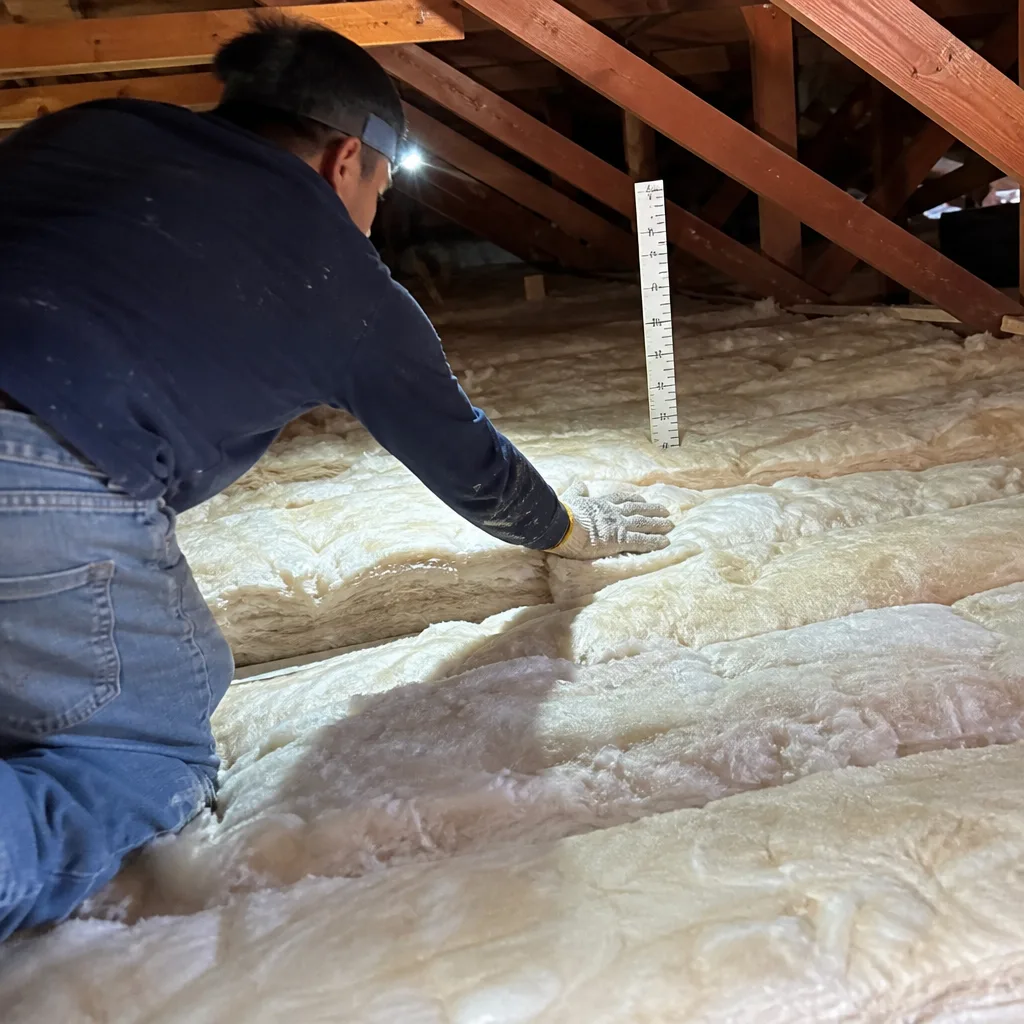
There is no safe DIY path for spray foam insulation installation. The two-component chemical reaction generates isocyanate vapors that require supplied-air respirators and full-body coverage; without professional ventilation control, these vapors linger in attic spaces and migrate downward through ceiling penetrations. Even “frosting” kits sold at building supply stores carry manufacturer warnings against residential self-application. What a homeowner can safely check: whether attic access is blocked by stored items, whether bath fans terminate at the roof or simply dump into the attic, and whether daylight is visible around the chimney chase or plumbing vent - all useful information to relay when you call.
Where DIY goes wrong is attempting to patch failed foam with canned gap filler, which has incompatible expansion rates and creates thermal bridges that accelerate condensation. Or adding blown fiberglass over degraded Icynene without addressing the air leaks underneath - burying the problem rather than fixing it. Seal the leaks first. The insulation is just the last layer, not the fix. For assessment and honest guidance on whether your attic needs full replacement or targeted remediation, call (626) 509-3237.
FAQs
Properly installed open-cell Icynene should perform 20-25 years, but in La Puente we see functional failure at 12-15 years when the original installation skipped air sealing or when attics repeatedly exceed 130°F due to inadequate ventilation. The foam itself does not disappear; it shrinks, cracks, or delaminates from the substrate, which is what our blower-door test identifies. Call (626) 509-3237 for a free assessment of your attic’s current condition.
Localized delamination can sometimes be cut out and re-foamed if the surrounding material tests solid and the substrate is dry, but this is the exception. Most failures we find in La Puente involve systemic shrinkage across multiple rafter bays, or the original foam was installed over an unsealed attic floor - meaning the thermal bypasses were never addressed. Patching degraded foam without correcting the air leaks is not a repair; it is a delay. We will show you the blower-door numbers and let you decide.
Most residential attic replacements in La Puente are completed in two days: Day one for removal, HEPA cleanup, and air sealing; day two for foam application and cure time. The home remains habitable - we isolate the attic hatch with plastic sheeting and run negative-air scrubbers during removal. You receive the post-job blower-door reading, depth log, and photo record before we leave. Same-day assessment is available at (626) 509-3237.
We carry Icynene-equivalent open-cell and closed-cell formulations matched to California Title 24 requirements, not branded Icynene product. Our material is sourced through Demilec and Johns Manville, meets the same ASTM E84 and CDPH emissions standards, and is mixed on-site from our rig for each job - foam cannot be “stocked” pre-cured. We are an independent service provider, not affiliated with Icynene. For same-day assessment and written pricing, call (626) 509-3237.
Written by Wes Okafor, Owner, Topside Attic Insulation La Puente at Topside Attic Insulation La Puente, serving La Puente and nearby areas.