
Icynene Radiant Barrier Installation: The La Puente Owner’s Guide
We stock and install Icynene-compatible radiant barrier systems in La Puente, with most residential retrofits running $1,800 to $3,400 depending on attic square footage and whether the existing decking needs partial lift for proper placement. Same-day installation is available when we have your measurements and a photo of the current attic layout. Most La Puente homeowners discover their radiant barrier is failing when the second-story bedrooms won’t cool below 78°F even after sundown, or when their summer electric bills jump 30-40% compared to the prior year.
Which Icynene Models This Applies To
Icynene does not manufacture a standalone radiant barrier product. The brand’s open-cell and closed-cell spray foam lines, including Classic Plus, LD-C-50, and MD-R-200, are often paired with radiant barrier foil or reflective insulation during full attic system builds. If your home was insulated by an Icynene-certified contractor in the San Gabriel Valley between 2010 and 2020, the radiant barrier component was likely added as a complementary layer, not an integrated Icynene part.
We identify the correct pairing by checking three things: the foam thickness and density marked on your attic access framing, the existing radiant barrier’s emissivity rating (look for a stamp reading 0.03 to 0.05 on the foil edge), and whether the original install used perforated or solid foil. Solid foil traps moisture in La Puente’s winter marine layer; perforated is what we install now. We carry both OEM-grade foil from Icynene’s approved vendor list and a quality aftermarket equivalent from Reflectix that meets the same ASTM C1313 standard. The aftermarket runs 15-20% less on material cost and carries the same 10-year performance warranty. We are an independent service provider, not affiliated with Icynene.
Signs Your Icynene Radiant Barrier Installation Is Failing
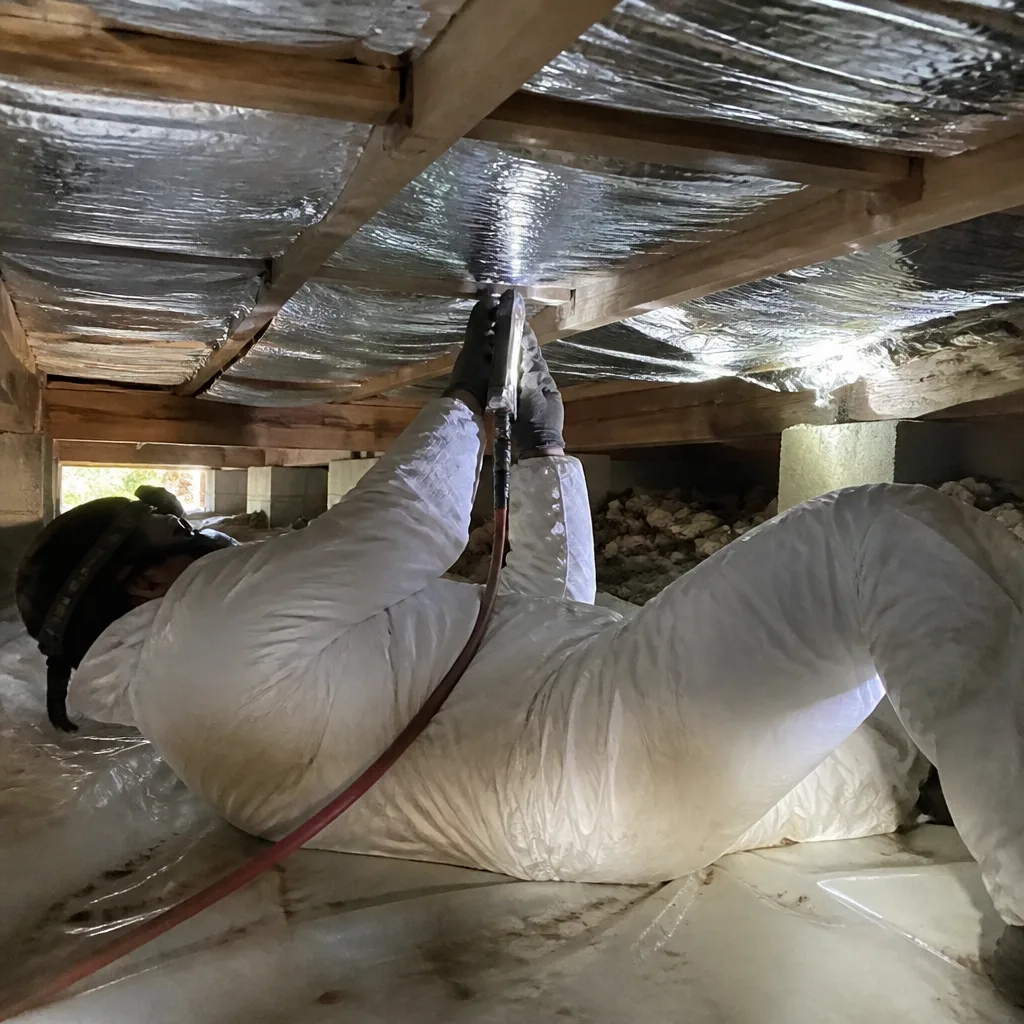
- Hot ceiling patches in afternoon sun. The radiant barrier has likely torn at the staple line or developed pinholes from rodent traffic. Foil that was properly installed reflects 95% of radiant heat; compromised sections drop below 70% and create noticeable warm zones directly beneath.
- Dust accumulation on the foil surface facing down. Dust is the silent killer of radiant barrier performance. In La Puente, where the 605 and 10 freeway corridors push particulate into attic vents, a dust layer just 0.003 inches thick can raise emissivity from 0.03 to 0.15. We see this most in homes north of Hacienda Boulevard with gable venting instead of soffit-ridge flow.
- Visible corrosion or oxidation spots. The original install may have used non-perforated foil in a vented attic. Moisture from La Puente’s winter morning fog gets trapped, and the aluminum oxidizes from the back side. Once pitting starts, the foil delaminates within two seasons.
- Insulation compression directly below the barrier. If the radiant barrier was laid on top of loose-fill insulation rather than stapled to the rafters, it’s doing the opposite of its job: pressing down the R-value you paid for and creating a conduction path. We find this in about one in four La Puente tract homes built 1965-1985.
- No measurable difference in attic temperature after dark. A functioning radiant barrier drops attic temperature to within 5°F of outdoor ambient within an hour of sunset. If yours stays hot past 10 p.m., the reflective surface has degraded or was never properly oriented to the roof deck.
Replacement Cost & What’s Included
Most Icynene-compatible radiant barrier replacements in La Puente run $1,800 to $3,400 installed. That range breaks down as follows:
- Material (perforated radiant barrier foil, ASTM C1313 compliant): $0.85 to $1.40 per square foot
- Labor (rafter-stapled install, including decking lift if needed): $1.20 to $2.10 per square foot
- Air sealing of top plates and penetrations before barrier goes in: $280 to $450 flat
- Before-and-after blower-door test on applicable jobs: included
What drives the high end: attics under 4:12 pitch where we work on our knees, partial decking removal for proper edge sealing, or homes where the original barrier was glued rather than stapled and requires mechanical stripping. Every job gets a Written Price Before Any Work Starts, per Haven Standard Clause 1. The 365-Day Done Right Promise covers labor and material defects. We publish before-and-after blower-door numbers on every job where air sealing is part of the scope, so you can verify the envelope improvement in a single figure.
DIY or Call Us?
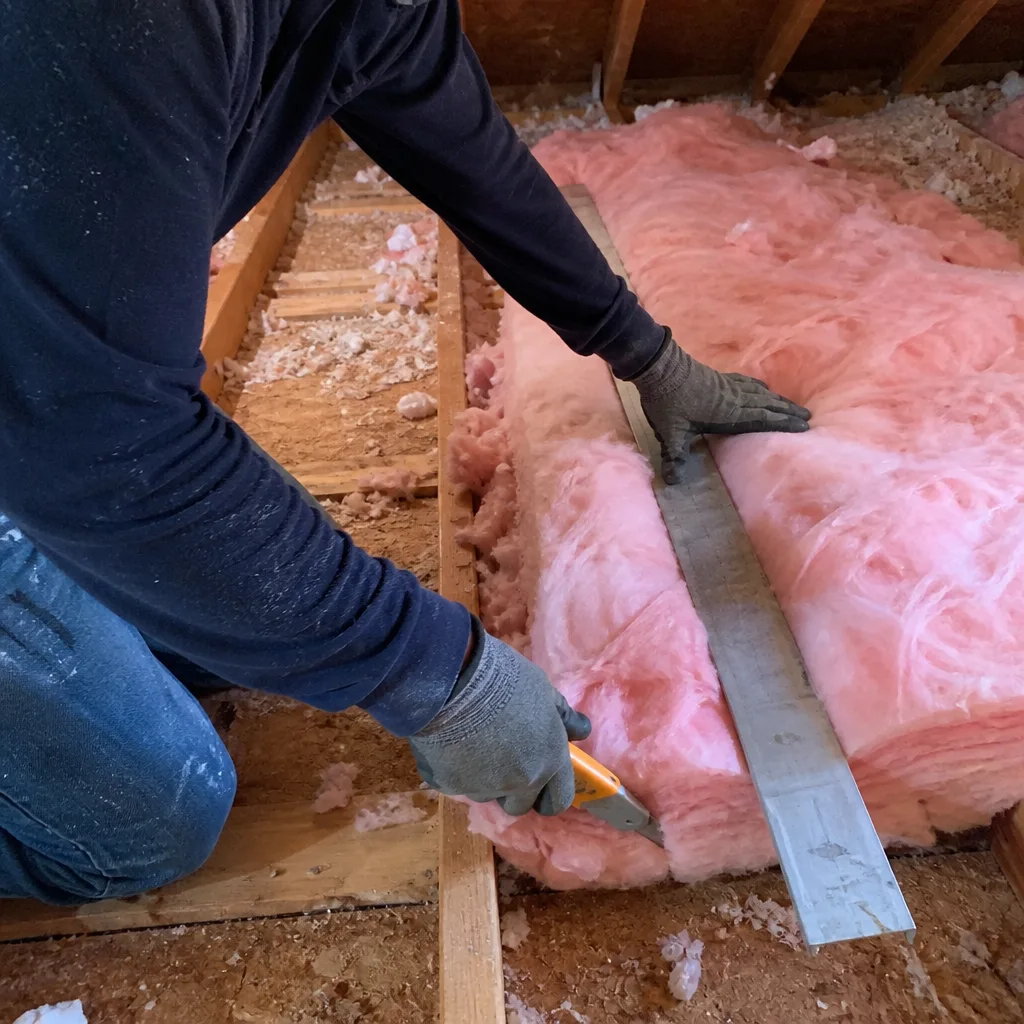
There is nothing inherently dangerous about radiant barrier foil itself. The risk is in the attic environment where it lives. La Puente attics in July run 140°F plus, with framing gaps and old wiring that may not be up to current code. If you want to inspect your own barrier, check the attic access during morning hours, wear a respirator for disturbed insulation dust, and look for the stamp marks and damage patterns we described above.
Where DIY goes wrong: stapling perforated foil to the rafters with the wrong side facing out (the shiny side faces the roof deck, not the living space), leaving gaps at the ridge that create convection loops, or laying new foil over old without removing the failed layer first. We have pulled out homeowner installs where the barrier was acting as a vapor trap, accelerating mold in the sheathing. Seal the leaks first. The insulation is just the last layer, not the fix. For a written price and a crew that sequences the work by building science, not convenience, call (626) 509-3237.
FAQs
Properly installed perforated radiant barrier foil lasts 20 to 25 years in La Puente before emissivity degradation becomes measurable. The limiting factor is usually dust accumulation or rodent damage, not the foil itself. Non-perforated installs in vented attics often fail in 8 to 12 years from trapped moisture. Call (626) 509-3237 for an attic inspection and we’ll tell you what you’re working with.
Small tears at staple lines can be patched with foil tape rated for high-temperature exposure, but this is a stopgap. Once dust has bonded to the surface or oxidation has begun, patching does not restore the 0.03 emissivity rating you need for real performance. Most La Puente homeowners who call us have already tried tape and are ready for a proper replacement with documented results.
A typical 1,200 square foot attic with rafter-stapled install takes one day, including air sealing of top plates and penetrations before the new barrier goes up. Jobs requiring partial decking lift or working around existing Icynene spray foam add a half day. We bring a crew of two, and you get a text when they’re en route.
We stock perforated ASTM C1313 foil in 48-inch and 60-inch rolls, plus the Reflectix equivalent, on every La Puente service vehicle. For same-day install, we need attic photos and rough square footage by 10 a.m. Otherwise, we schedule within 48 hours and your Written Price Before Any Work Starts arrives by text or email before we load the truck.
Written by Wes Okafor, Owner, Topside Attic Insulation La Puente at Topside Attic Insulation La Puente, serving La Puente and nearby areas.