
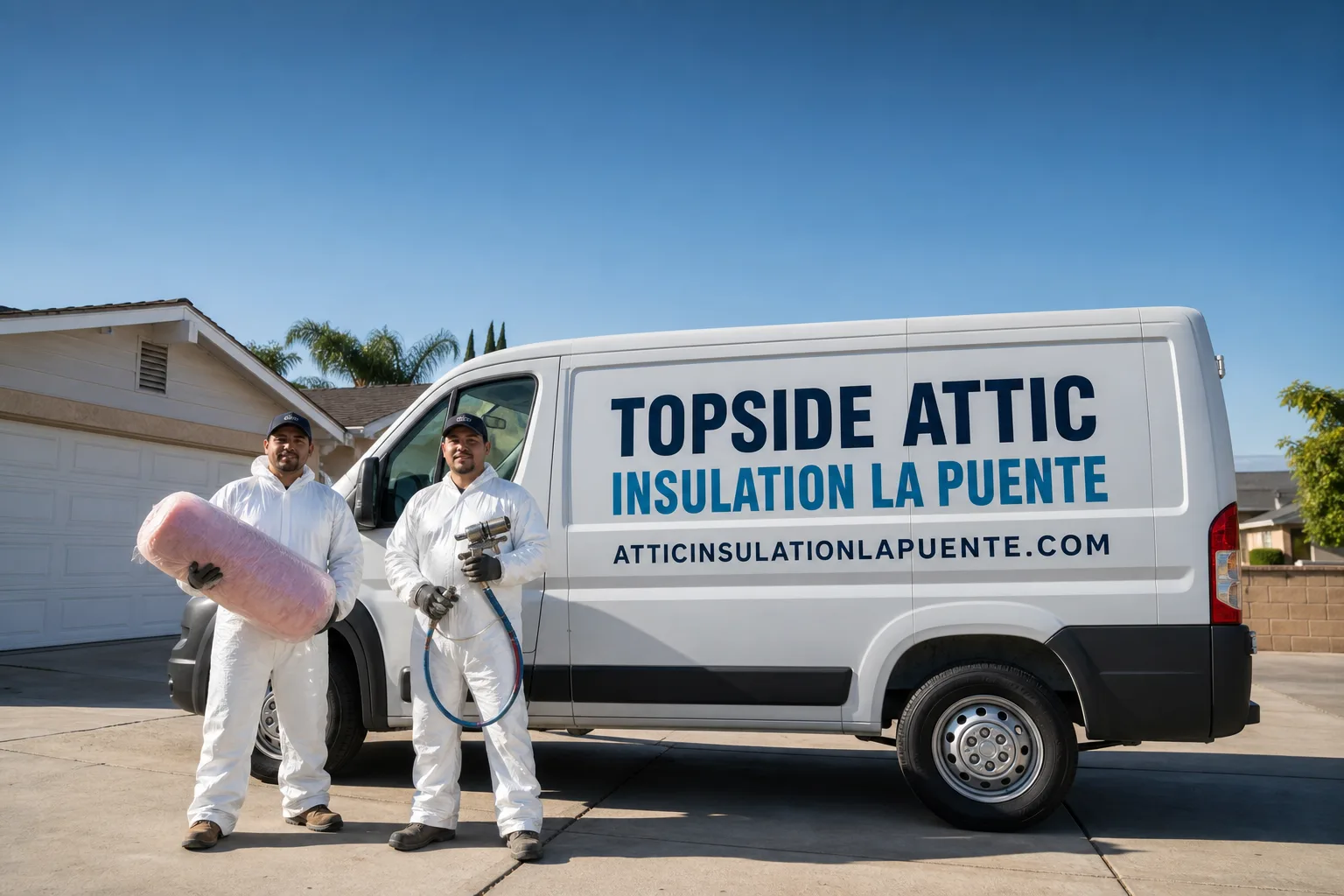
How Much Does Insulation Removal & Replacement Cost in La Puente?
Our Insulation Removal & Replacement services in La Puente, CA typically run between $1,800 and $4,500 for a standard single-story home with an attic footprint of 1,000 to 1,800 square feet. Most jobs in this market land around $2,400 to $3,200 when you factor in vacuum removal of degraded batt or blown-in material, attic air sealing, and a fresh layer of blown cellulose or fiberglass to current California Title 24 standards (R-38 minimum for this climate zone). Under Haven Standard Clause 1, you get a written price before anyone touches a tool – no surprises at invoice time.
Insulation Removal & Replacement Cost Breakdown (2026)
These ranges reflect what Envelope Insulation Co. actually quotes on jobs in La Puente and the surrounding San Gabriel Valley. Prices shift based on attic square footage, contamination level, current R-value, and whether air sealing is needed before insulation goes back in – and it almost always is.
| Scope of Work | Typical Cost Range (La Puente, 2026) |
|---|---|
| Insulation removal only (vacuum, bag, haul) – per sq ft | $1.20 – $2.00/sq ft |
| Insulation removal – 1,000 sq ft attic | $1,200 – $2,000 |
| Insulation removal – 1,500 sq ft attic | $1,800 – $3,000 |
| Insulation removal – 2,000 sq ft attic | $2,400 – $4,000 |
| Attic air sealing (top plates, can lights, penetrations) | $400 – $900 |
| Blown-in cellulose reinstallation to R-38 | $0.70 – $1.10/sq ft |
| Blown-in fiberglass reinstallation to R-38 | $0.80 – $1.25/sq ft |
| Full removal + air seal + reinstall – 1,000 sq ft attic | $1,800 – $2,800 |
| Full removal + air seal + reinstall – 1,500 sq ft attic | $2,600 – $3,800 |
| Full removal + air seal + reinstall – 2,000 sq ft attic | $3,400 – $5,200 |
| Rodent dropping remediation + sanitizing (if needed) | $300 – $700 (added to removal cost) |
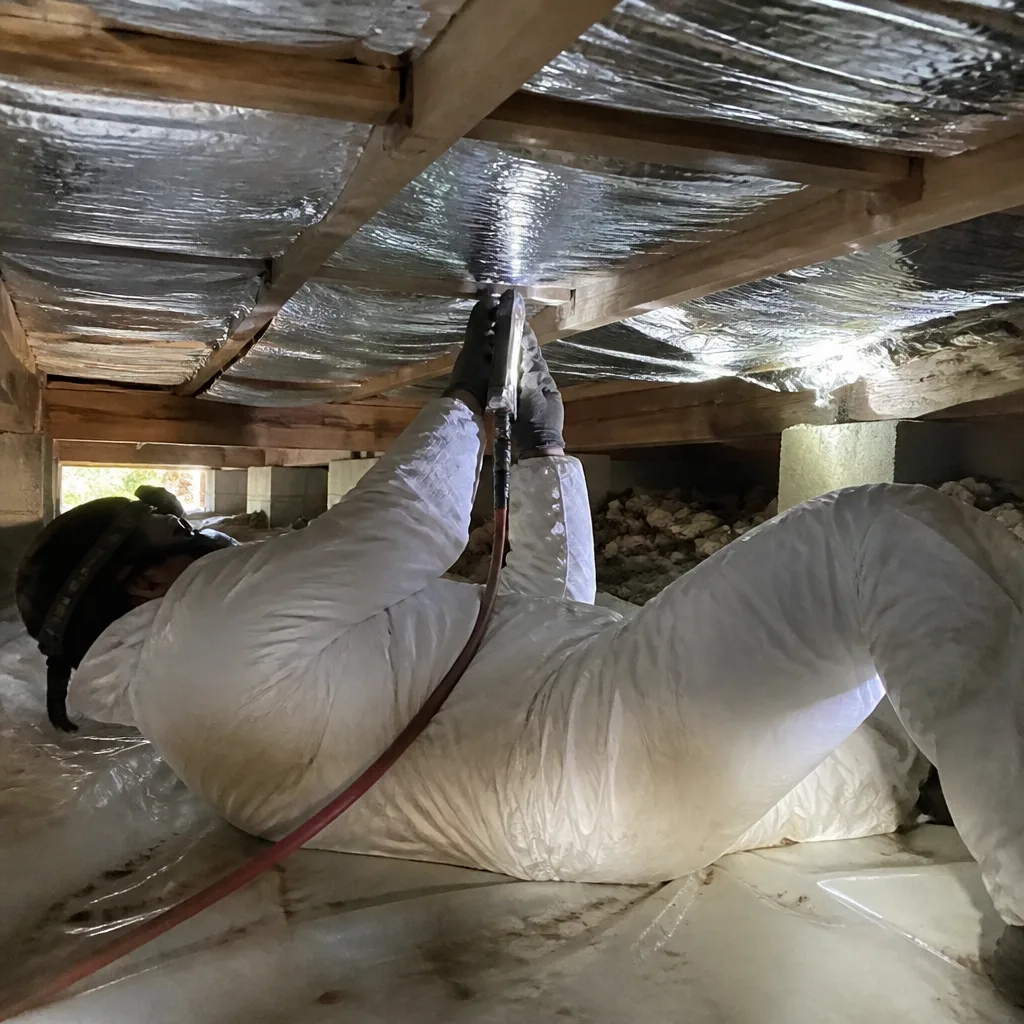
| Radiant barrier installation (foil, stapled to rafters) | $600 – $1,200 (add-on) |
The biggest cost variable is contamination. An attic that holds clean, degraded fiberglass takes a crew a few hours to vacuum out. An attic with active or past rodent infestation – something we see often in La Puente’s older ranch-style homes near Valinda and in the corridors between Hacienda Boulevard and Sunset Avenue – requires full sanitization before new material goes in, which adds time and materials. We document every condition with photographs before removal starts, so you know exactly what we found and why the scope is what it is.
Air sealing is never optional at Envelope Insulation Co. Before any new insulation goes onto that attic floor, we seal top plates, penetrations, can lights, and any bypasses with fire-rated caulk or spray foam. That work typically costs $400 to $900 on its own, but skipping it and blowing insulation over open bypasses is the single most common reason an attic re-insulation job fails to lower energy bills. The before-and-after blower-door reading we provide on applicable jobs – a pressurization test that shows, in one number, how much conditioned air your home was losing before and after sealing – gives you documented proof that the air sealing actually worked. Most crews skip this step entirely and it shows in the follow-up energy bills.
What Affects Insulation Removal & Replacement Pricing in La Puente
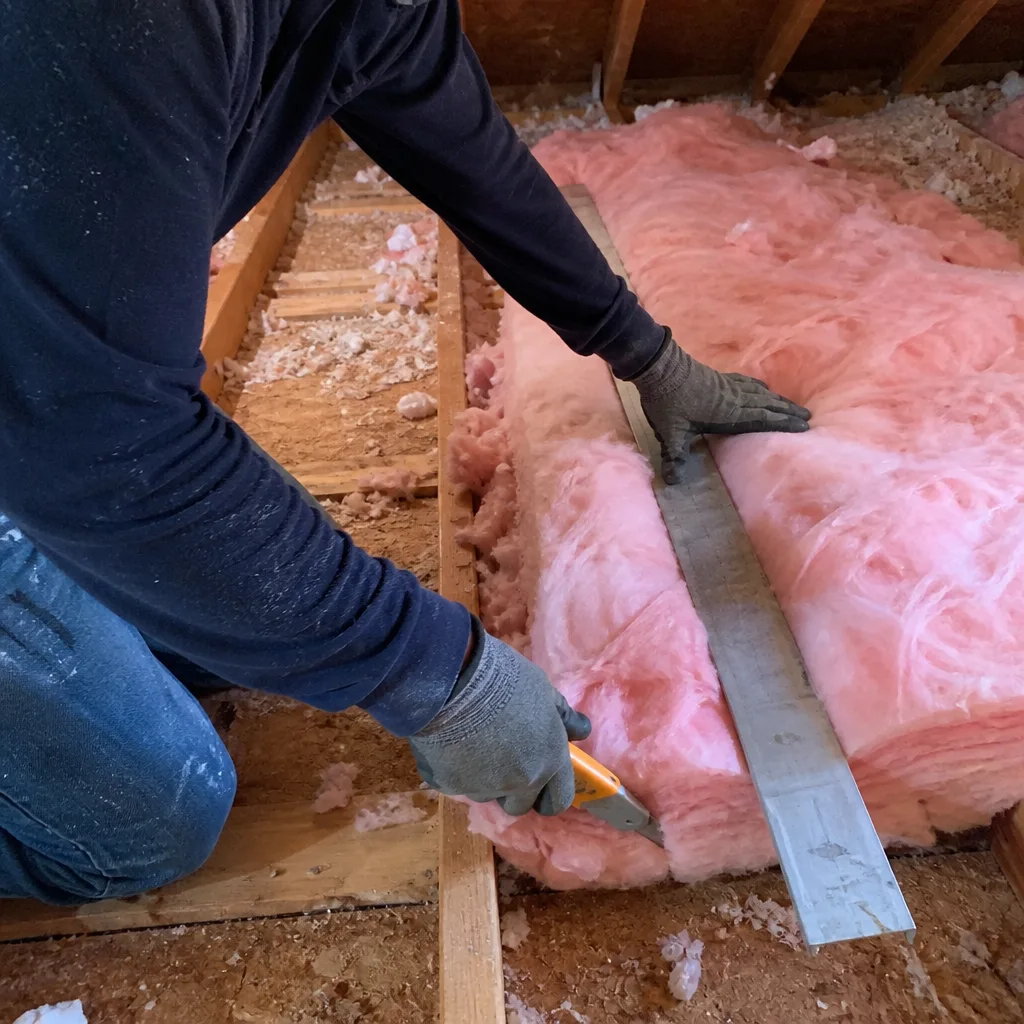
- Attic square footage and access. Larger attics cost more because vacuum removal is priced by area. La Puente has a mix of post-war 1,000 sq ft tract homes and larger 1960s-1970s builds in the 1,600-2,000 sq ft range. Tighter access hatches, low-pitch rooflines, or HVAC equipment sitting in the attic floor all slow the crew down and add to labor time.
- Type and depth of existing insulation. Old blown-in cellulose compacts over decades and can pack down to half its original depth. Batt fiberglass that has been compressed by foot traffic or wet from a roof leak is heavier per square foot to remove. Both conditions increase vacuum and bag counts, which adds cost.
- Rodent or pest contamination. This is a significant factor in La Puente specifically. Homes in the older sections near Temple Street and east toward Industry see higher rates of rodent activity in attic spaces. Contaminated insulation must be bagged and disposed of as bio-waste, and the attic shell needs an enzyme-based sanitizing treatment before new insulation is installed. Budget an extra $300 to $700 if we find evidence of infestation.
- Moisture damage. La Puente sits in the San Gabriel Valley, where summer temperatures regularly hit 95°F to 105°F and roof condensation issues are common in homes with inadequate soffit-to-ridge ventilation. Wet insulation loses R-value fast, and if it has been wet long enough to grow mold, the remediation scope expands. We photograph moisture staining and flag it in the written scope before quoting.
- Target R-value for reinstallation. California’s Title 24 energy code requires R-38 minimum in Climate Zone 10, which covers La Puente. Some homeowners opt to go to R-49 or R-60 for better summer cooling performance – a smart move given San Gabriel Valley heat load. Each additional R-level adds material cost, but the marginal price per R-unit drops as you scale up.
- Air sealing complexity. A 1970s La Puente ranch with original recessed can lights poking through the attic floor and no top-plate blocking is going to require more air sealing labor than a newer build with sealed fixtures. We count every penetration during the assessment and include the air sealing line item in the written price before work starts.
La Puente Climate and Why It Makes Proper Insulation More Critical Here
La Puente sits roughly 20 miles east of downtown Los Angeles at an elevation around 400 feet, in the inland portion of the San Gabriel Valley. That geography matters for insulation performance. The valley traps heat. Summer afternoon temperatures in La Puente regularly run 8 to 12 degrees hotter than coastal Los Angeles, and the lack of marine cooling means attic temperatures can hit 140°F to 160°F on a 100°F afternoon. When the insulation sitting on your attic floor is compressed, contaminated, or has half the R-value it once had, that heat load transfers directly into your living space.
In the neighborhoods around Puente Hills Mall, along Francisquito Avenue, and in the older residential corridors near Workman Avenue, we regularly find attics with blown-in insulation that has settled to an R-10 or R-12 after 30 or 40 years – well below the R-38 California now requires. Homes in those conditions are cooling systems working against physics. A full removal and reinstall with proper air sealing changes the math substantially. On jobs where we run the blower-door before and after, it is common to see air leakage figures cut in half, which translates directly to the HVAC running fewer hours per day.
Winter matters too. La Puente nights in December and January can drop into the mid-30s, and a poorly insulated attic drives up gas heating costs just as it drives up summer cooling bills. The performance problem is year-round, even if the summer pain is what usually prompts the call.
How to Save on Insulation Removal & Replacement
There are practical ways to keep the total cost reasonable without cutting corners on the work that actually matters.
- Get a written itemized quote, not a per-job lump number. A quote that lists removal cost, disposal, air sealing, and reinstallation separately lets you compare bids accurately. If a competing quote gives you one number with no breakdown, ask them to itemize it. We include line items in every written price we deliver – Haven Standard Clause 1 requires it.
- Ask about California rebates and utility incentives. SoCalGas and Southern California Edison both run rebate programs tied to insulation upgrades, and some La Puente homeowners qualify for the California Energy Commission’s programs depending on household income. The rebate amounts change year to year, but they can offset $200 to $600 of the total project cost. Ask us to check eligibility during your estimate.
- Combine scope where possible. If you need insulation removal and you have been thinking about a radiant barrier, scheduling both at once reduces the total labor charge compared to two separate mobilizations. Same logic applies to attic cleaning and rodent proofing – one crew visit is cheaper than two.
- Don’t skip air sealing to reduce the quote. This is the most expensive mistake we see. Air sealing adds $400 to $900 to the job. Skipping it saves that amount upfront and costs it back in higher utility bills within two or three cooling seasons. The blower-door numbers we publish on applicable jobs make this easy to verify – homes sealed and insulated correctly perform measurably better than homes that just got new insulation blown over old bypasses.
- Use the Free Second Opinion. If you already have a written estimate from another contractor, bring it to us. We will read through it with you – line by line – and tell you what is included, what is missing, and how the price compares to what we would charge for the same scope. There is no charge for this, and no pressure to book with us afterward.
To get a written price for your specific attic, call (626) 509-3237. We will schedule a site assessment, measure the attic, document current conditions with photographs, and deliver a flat written price before any work is discussed further.
What the Removal and Reinstallation Process Actually Looks Like
Most homeowners have not watched insulation removal happen before, so here is what the job looks like from assessment to finished attic.
Step 1: Assessment and Written Price
Wes Okafor or a trained Envelope Insulation Co. technician accesses the attic, measures the footprint, checks current R-value with a depth probe, photographs any contamination, moisture staining, or air bypass locations, and notes every can light and major penetration. That information goes into a written scope with a flat price. Nothing starts until the written price is signed.
Step 2: Preparation
The crew lays protective runners from the access hatch to the exterior and sets up commercial-grade vacuum equipment – typically a truck-mounted or trailer-mounted unit with a flexible hose run from the truck into the attic. HVAC registers in the home are covered to prevent dust migration.
Step 3: Vacuum Removal and Bagging
Old insulation is vacuumed into large bags, loaded, and hauled away for disposal. If rodent dropping contamination is present, the crew wears appropriate respiratory protection and the material is treated as bio-waste. This phase typically takes two to four hours on a standard La Puente attic.
Step 4: Sanitizing (If Needed)
If contamination is present, the attic deck and framing get an enzyme-based sanitizing treatment after removal. We document the pre- and post-sanitizing condition with photographs.
Step 5: Air Sealing – Always Before Insulation
This is the step that separates a genuine insulation job from one that looks the same but performs differently. Every top plate, can light, electrical penetration, plumbing stack, and attic hatch gets sealed with fire-rated caulk or closed-cell spray foam before any insulation material is loaded into the blower machine. On applicable jobs, a blower-door test – a pressurization measurement in cubic feet per minute at 50 pascals (CFM50) – is run before and after sealing so the air-tightness improvement is documented in a single number you can verify.
Step 6: Reinstallation
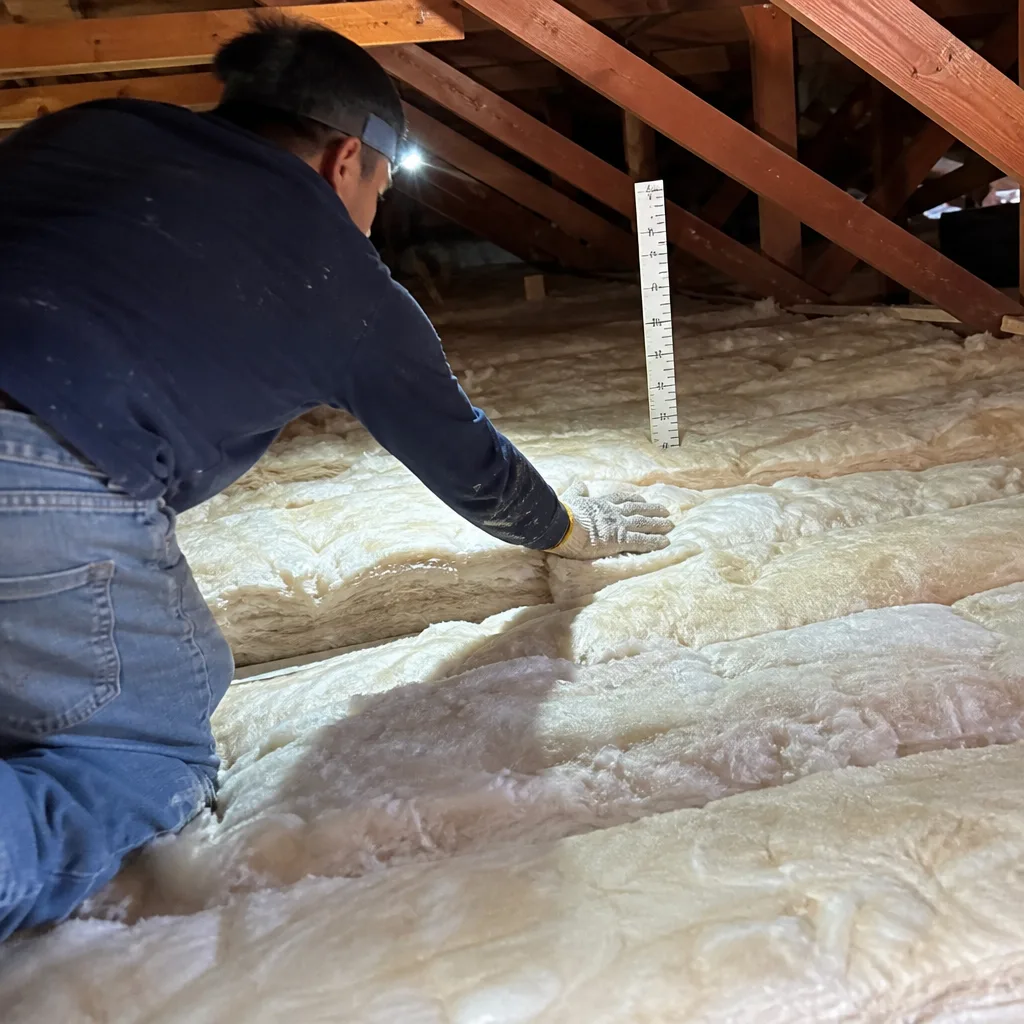
New material – cellulose, fiberglass, or mineral wool depending on what was specified in the written scope – is blown in to the target depth for R-38 or higher. Depth rulers are stapled to the framing so you can verify depth with a tape measure after we leave. The job closes with a Documented Photo Record of the finished attic delivered to you before the crew leaves the driveway.
Materials We Use in La Puente Attics
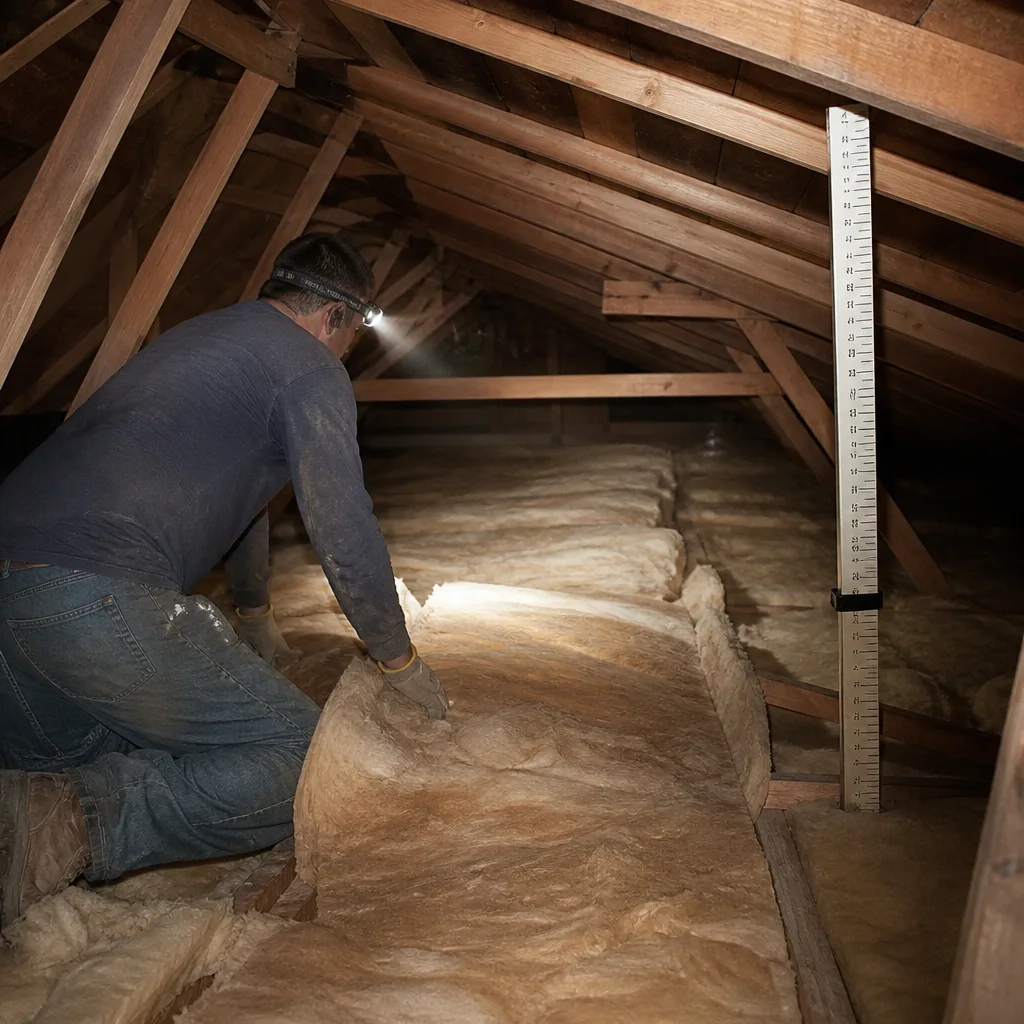
We source from Owens Corning, Johns Manville, Knauf, Rockwool, CertainTeed, Icynene, Demilec, and GreenFiber – not because of any preferred vendor arrangement, but because these manufacturers produce material that meets California standards with third-party testing data we can show you. We don’t have a proprietary product line to push. If there is a reason a specific material is better for your attic – mineral wool for fire resistance in a space near a garage wall, for instance, or GreenFiber cellulose for its recycled content and density – we will say so and explain the tradeoff in the quote.
For most La Puente attics being converted from old degraded fiberglass, blown-in cellulose or blown-in fiberglass to R-38 is the practical and cost-effective choice. Spray foam has a role in specific situations – rim joists, difficult bypasses, or encapsulated attics where you want the thermal boundary at the roofline rather than the attic floor – but it is not the default answer, and we will tell you honestly when it is and is not the right call for your situation. If you want to explore what service line fits your home, the home page gives a full picture of what we cover.
Insulation Removal in La Puente vs. Nearby Cities: Is the Price Different?
La Puente pricing sits in the mid-range for the eastern San Gabriel Valley. Contractors working west toward El Monte or Rosemead often price slightly lower due to denser competition. Jobs in Diamond Bar, Walnut, or the Hacienda Heights zip codes adjacent to La Puente sometimes run slightly higher because of longer drives for material hauls. The differences are not dramatic – usually $100 to $300 on a full project – but they exist. What matters more than zip code is attic condition, contamination status, and whether air sealing is included or skipped to hit a lower headline number.
If you are comparing quotes across contractors, the right comparison is: same scope, same R-value target, same air sealing included. A quote without air sealing is not the same job, even if it is the same attic.
The Haven Standard: What You Get in Writing Before Work Starts
Every project at Envelope Insulation Co. runs under The Haven Standard, a documented set of operating commitments that Wes Okafor put into writing when the company launched in 2016. The ones that matter most for a removal and replacement job:
- Written Price Before Any Work Starts (Always). Flat price, written scope, written warranty delivered before the crew touches anything. No verbal estimates that shift at invoice time.
- 365-Day Done Right Promise. If the work is not done right, we make it right. The promise is in writing, not in a conversation.
- Documented Photo Record on Every Visit. Before and after photographs of the attic, included on every job, not available on request.
- Before-and-After Blower-Door Numbers on Applicable Jobs. A pressurization reading – in CFM50 – before sealing and after, so you can see the air-tightness change in a documented number rather than taking our word for it.
- Free Second Opinion on Any Written Estimate. Bring us a competing quote. We read it with you.
- Live Person Answers, 24/7. No voicemail loops. A live person picks up when you call (626) 509-3237, any day, any hour.
For the full scope of what we do in La Puente, including the air-sealing-first methodology and what the Documented Photo Record actually contains, visit our Insulation Removal & Replacement in La Puente service page.
FAQs – Insulation Removal & Replacement Cost in La Puente
How much does insulation removal cost in La Puente, CA in 2026?
Insulation removal in La Puente runs $1.20 to $2.00 per square foot for the vacuum, bag, and haul process, putting a typical 1,200 sq ft attic at $1,440 to $2,400 for removal alone. If the attic has rodent contamination, add $300 to $700 for bio-safe disposal and enzyme sanitizing. Call (626) 509-3237 for a site-specific written price – the assessment is free and you get a flat number before any work is scheduled.
How much does full insulation replacement cost in La Puente?
A complete removal, air sealing, and reinstallation to California’s R-38 requirement typically costs $2,600 to $3,800 for a 1,500 sq ft attic in La Puente. Larger attics in the 2,000 sq ft range run $3,400 to $5,200. The air sealing component – $400 to $900 depending on bypass count – is included in these figures because we don’t install new insulation over an unsealed attic floor. Call (626) 509-3237 for a written line-item quote.
Is it worth replacing old insulation in a La Puente home?
For most La Puente homes built before 1990, yes – the economics are clear. Old blown-in insulation settles from R-19 to R-10 or lower over 30 to 40 years, and attic temperatures here regularly hit 140°F to 160°F in summer. A home losing conditioned air through a poorly insulated, unsealed attic is paying for that loss in cooling and heating bills year-round. On jobs where we run a blower-door before and after air sealing, it is typical to see CFM50 readings cut by 40 to 60 percent, which translates directly to HVAC runtime reduction. Whether that math works for your specific home depends on your current R-value, your utility bills, and your attic’s condition – all of which we document in writing before quoting.
How long does insulation removal and replacement take in a typical La Puente attic?
Most jobs on a 1,000 to 1,500 sq ft La Puente attic are completed in one day – typically six to eight hours for a crew of two or three. Larger attics, significant contamination, or complex air sealing work can push a job to day and a half. The written scope you receive before work starts will include a time estimate so you know what to expect before the crew arrives.
Does insulation replacement require a permit in La Puente?
In most cases, adding or replacing insulation in an existing attic in La Puente does not require a building permit, though it must meet California Title 24 R-38 minimum for Climate Zone 10. If the project includes work that modifies structural elements or HVAC systems, permit requirements change. We flag any permit questions in the written scope before work starts so there are no compliance surprises after the job is done.
Key Takeaways
- Insulation removal in La Puente runs $1.20 to $2.00 per square foot; a full removal, air sealing, and reinstallation project for a typical home runs $2,600 to $3,800 for a 1,500 sq ft attic.
- Rodent contamination, moisture damage, and access difficulty are the main cost variables specific to La Puente’s older housing stock.
- California Title 24 requires R-38 minimum in Climate Zone 10 (La Puente) – any reinstallation that doesn’t hit that target is out of code compliance.
- Air sealing before reinstallation is not optional here – it is the step that determines whether the new insulation actually performs, and we document it with blower-door numbers on applicable jobs.
- Under Haven Standard Clause 1, you receive a written flat price, written scope, and written warranty before anyone starts work – no verbal estimates that change at invoice.
- The 365-Day Done Right Promise applies to every completed job, and a live person answers (626) 509-3237 any time you call.
Ready for a Written Price? Here’s How to Get One.
If your La Puente home has insulation that is more than 15 years old, if you have seen evidence of rodents in the attic, or if your summer cooling bills have been climbing without explanation, a written assessment is the right first step. Wes Okafor and the team at Envelope Insulation Co. will come to your home, measure and photograph the attic, check the current R-value, flag any contamination or air sealing needs, and hand you a flat written price before anything else happens.
There is no charge for the estimate. If you already have a quote from another contractor, bring it – we will read through it with you under our Free Second Opinion offer and explain exactly what you are comparing.
Call (626) 509-3237 to schedule your free written estimate. A live person picks up every call.
Written by Wes Okafor, Owner at Envelope Insulation Co. (operating as Topside Attic Insulation La Puente), serving La Puente, CA since 2016. Pricing reflects the La Puente market as of 2026. Topside Attic Insulation La Puente offers free estimates – call (626) 509-3237.
What Our Customers Say
"They air-sealed the attic floor before insulating and showed me the blower-door number before and after. The upstairs is finally the same temperature as downstairs."
- Marisol D."Crawl space encapsulation done properly. Photographs of the vapour barrier at every seam, and the damp smell in the hallway is gone."
- Ainsley P."They photographed rodent damage in the old insulation that we had no idea about, and priced the exclusion work separately so we could decide."
- Harriet N.