
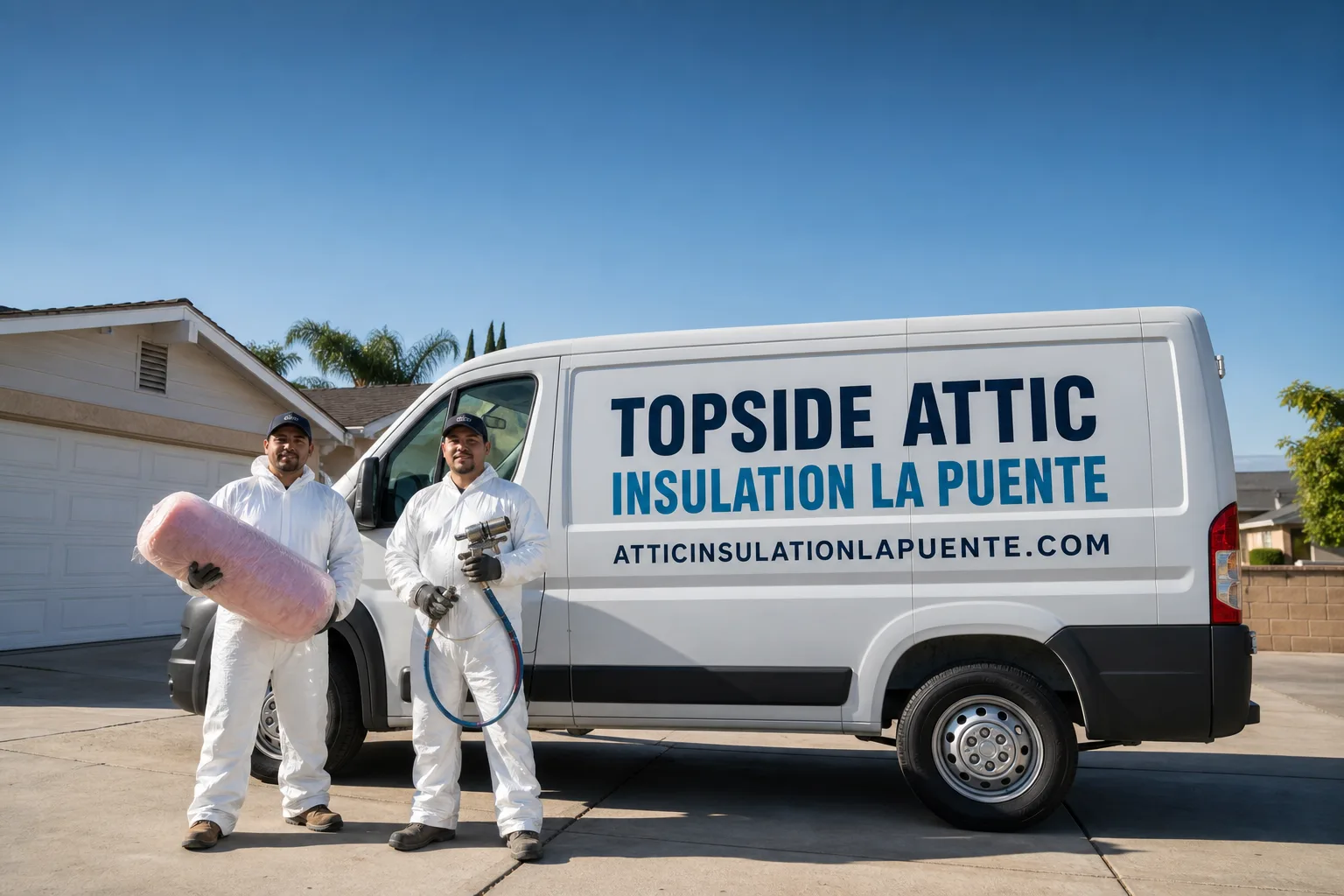
Fast, Reliable Blown-In Insulation Across El Monte
Blown-in insulation in El Monte typically runs $1,800-$4,500 for a standard single-story attic, with most jobs completed in one day and same-day estimates available. We dispatch crews daily to El Monte from our Los Angeles office, and the drive down the 10 or surface streets through Baldwin Park puts us at most El Monte homes within 45 minutes of dispatch. If your attic reads 150°F in August or your west-facing bedrooms won’t cool below 80°F until 10 p.m., the problem is almost always inadequate insulation in a house built before modern Title 24 standards applied. Call (626) 509-3237 for a written price before any work starts - that’s Haven Standard Clause 1, no exceptions.
We know the specific housing stock here. The 1950s and 1960s stucco tracts between Tyler Avenue and Peck Road, the multigenerational homes with garage conversions off Ramona Boulevard, the tight alley-loaded lots where parking a blower truck requires coordination with neighbors. El Monte’s inland heat pocket - 15 to 20 degrees hotter than coastal LA on the same July afternoon - turns under-insulated attics into radiant ovens that reverse-drive heat through ceilings for six hours after sunset. Our Blown-In Insulation team treats that climate reality as the starting point, not an afterthought.
Why Topside Attic Insulation La Puente Is El Monte’s Preferred Blown-In Insulation Company
We’ve sealed and insulated over 9,000 homes since 2016, and a significant share of those have been in the San Gabriel Valley corridor that includes El Monte, Baldwin Park, and Rosemead. El Monte homeowners leave specific feedback about three things: the written price they received before anyone lifted a tool, the photo documentation they walked away with, and the blower-door numbers that proved the air sealing worked. We don’t ask you to trust a feeling. We hand you a folder with before-and-after pressurization readings - a single figure showing exactly how much conditioned air your home was losing before and after the crew finished.
Response time to El Monte averages under 45 minutes from dispatch to arrival for scheduled appointments, and our live-answered line operates 24/7 with no voicemail loops. The crew that arrives will be uniformed, background-checked, and named in a text sent when they’re en route - Haven Standard: Arrive on schedule, you get a named technician.
Our local knowledge runs deeper than zip-code targeting. We know which El Monte neighborhoods built between 1945 and 1970 are most likely to contain vermiculite in attic knee walls. We know the 2×4 wall cavities in those stucco tracts were almost never insulated originally. And we know that a garage conversion done without permits in the 1980s or 1990s probably has zero wall insulation and an unsealed top plate leaking attic air directly into the living space. That specificity matters because it changes what we test, what we quote, and what we deliver.
Our Blown-In Insulation Services in El Monte
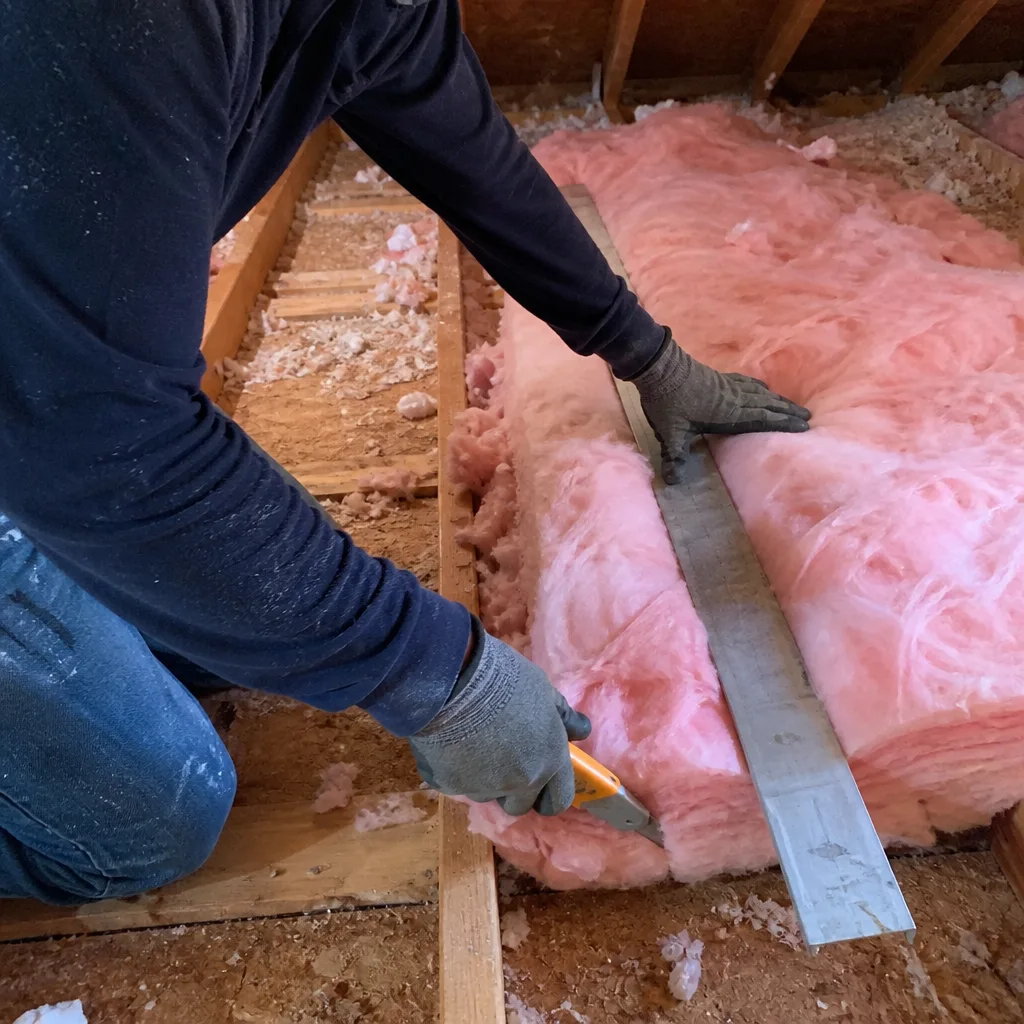
Blown-In Cellulose
We install GreenFiber cellulose - a treated, recycled-paper product - at densities that achieve R-3.8 per inch in open-blow attic applications and R-3.5 per inch in dense-pack wall cavities. In El Monte’s climate, cellulose performs well because it handles the extreme delta-T between 150°F attic air and 72°F conditioned space without the settling issues that plagued older formulations. On a 1958 stucco tract home off Tyler Avenue near Mountain View Park, our crew found R-11 attic coverage and vermiculite packed around the flue chase; we arranged asbestos testing, then removed and bagged the suspect material before dense-packing the 2×4 wall cavities with GreenFiber cellulose and topping the attic to R-38 with Owens Corning blown-in fiberglass. The homeowner’s west-facing bedrooms dropped noticeably in afternoon heat, and the alley-side garage conversion - uninsulated since the 1960s - was sealed and blown last.
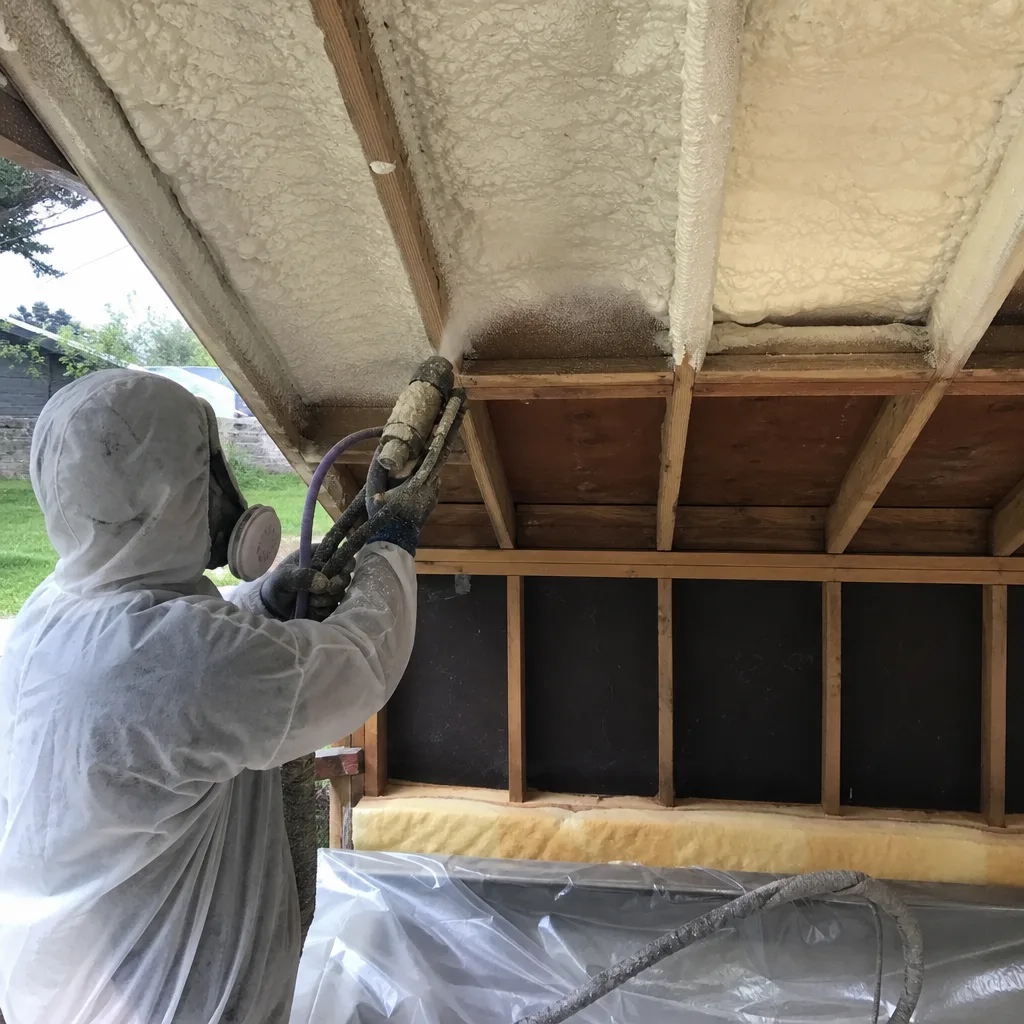
Blown-In Fiberglass
Owens Corning blown-in fiberglass goes in at R-2.5 per inch for open-blow applications, and we typically specify it for attic top-ups where the existing insulation is clean and the primary goal is reaching R-38 or R-49 without excessive weight on older drywall ceilings. In El Monte’s single-story tracts with 2×4 ceiling joists and original R-11 batts, fiberglass blown over sealed top plates and sealed can-light penetrations is often the most cost-effective path to code-minimum performance. We never blow over unsealed air leaks - that’s not upsell, it’s prerequisite. The blower-door test proves it.
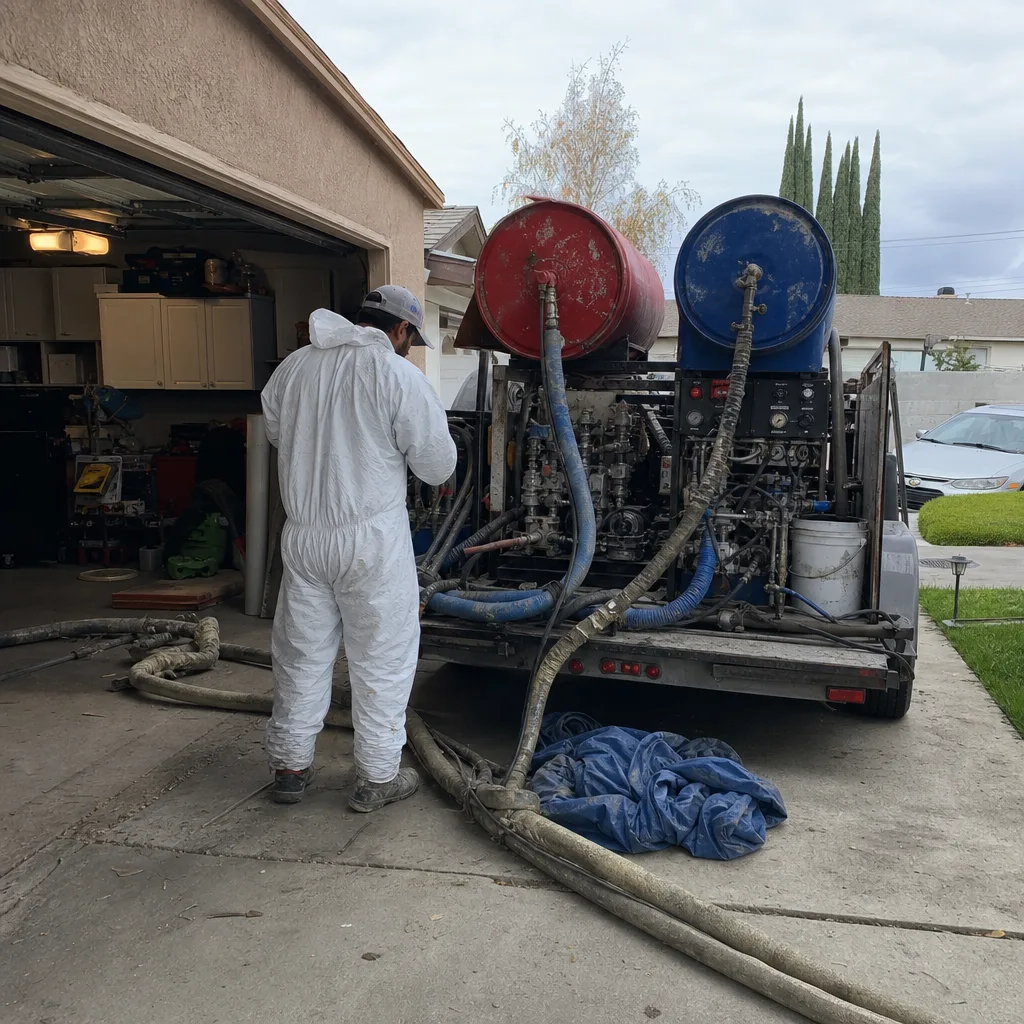
Dense-Pack Wall Insulation
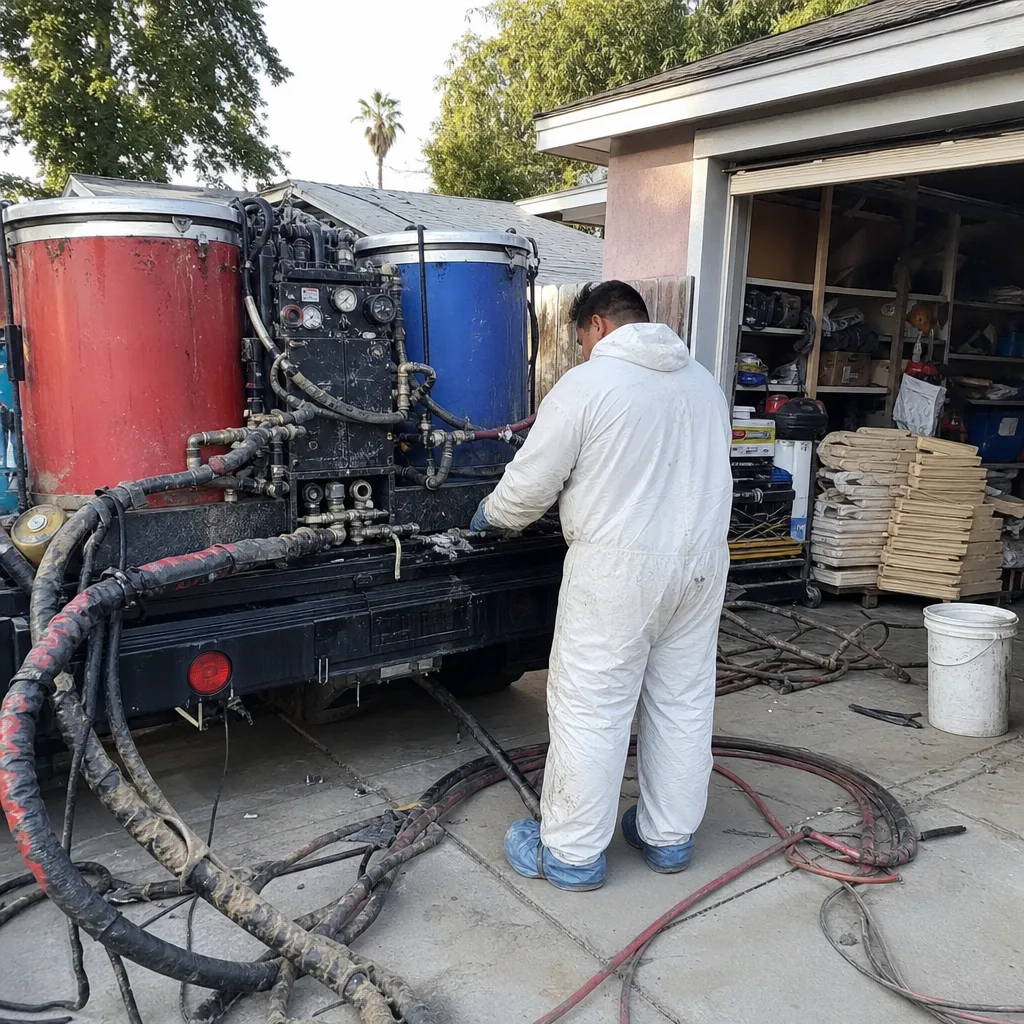
This is where we see the largest performance gaps in El Monte homes. Those 1950s and 1960s stucco tracts? Zero wall insulation in the 2×4 cavities. The garage conversions off Peck Road and Ramona Boulevard? Same problem, plus unsealed top plates where the new roofline meets the old. Dense-pack wall insulation - blowing cellulose or fiberglass at 3.5 pounds per cubic foot into enclosed cavities - fills those voids and dramatically reduces the thermal bypass that makes west-facing rooms uninhabitable in July. We drill access holes at stud-bay intervals, blow to density, patch with matching texture, and document every bay with photos. For El Monte’s housing stock, this is often a bigger comfort upgrade than doubling attic insulation.
Blown-In Top-Up
Not every El Monte home needs full removal and replacement. If your attic has R-19 or R-22 and no vermiculite contamination, a blown-in top-up to R-38 or R-49 is a same-day job with immediate impact. We test first - blower-door to find the leaks, visual inspection for suspect materials, infrared scan if the attic geometry allows - then seal, then blow. The top-up pays for itself fastest in El Monte’s climate because the cooling-load reduction is larger here than in coastal LA. A typical top-up in a 1,200-square-foot El Monte attic runs $1,800-$2,800, including air sealing of top plates and penetrations.
What happens when you call
- 1
A real person answersNo phone trees - you reach a local pro.
- 2
You get an upfront price rangeHonest numbers before anyone is dispatched.
- 3
A background-checked tech heads outLicensed & insured, dispatched right away.
- 4
You approve before work beginsNothing starts until you say go.
Trusted Brands We Service in El Monte
We source materials from Owens Corning, Johns Manville, Knauf, and Rockwool - no proprietary lock-in, no house-brand substitutions. For El Monte jobs, we stock Owens Corning blown-in fiberglass and GreenFiber cellulose at our Los Angeles warehouse, which means no supply-chain delays on standard attic work. If your home has specific compatibility requirements - say, a non-IC rated can light assembly that needs Rockwool batt surround before we blow over it - we specify that in the written scope, not discover it mid-job. You see the brand names and product specs in your quote before anyone schedules the work.
Common Blown-In Insulation Problems We See in El Monte Homes
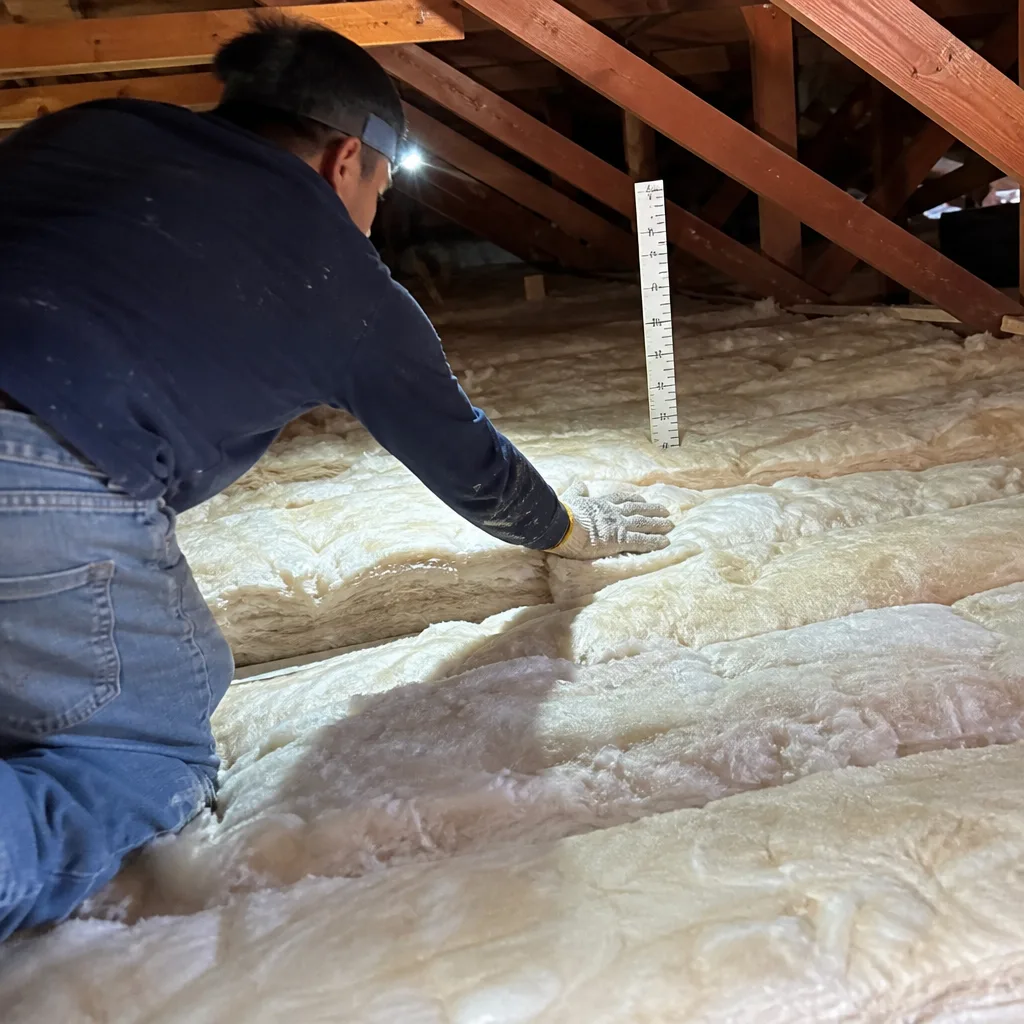
- Vermiculite in pre-1975 knee walls and flue chases. Contractors who skip testing blow new insulation directly over untested material, disturbing asbestos fibers and creating a compliance failure that can trigger abatement costs ten times the original insulation quote. We test first. Always.
- Compressed or displaced R-11 at low-clearance eaves. Single-story El Monte tracts have shallow roof pitches with tight eave runs where original batts were stuffed and forgotten. When attic temps hit 150°F, those perimeter edges become thermal highways. We remove, air-seal the top plate, and blow continuous coverage into those corners.
- Zero wall insulation in 2×4 stucco walls. Dense-pack jobs get skipped because they’re harder to quote and harder to execute, so the wall cavities stay the weak link even after a generous attic top-up. We measure whole-home performance with the blower door, and if the walls are the problem, we say so in the written scope.
- Unpermitted garage conversions with no insulation and unsealed top plates. These are common in El Monte’s multigenerational housing stock. The conversion looks finished but leaks attic air continuously. We find the thermal boundary, move it where it belongs, and document the change with before-and-after blower-door numbers.
Pricing for Blown-In Insulation in El Monte, CA
Here’s what blown-in insulation costs in El Monte’s market right now:
| Service | Typical Range | Most Common Job Size |
|---|---|---|
| Blown-in attic top-up (to R-38) | $1,800 - $2,800 | 1,000-1,400 sq ft attic |
| Full attic removal + replacement | $3,200 - $4,500 | With vermiculite abatement: add $800-$2,400 |
| Dense-pack wall insulation | $2,400 - $4,200 | 1,200 sq ft single-story, all exterior walls |
| Blown-in cellulose (attic, open blow) | $2,000 - $3,400 | R-38 in 1,200 sq ft attic with air sealing |
What moves the number: attic square footage, existing material condition, vermiculite testing requirements, accessibility (tight alleys and steep roofs take longer), and whether we’re air-sealing before blowing - which we always do, but which adds labor. Every quote is a flat written price with scope and warranty delivered before work starts. No “call for pricing.” No range that widens once we’re in the attic. And we offer a Free Second Opinion on any written estimate from another contractor - bring us their scope, we’ll read it with you.
Call (626) 509-3237 for a written estimate. Estimates are free, and most El Monte homes can be assessed and priced same-day.
We Also Serve Cities Near El Monte
Our crews work the full San Gabriel Valley corridor. If you’re in Temple City, Rosemead, Baldwin Park, or Whittier, the same response times, same materials, and same Haven Standard documentation apply. El Monte remains our deepest-concentration market for pre-1975 tract-home insulation retrofits, but the building stock and climate conditions extend across these neighboring cities with only minor variation.
Serving El Monte, CA - Our Local Coverage Area
We’re based in the El Monte area and know this community well. Use the map below to see our service coverage - if you’re nearby, we can almost certainly help.
FAQs - Blown-In Insulation in El Monte
Yes, if your home was built before 1975 and has loose-fill material in attic knee walls or around flue chases, mandatory asbestos testing is required before any insulation removal or addition. Pre-1975 El Monte tract homes frequently contain vermiculite from that era’s construction supply chains, and disturbing it without testing creates a compliance and health exposure issue. We arrange third-party testing as a standard step in our pre-work assessment, and we will not blow new material over suspect existing insulation. Call (626) 509-3237 to schedule an inspection - estimates are free, and testing is quoted upfront if needed.
El Monte’s inland location in the San Gabriel Valley heat pocket produces summer attic temperatures 15 to 20 degrees higher than coastal LA, which means the thermal delta-T across your ceiling is larger and the cooling load is heavier. The same R-38 attic retrofit that saves $180 annually in Santa Monica typically saves $280-$340 in El Monte because the air conditioner runs longer and harder against uninsulated attic heat gain. Winter nights in the low 40s add heating-season savings that coastal zones don’t match. The payback period here is shorter, and the comfort improvement is more dramatic. For a written estimate on your specific home, call (626) 509-3237.
Yes, and these conversions are common in El Monte’s multigenerational housing stock. The critical step is identifying where the thermal boundary currently sits - often the original garage ceiling or roofline was left uninsulated and unsealed when the conversion was finished. We treat the conversion as a distinct zone: inspect with infrared, seal the top plate where the new structure meets the old, and blow insulation into accessible cavities. The work is documented with photos and blower-door numbers regardless of permit status. We do not perform code-compliance inspections, but we do insulate and air-seal to the same standard as permitted construction. Call (626) 509-3237 for an assessment.
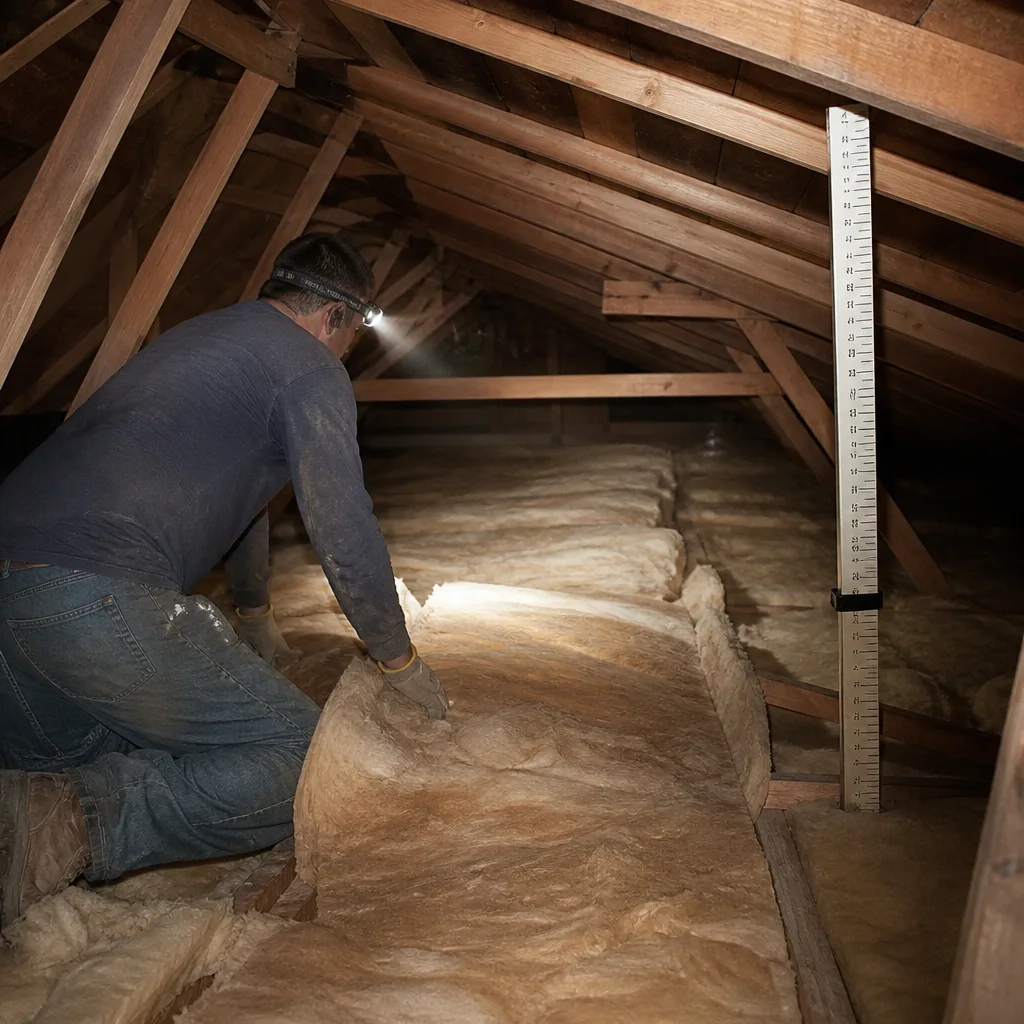
Current California Title 24 requirements specify R-38 minimum for attics in El Monte’s climate zone, and we typically recommend R-38 to R-49 for retrofits given the extreme summer attic temperatures. R-38 translates to roughly 10 inches of blown cellulose or 15 inches of blown fiberglass in an open-blow application. If your existing insulation is R-11 or R-19 - standard for 1960s El Monte construction - a top-up to R-38 is the most cost-effective upgrade path. We measure what’s there, specify what’s needed, and put both numbers in your written quote. Call (626) 509-3237 for a same-day assessment.
Yes. El Monte’s older neighborhoods have narrow alley-loaded lots where a standard blower truck needs advance coordination. We survey access during the estimate - measuring gate widths, overhead clearances, and parking availability - and dispatch appropriately sized equipment. For truly constrained sites, we use portable electric blowers with material staged at the curb and carried in. The crew calls ahead, texts when en route, and arrives with a plan already set. Parking and access constraints never change the written price once it’s delivered. Call (626) 509-3237 to schedule an estimate, and we’ll walk the access path with you.
Written by Wes Okafor, Owner at Envelope Insulation Co., serving El Monte since 2016 under The Haven Standard.