
How Much Does Crawl Space Encapsulation & Vapor Barrier Cost in La Puente?
Crawl space encapsulation in La Puente, CA typically runs between $3,200 and $8,500 for a standard single-family home, with most projects landing around $4,800 to $6,200 when the crawl space is accessible and in fair condition. Our Crawl Space Vapor Barrier service - a barrier-only installation without full encapsulation - comes in lower, usually $1,400 to $2,800 depending on square footage and mil thickness. If your crawl space has standing moisture, damaged insulation, or rodent activity, expect to add $600 to $2,000 for remediation before any barrier or liner goes in.
Crawl Space Encapsulation & Vapor Barrier Cost Breakdown (2026)
Crawl space encapsulation in La Puente, CA typically costs between $3,200 and $8,500 for a full installation, with most single-family homes falling in the $4,800 to $6,200 range. That said, the number that shows up on your written quote depends on square footage, existing conditions, and which components the job actually requires. Here is how individual line items price out in this market.
| Service / Component | Typical La Puente Price Range | Notes |
|---|---|---|
| Vapor barrier only (6-mil poly) | $1,400 - $2,200 | Ground cover only; no wall liner or sealing |
| Vapor barrier (12-mil reinforced) | $1,900 - $2,800 | Thicker material, better puncture resistance |
| Full encapsulation (liner + wall + sealing) | $3,200 - $5,500 | Covers floor, piers, and foundation walls |
| Full encapsulation + dehumidifier | $4,800 - $8,500 | Most effective long-term solution for La Puente’s summer humidity pockets |
| Crawl space vent sealing | $300 - $700 | Often paired with encapsulation; required for conditioned crawl space approach |
| Old vapor barrier removal | $400 - $900 | Deteriorated or pest-damaged poly adds labor and disposal cost |
| Drainage board / dimple mat | $500 - $1,200 | Added when standing water or hydrostatic pressure is present |
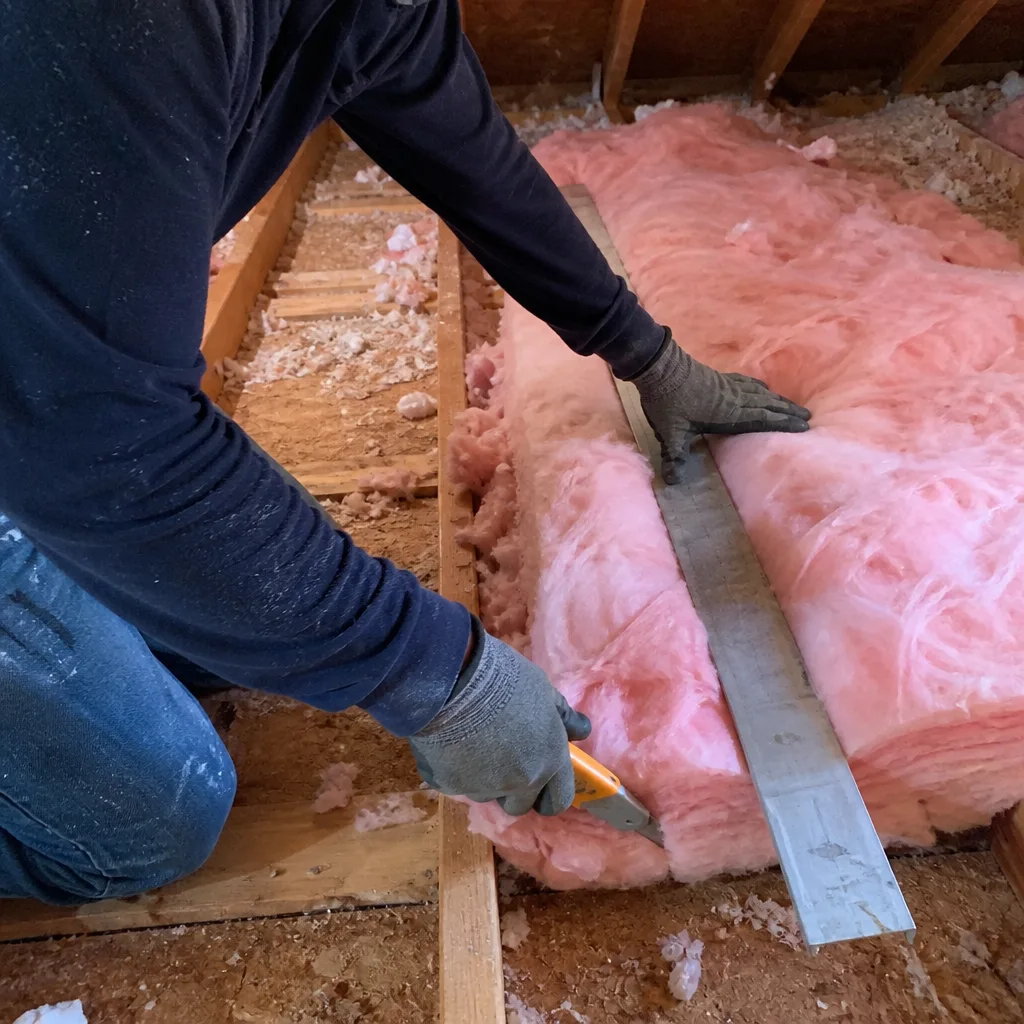
| Insulation removal from crawl space | $600 - $1,400 | Fiberglass batt removal before encapsulation is installed |
| Rodent dropping cleanup / sanitizing | $400 - $1,000 | Common in La Puente and West Covina-adjacent neighborhoods; must precede liner installation |
| Crawl space access door upgrade | $200 - $500 | Airtight insulated hatch; part of the conditioned envelope approach |
The single biggest variable is crawl space condition when we arrive. In La Puente’s older housing stock – homes built in the 1950s through 1970s near Hacienda Boulevard and the blocks south of the 60 Freeway – we regularly find deteriorated 4-mil poly, missing sections, and subfloor insulation that has absorbed enough moisture to fall out of place. Clearing that before a new liner goes in adds a real number to the invoice, but skipping it means the new encapsulation sits on a compromised substrate. Under Haven Standard Clause 1, that number is in your written quote before anyone enters the crawl space.
Square footage drives the baseline. A 900-square-foot crawl space under a typical La Puente ranch home uses more material and more labor hours than a 500-square-foot partial crawl, and the liner overlaps at seams, so actual material usage runs 10 to 15 percent above the floor area. Crawl height matters too: anything under 18 inches adds time and physical difficulty, which is reflected in labor rates.
What Affects Crawl Space Encapsulation & Vapor Barrier Pricing in La Puente
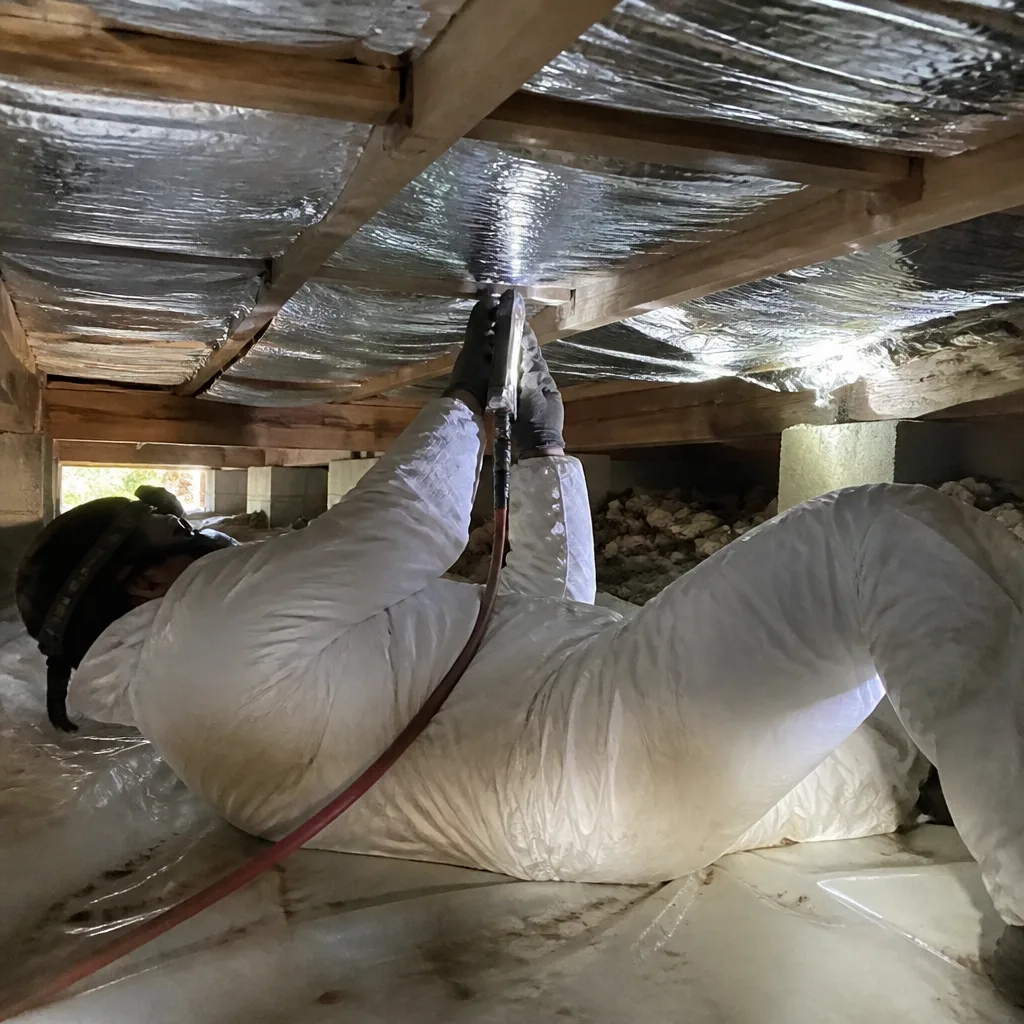
- Square footage of the crawl space: Material and labor scale directly with size. Most La Puente single-family homes have crawl spaces between 600 and 1,400 square feet. Anything above 1,200 square feet will typically push the project past $6,000 for a full encapsulation.
- Crawl height and accessibility: Standard access is roughly 24 to 36 inches of clearance. Below 18 inches – which we see on some post-war slabs and older additions in the Puente Hills area – adds significant labor time. Working in a 14-inch crawl takes longer and is harder on the crew; that cost is in the quote, not hidden in a change order.
- Existing moisture conditions and damage: La Puente sits in a basin that traps humidity, particularly during summer monsoon events. Homes between Workman Mill Road and Amar Road that back up to older irrigation infrastructure sometimes show ground moisture levels above 85 percent relative humidity in the crawl space. When the soil or subfloor is wet, remediation – drainage board, drying time, possible sanitizing – has to happen before the liner seals anything in.
- Liner thickness and material spec: A standard 6-mil polyethylene sheet is the minimum code-compliant ground cover in California. A 12-mil reinforced liner with a white interior surface adds cost but lasts significantly longer and gives inspectors and future homeowners a cleaner documented space. For a conditioned crawl space approach – where the crawl is treated as part of the home’s thermal envelope – a 20-mil liner is common and costs more again.
- Vent sealing and conditioned vs. vented approach: California’s Title 24 energy code allows both vented and unvented (conditioned) crawl space designs, but the right call depends on your home’s configuration and HVAC setup. Sealing the foundation vents and conditioning the space is generally more effective at moisture control in La Puente’s climate but requires more materials and adds to the project cost.
- Dehumidifier installation: A crawl space dehumidifier – typically a Santa Fe or similar commercial-grade unit, not a portable box store model – adds $1,000 to $2,000 to the project cost but is often the right answer for homes with persistent moisture issues or those without active HVAC airflow through the crawl. Wes Okafor recommends documenting the pre-installation humidity reading so you have a baseline to compare against after the equipment runs for 30 days.
- Pre-existing pest or rodent activity: Rodent droppings must be removed and the area sanitized before a liner is installed. We see this condition regularly in La Puente, especially in homes near open field corridors south of Garvey Avenue. The remediation cost is real – typically $400 to $1,000 – and is never folded quietly into a vague “preparation” line. It shows up as its own scope item.
How to Save on Crawl Space Encapsulation & Vapor Barrier
The most direct way to control cost is to get the work done before the damage compounds. A crawl space with early-stage moisture intrusion and an intact but aging vapor barrier is a straightforward liner replacement job. The same space with two years of unchecked moisture becomes a mold remediation, insulation removal, sanitizing, and encapsulation project that costs two to three times as much. In La Puente’s climate, where late-summer humidity regularly drives crawl space moisture levels up, “we’ll deal with it next year” has a measurable dollar consequence.
Here are the specific things that keep costs reasonable:
- Get a second opinion on any written estimate. Under our free second opinion policy, bring us a competing quote and we’ll read it with you, line by line. Scope varies significantly between contractors in the San Gabriel Valley market – some quotes include vent sealing, some don’t; some spec a 12-mil liner, some spec a 6-mil. You can’t compare prices until you’re comparing the same scope.
- Bundle with related work if you’re already opening the crawl. If the job also needs insulation removal or subfloor insulation replacement, scheduling those together saves mobilization cost and avoids a second entry. Our Crawl Space Encapsulation & Vapor Barrier in La Puente service page covers what a typical bundled scope looks like.
- Ask specifically about liner spec, not just total price. A lower bid using 6-mil poly in a high-moisture situation will cost more over five years than a higher bid using a 20-mil reinforced liner. The liner thickness should be in writing before you agree to anything.
- Check for California energy efficiency rebates. Southern California Edison and SoCalGas both offer rebates for qualifying home energy improvements. Crawl space encapsulation, particularly when combined with insulation upgrades, can qualify. The rebate amounts change frequently, so verify directly with the utility – but we can help you identify which components of a project are typically rebate-eligible.
- Don’t pay for a dehumidifier you don’t need. A dehumidifier is the right answer in some crawl spaces; it’s an upsell in others. If a contractor is quoting one without first taking a moisture reading and showing you the number, ask why. We take a documented humidity reading before recommending mechanical dehumidification.
- Avoid contractors who begin work before you have a written scope and price. This is Haven Standard Clause 1, and it protects you from scope creep. A contractor who starts pulling out old insulation before you’ve signed a written price for that line item can charge you what they want for it afterward. Written price before any work starts isn’t a formality – it’s how you control the final number.
For a free estimate with a written scope on your La Puente home, call (626) 509-3237. Wes Okafor or a member of the Envelope team will schedule a crawl space assessment, take documented photos, and hand you a flat written price before any work is discussed.
Crawl Space Encapsulation vs. Vapor Barrier: What’s the Difference, and Does It Change the Price?
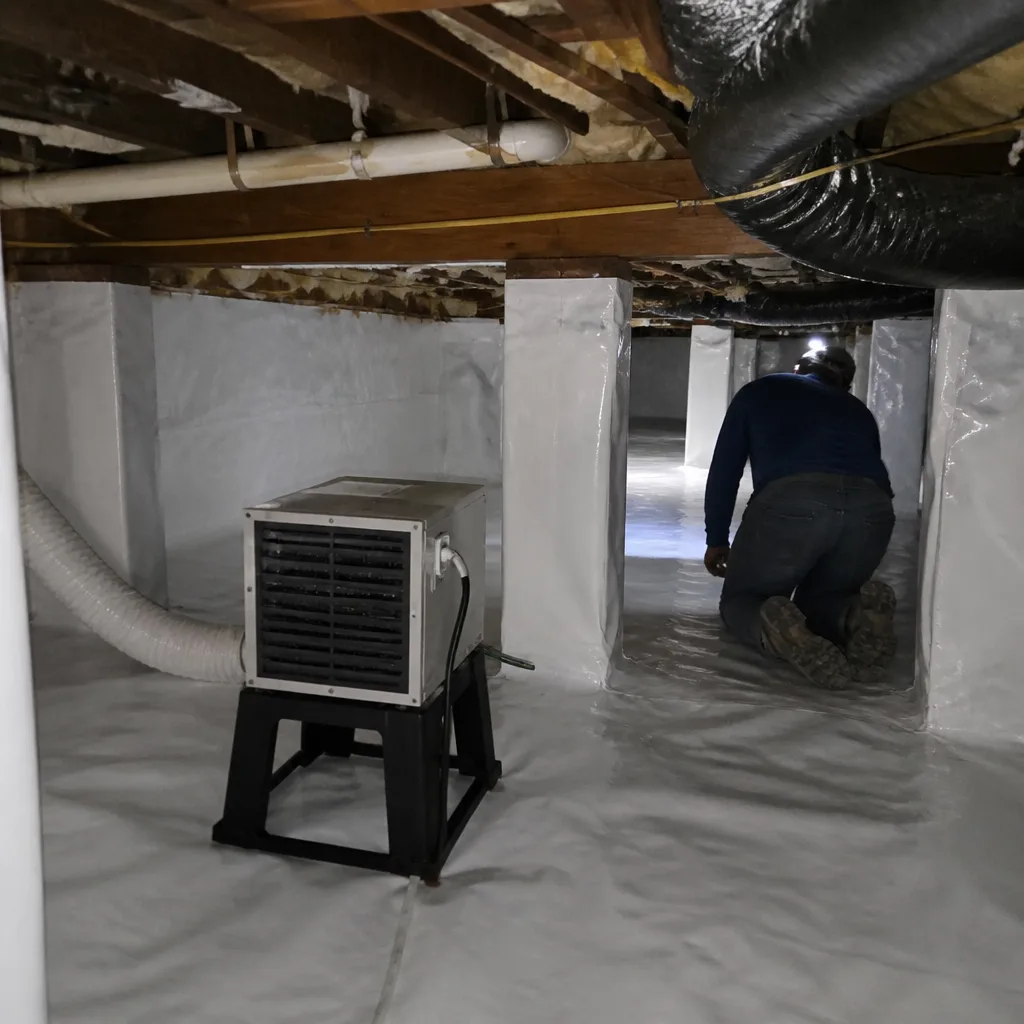
These two terms get used interchangeably in contractor bids, and that causes real confusion when you’re comparing quotes. Here’s what they actually mean, and why the distinction changes the price by $1,500 or more.
A vapor barrier – also called a ground cover – is a polyethylene sheet laid on the crawl space floor to reduce moisture evaporation from the soil. It’s the baseline product. California building code allows a 6-mil minimum in most residential applications. It covers the ground. That’s its job.
Crawl space encapsulation goes further. The floor is covered with a heavier liner (typically 12 to 20 mil), that liner is run up the foundation walls and sealed to the sill plate, the piers are wrapped, and the seams are taped. The goal is to turn the crawl space from a vented, soil-contact zone into a sealed, controlled environment. In some configurations, foundation vents are sealed and the crawl is conditioned – meaning it’s treated as part of the home’s thermal envelope rather than an exterior-adjacent space.
In La Puente, where summer humidity can push crawl space soil moisture well above 70 percent, the difference matters. A basic vapor barrier slows evaporation. Full encapsulation controls the crawl space environment. If your HVAC ducts or water lines run through the crawl – common in La Puente homes built before 1990 – encapsulation also protects that equipment from humidity-accelerated deterioration.
When you’re reading a contractor quote, confirm which one you’re actually buying. “Vapor barrier installation” can mean anything from a 6-mil ground cover to a full encapsulation depending on who wrote the proposal. That specification should be in writing before you agree to anything.
What La Puente Crawl Space Conditions Actually Look Like
La Puente sits at roughly 400 feet elevation in the San Gabriel Valley, in a basin that holds heat and traps humidity more than the surrounding hillside communities. Homes in the flatland neighborhoods between Hacienda Boulevard and the 60 Freeway – and especially those east of Stimson Avenue toward Industry – were built primarily in the 1950s and 1960s with vented crawl spaces and minimal ground cover. Many of those original vapor barriers are 6-mil poly that was installed 40 or 50 years ago. When we get under those homes today, we typically find:
- Poly that has become brittle, torn, or absent in sections where plumbers or pest control contractors accessed the crawl over the years
- Fiberglass batt insulation between the floor joists that has absorbed moisture, compressed, and in some cases fallen to the ground – at which point it’s providing almost no thermal value and is actively trapping humidity against the subfloor
- Visible efflorescence (mineral salt deposits) on foundation walls – a sign that water has been moving through the masonry repeatedly
- Rodent evidence, ranging from trails through damaged poly to active nesting in fallen insulation
- In homes near older irrigation infrastructure, occasional standing water at low points in the crawl after heavy rain
None of those conditions are unique to La Puente, but the combination of older housing stock, basin-trapped humidity, and earthquake retrofitting that sometimes creates new crawl access points makes this market somewhat more likely to have deferred maintenance than newer construction zones. We document every condition we find with photos before we quote anything. You know what’s under your house before you decide what to do about it.
Encapsulation and La Puente Building Permits: What You Need to Know
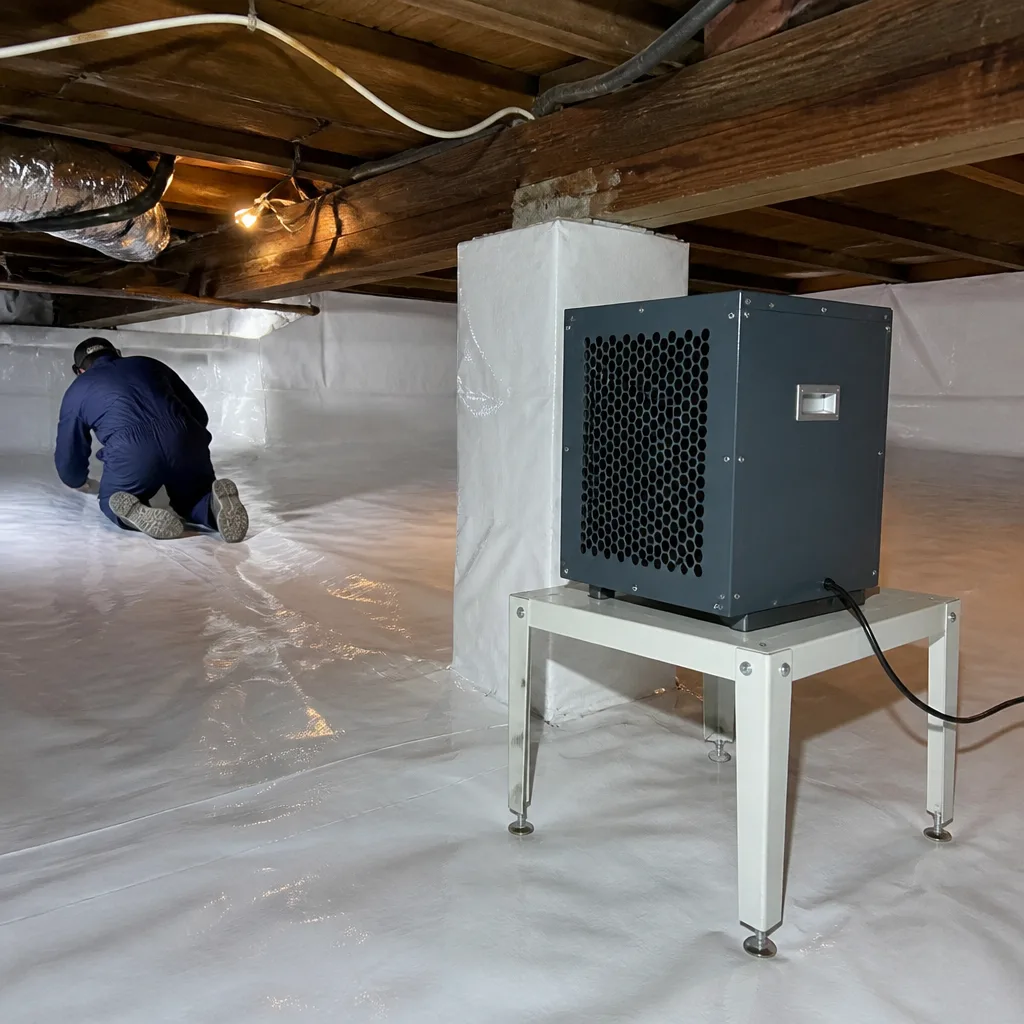
A standard vapor barrier replacement – removing old poly and installing new ground cover – does not typically require a permit from the City of La Puente or Los Angeles County Building and Safety (which has jurisdiction over unincorporated areas adjacent to La Puente). Full Crawl Space Insulation that includes sealing foundation vents and conditioning the crawl space may require a permit because it changes the ventilation strategy of the home, which is a code-regulated system.
If your project includes vent sealing, a dehumidifier connected to a condensate drain, or any electrical work for a dehumidifier outlet, a permit is more likely to be required. We confirm permit requirements during the scoping visit and include any required permit costs in the written quote. No work starts without the permit in hand if one is required – that’s not optional and it’s not something we discuss after the job starts.
For homes in unincorporated LA County territory near La Puente’s eastern boundary, the permitting authority is the LA County Department of Regional Planning and Building and Safety. Requirements are similar but occasionally differ in timeline and inspection scheduling. We handle both jurisdictions regularly and know which inspector routes serve the area.
How Crawl Space Encapsulation Connects to Your Home’s Energy Performance
If you’re on our home page reviewing the full scope of building-envelope services, you’ve seen that Envelope Insulation Co. treats the building envelope as a system – not a collection of independent upgrades. Crawl space encapsulation fits into that system in a specific way.
Air moves through a home following pressure differences. In La Puente, where afternoon temperatures regularly reach 95 to 100 degrees Fahrenheit in July and August, a vented crawl space pushes hot, humid air upward into the living space through floor penetrations, subfloor gaps, and plumbing and electrical chases. Sealing and encapsulating the crawl reduces that stack-effect air movement. The benefit shows up in two places: reduced HVAC load (your system runs less to maintain temperature) and reduced humidity in the living area (which matters for comfort and for wood floors, cabinetry, and anything else sensitive to moisture swings).
On jobs where we’re also air-sealing the attic floor or replacing subfloor insulation, we can document the before-and-after change with a blower-door test – a pressurization measurement that produces a single number (CFM50) representing how much air the building envelope is exchanging with the outside. A crawl space encapsulation alone may or may not move that number enough to show up dramatically in a blower-door result, depending on how sealed the rest of the envelope is, but in homes where the crawl is the primary air infiltration source, the change is measurable. We publish those numbers when they’re applicable to the job.
FAQs: Crawl Space Encapsulation & Vapor Barrier Cost in La Puente
How much does crawl space encapsulation cost in La Puente, CA in 2026?
Full crawl space encapsulation in La Puente runs $3,200 to $8,500 for most single-family homes, with the majority of projects landing between $4,800 and $6,200. That range covers liner installation, wall coverage, seam taping, and vent sealing, but not a dehumidifier (add $1,000 to $2,000 if one is needed) or pre-existing damage remediation. A vapor barrier-only installation – ground cover without full wall coverage or sealing – runs $1,400 to $2,800 depending on square footage and liner spec. Call (626) 509-3237 for a free written estimate specific to your crawl space.
Is crawl space encapsulation worth the cost in La Puente’s climate?
In most La Puente homes with original vented crawl spaces, yes – and the ROI case is specific. La Puente’s summer humidity and its stock of 1950s-1970s homes with deteriorated or absent vapor barriers create conditions where unencapsulated crawl spaces actively accelerate subfloor deterioration, push moisture into living areas, and add HVAC load. A $5,000 encapsulation that extends the life of a $12,000 subfloor and reduces cooling demand is worth the math. For homes where the crawl is dry, accessible, and has an intact relatively recent liner, the calculus is different – we’ll tell you that in the assessment rather than push a scope you don’t need.
How long does crawl space encapsulation last in Southern California?
A properly installed 12-mil or heavier reinforced liner in a conditioned or sealed crawl space typically lasts 20 to 25 years in Southern California conditions. Thinner 6-mil poly in a vented crawl space with continued soil contact and pest traffic degrades faster – 10 to 15 years is more realistic, and in some La Puente homes we find it deteriorated well before that. The liner spec is in your written scope; you know what you’re getting and what its expected service life is before anyone starts work.
Do I need a permit for crawl space encapsulation in La Puente?
A basic vapor barrier replacement typically doesn’t require a permit in La Puente or the surrounding LA County jurisdiction. Full encapsulation that seals foundation vents and conditions the crawl space may require a permit because it changes the home’s ventilation configuration, which is code-regulated. Any electrical work for a dehumidifier outlet also triggers a permit requirement. We confirm this during the scoping visit and include applicable permit costs in your written quote. No work starts without the required permits in place.
Can I install a vapor barrier myself to save money?
A basic 6-mil polyethylene ground cover is a DIY-accessible project if your crawl space is clean, dry, accessible (at least 24 inches of clearance), and you’re comfortable working in a confined space. The material cost runs $0.10 to $0.25 per square foot for basic poly. What DIY typically misses: proper seaming and overlap (at least 12 inches, taped), pier wrapping, perimeter attachment to foundation walls, and correct identification of whether a vapor barrier is even the right solution vs. full encapsulation. For La Puente homes with any moisture history, existing damage, or rodent evidence, the assessment step is worth doing professionally before any liner goes down – otherwise you’re sealing problems in rather than out. Call (626) 509-3237 to schedule an assessment with no obligation to proceed.
What’s included in a crawl space encapsulation quote from Envelope Insulation Co.?
Every written quote from Envelope Insulation Co. is a flat-price, line-item scope that covers exactly what will be done, the materials spec (liner brand and mil thickness), any removal or remediation work, and the warranty terms – all in writing before anyone enters the crawl space. The Documented Photo Record is included on every visit, so you have a before-and-after visual record of the space. If the job includes work that qualifies for a blower-door comparison, we publish the before and after numbers. Under the 365-Day Done Right Promise, if any completed scope item isn’t right, we make it right – that commitment is in the written warranty, not a verbal assurance at the end of the job.
Key Takeaways
- Crawl space encapsulation in La Puente costs $3,200 to $8,500 for most homes; full encapsulation with a dehumidifier tops out around $8,500.
- Vapor barrier-only (ground cover) runs $1,400 to $2,800 depending on liner spec and square footage.
- Pre-existing damage – deteriorated poly, fallen insulation, rodent activity – adds $400 to $2,000 and must be addressed before a new liner goes in.
- La Puente’s basin climate and older housing stock make crawl space moisture a real and recurring issue, not a theoretical one.
- Liner spec (6-mil vs. 12-mil vs. 20-mil) matters more than the headline price when comparing quotes; confirm it’s in writing.
- Under Haven Standard Clause 1, you receive a flat written price and scope before any work starts – no surprises on the invoice.
- A free second opinion on any written estimate is available; call (626) 509-3237 to schedule.
Schedule a Free Crawl Space Assessment in La Puente
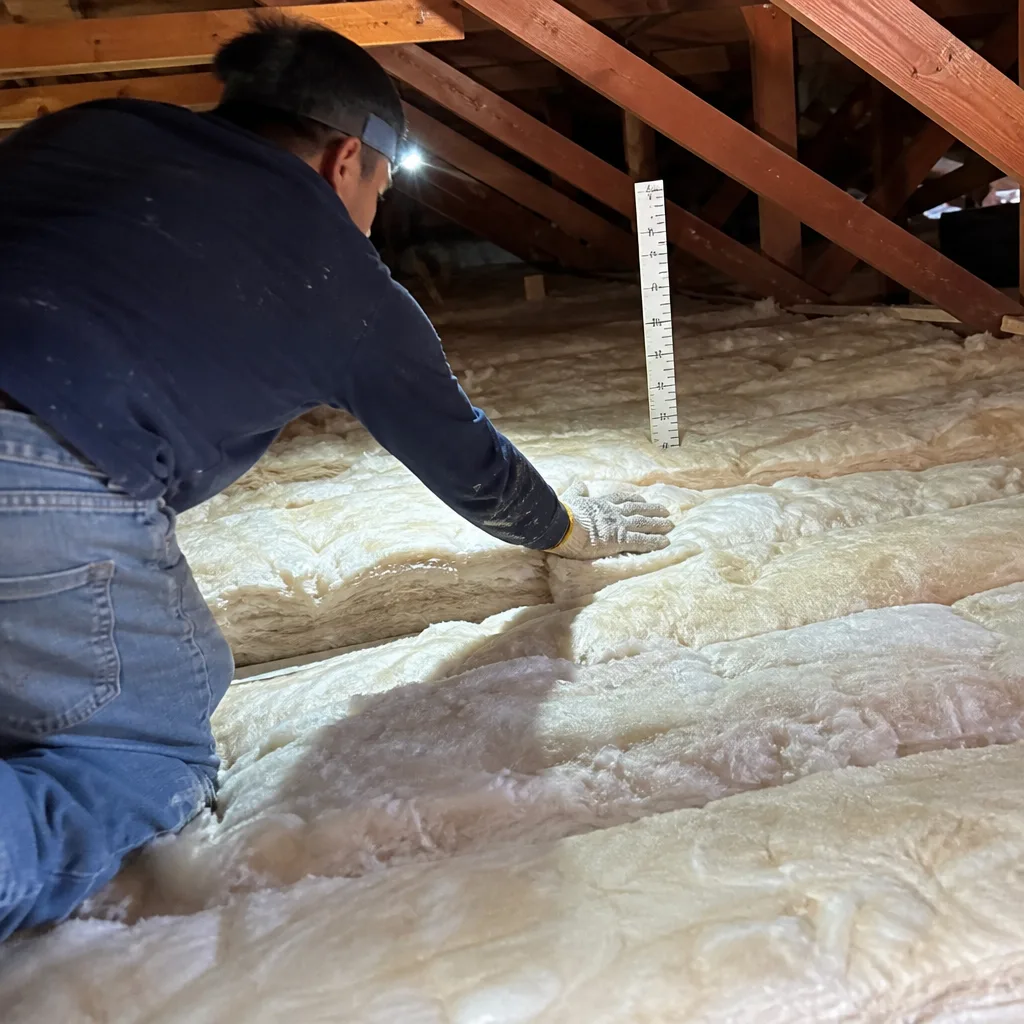
If you’re seeing signs of crawl space moisture – musty odors, cold floors in winter, higher-than-expected cooling bills, or visible damage to floor finishes – the crawl space is usually worth looking at before the problem compounds. Wes Okafor and the Envelope Insulation Co. team serve La Puente and the surrounding San Gabriel Valley communities from a local base, and every assessment starts with documented photos and ends with a written price. No work begins without it.
Call (626) 509-3237 to schedule a free estimate. A live person answers – no voicemail, no callback window measured in business days. You’ll get a named technician and a text when they’re on the way, per Haven Standard: Arrive on Schedule.
The written quote covers every line item: liner spec, any removal or remediation scope, vent sealing if applicable, and the warranty terms. You’ll know what you’re getting and what it costs before anyone lifts a tool.
Written by Wes Okafor, Owner at Envelope Insulation Co., serving La Puente since 2016. Pricing reflects the La Puente market as of 2026. Topside Attic Insulation La Puente offers free estimates – call (626) 509-3237.
What Our Customers Say
"Crawl space encapsulation done properly. Photographs of the vapour barrier at every seam, and the damp smell in the hallway is gone."
- Ainsley P."They photographed rodent damage in the old insulation that we had no idea about, and priced the exclusion work separately so we could decide."
- Harriet N."Two other companies quoted to blow more insulation on top of what was there. These were the only ones who said the existing material had to come out first, and explained why."
- Clifford E.