
Last updated September 24, 2026
Insulation Cost Breakdown: The La Puente Homeowner’s Reference for 2026
A $1,800 attic insulation quote and a $3,400 attic insulation quote can both be fair prices, or both be overpriced, depending entirely on what the contractor actually plans to do. The number that matters most, the blower-door result before and after the work, rarely appears on the cheaper quote at all. In La Puente, where summer attic temperatures regularly exceed 140°F and winter overnight lows dip into the low 40s, insulation that isn’t paired with proper air sealing often fails to deliver the savings the homeowner was promised. This guide deconstructs every line item in a typical insulation bid so you can compare bids that are actually comparable, not just bids that use the same words, and points you to more guides & resources for deeper reading.
Quick Answer
Insulation costs in La Puente range from $0.50 to $4.00 per square foot installed, with most whole-attic jobs falling between $1,800 and $4,500 depending on material, R-value, and whether air sealing and blower-door testing are included. A properly scoped job for a 1,200-square-foot attic with air sealing, R-38 blown cellulose, debris removal, and before-and-after blower-door documentation typically runs $2,800 to $3,600 in the San Gabriel Valley market. The lowest bids usually exclude air sealing and testing, which means you’re paying for material performance you’ll never actually achieve.
Table of Contents
- Why Quotes Vary So Widely for the Same “Attic Insulation”
- Material Costs per R-Value: What Contractors Pay in 2026
- The Air Sealing Line Item: What It Costs and What Happens Without It
- Labor, Permits, and HERS Inspections in Los Angeles County
- Calculating Your Payback: SCE and SoCalGas Rates for La Puente
- Blower-Door Testing: Contractor vs. Independent HERS Rater
- How to Compare Bids Apples-to-Apples
- Common Mistakes to Avoid
Why Quotes Vary So Widely for the Same “Attic Insulation”
We see this constantly in La Puente and across the San Gabriel Valley. A homeowner collects three quotes for “attic insulation” and receives numbers spread across $2,000 or more. The natural assumption is that someone is gouging, or someone is cutting corners. Often, neither is true. The quotes simply describe different scopes of work hidden behind identical language.
Here is what we typically find when we review competing estimates with homeowners during our free second opinion visits:
- The low bid quotes material and basic labor only, with no air sealing, no testing, and no debris removal from existing insulation
- The mid bid includes some air sealing, usually described vaguely as “seal penetrations,” without specifying top plates, can lights, or duct boots
- The high bid includes full air sealing, blower-door testing before and after, debris removal, and often a written performance target
The critical distinction is this: insulation slows heat transfer through solid materials, but it does almost nothing to stop air movement. In a typical La Puente attic built between 1950 and 1985, the conditioned air leaking through gaps at top plates, around recessed can lights, and at duct penetrations can account for 30 to 50 percent of total heating and cooling load. Blowing R-38 cellulose over those leaks is like putting a thick sweater on someone standing in a wind tunnel. The sweater helps, but the wind nullifies most of the benefit.
We published before-and-after blower-door numbers on every applicable job since we started operating under The Haven Standard in 2016. The pattern is consistent. A 1,400-square-foot home in the Bassett neighborhood, for example, tested at 3,800 CFM50 before work and 1,900 CFM50 after complete air sealing and insulation. Without the sealing, the insulation alone would have moved that number to perhaps 3,200 CFM50, a marginal improvement the homeowner would have felt mostly in their wallet, not their comfort.
CFM50, by the way, is cubic feet per minute at 50 pascals of pressure, a blower-door test, a pressurization reading that shows, in one number, how much air your building envelope is losing. Lower is better. Under 1,500 is tight. Over 4,000 is leaky.
Material Costs per R-Value: What Contractors Pay in 2026
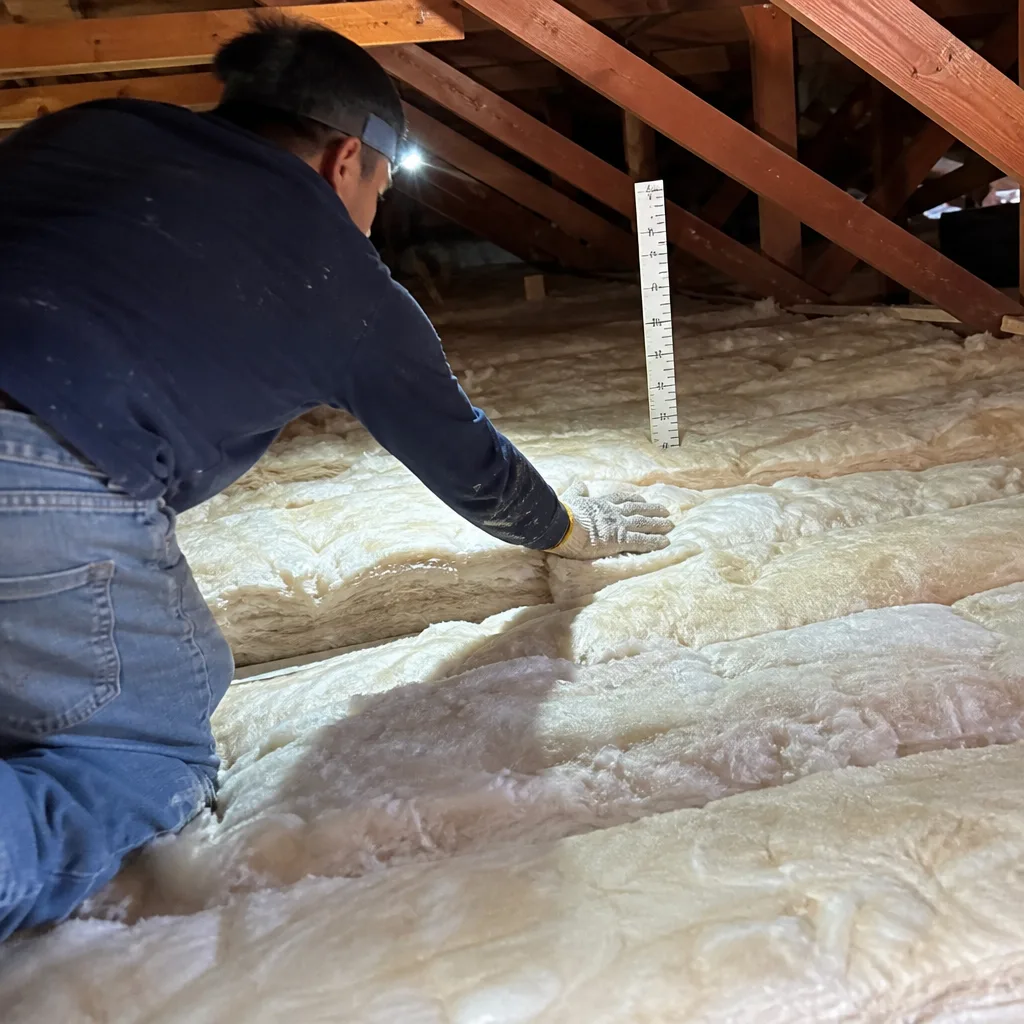
Material pricing fluctuates with oil and freight markets, but San Gabriel Valley contractor pricing in early 2026 falls in fairly stable bands. These are our landed costs, what we pay after delivery to our La Puente warehouse, not retail shelf prices at the big-box store.
| Material | R-Value per Inch | Material Cost per R-Value per Sq Ft | Typical Installed R-Value | Material Cost per Sq Ft at Full Depth |
|---|---|---|---|---|
| Blown cellulose (GreenFiber or similar) | R-3.2 to R-3.8 | $0.08 to $0.12 | R-38 | $0.95 to $1.40 |
| Fiberglass batt (Knauf or CertainTeed) | R-3.0 to R-3.7 | $0.10 to $0.15 | R-30 or R-38 | $1.20 to $1.80 |
| Open-cell spray foam (Icynene or Demilec) | R-3.5 to R-3.8 | $0.35 to $0.50 | R-13 to R-21 (wall/rafter cavity) | $2.80 to $4.00 |
| Rockwool batt | R-4.0 to R-4.2 | $0.18 to $0.25 | R-23 (walls) or R-30 (attic) | $1.80 to $2.50 |
The labor multiplier is what turns material cost into installed cost. For blown cellulose in a standard open attic with reasonable access, our labor multiplier runs 1.8 to 2.2 times material cost. That covers setup, blowing, cleanup, and basic site protection. For spray foam, the multiplier is higher, 2.5 to 3.5 times, due to specialized equipment, respiratory protection requirements, and the skill threshold for proper mixing ratios.
So a blown cellulose job with $1,200 in material typically carries $2,200 to $2,600 in total installed cost at fair market pricing. If you see $1,800, ask what was removed from the scope. If you see $4,000, ask what was added, or whether the contractor is using a premium material like Rockwool at greater depth.
In La Puente specifically, we factor in attic access difficulty. Homes in the older sections near Amar Road and Hacienda Boulevard often have scuttle holes rather than pull-down stairs, and crews must haul material through living spaces. That adds labor hours. Newer construction in the northern hills toward Walnut has better access but sometimes complex rooflines with kneewalls and dormers that slow installation.
The Air Sealing Line Item: What It Costs and What Happens Without It
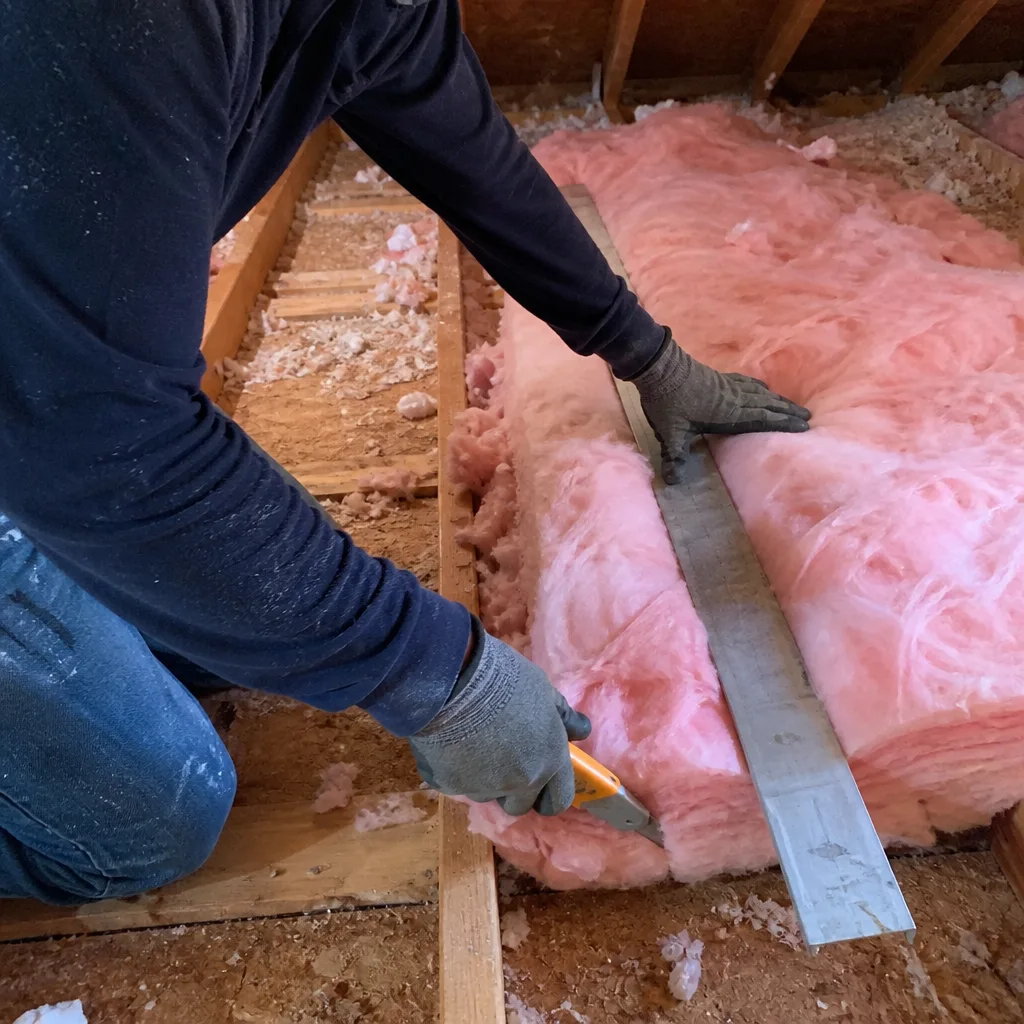
This is where most insulation bids diverge, and where most homeowners lose value. Air sealing is the painstaking work of closing gaps in the building envelope before insulation goes in. In an attic, that means:
- Sealing top plates, the horizontal framing member where interior walls meet the ceiling, using caulk or foam
- Sealing around recessed can lights, which are essentially holes punched through your ceiling into 140°F attic air
- Sealing duct boots and penetrations where HVAC lines pass through the ceiling
- Sealing the chase around flues and chimneys with fire-rated materials
- Sealing the attic hatch or scuttle hole with weatherstrip and rigid insulation
In our La Puente market, proper air sealing for a 1,200-square-foot attic runs $600 to $1,200 as a standalone line item, depending on access and the number of penetrations. A home with 24 recessed can lights, common in 1970s and 1980s construction in the Valinda and West Puente Valley areas, takes significantly longer than a home with surface-mounted fixtures.
When a contractor omits air sealing from the quote, several things happen. The job finishes faster, often in half a day instead of a full day. The crew doesn’t need to work in the hot, cramped conditions at the eaves where top plates live. The homeowner gets a lower number on paper. But the insulation performs poorly, because conditioned air continues to leak out and unconditioned attic air continues to leak in.
We’ve removed and replaced insulation in La Puente homes where the original contractor skipped sealing. The homeowner paid for R-38 and received perhaps R-38’s worth of material delivering R-20’s worth of performance. Under Haven Standard Clause 1, we provide a written scope before any work starts, and air sealing is never optional. We won’t blow insulation over an unsealed attic floor. The crew has standing instructions to stop and call the office if they encounter a scope that omits sealing.
The documentation you receive should reflect this. After air sealing, we run a blower-door test to verify the reduction in leakage. You get the number in writing. Without that number, you have no evidence the sealing was done effectively, or at all.
Labor, Permits, and HERS Inspections in Los Angeles County
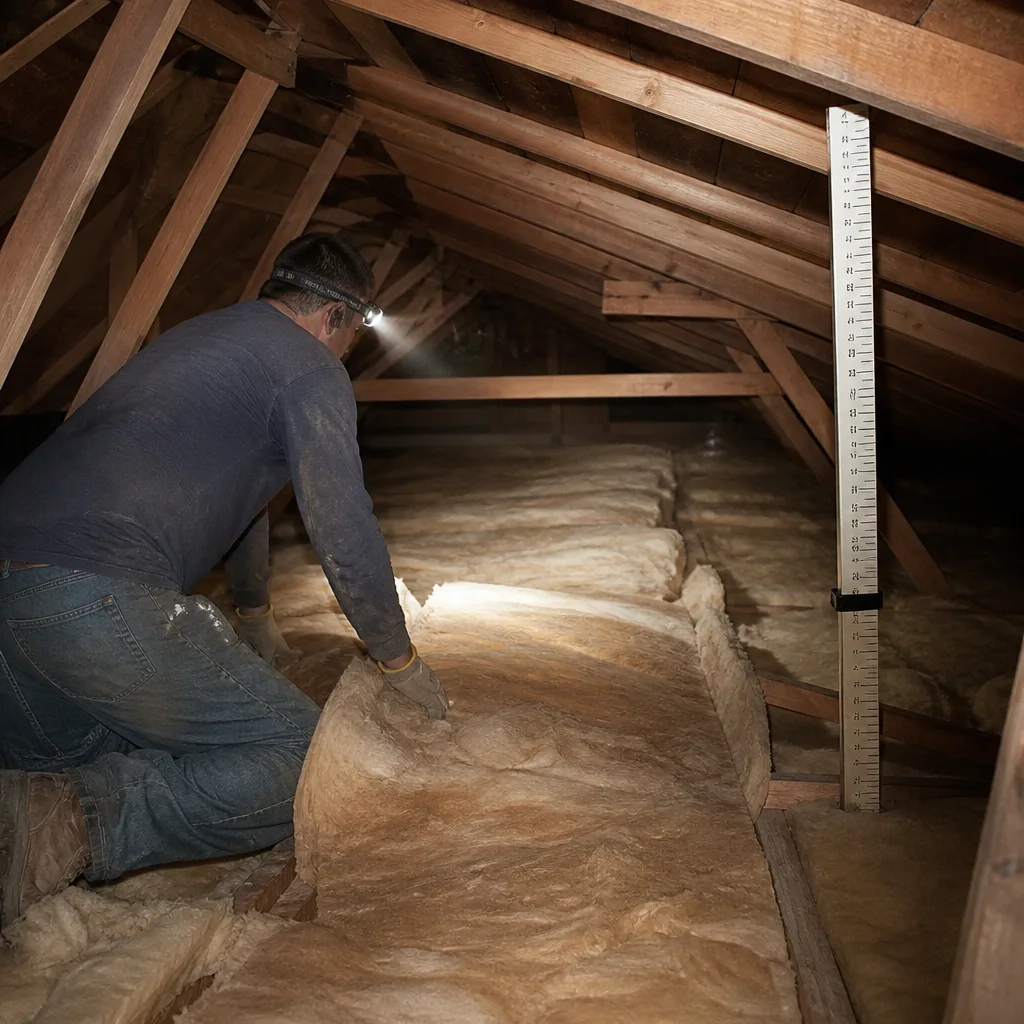
Los Angeles County requires building permits for insulation work that involves alterations to the thermal envelope, which covers most retrofits; see our full breakdown in Insulation Permits, Codes & Inspections in CA: What You Need to Know. The permit triggers a HERS, Home Energy Rating System, inspection when the work exceeds certain thresholds or when the homeowner seeks utility rebate participation.
Permit fees for insulation-only work in unincorporated Los Angeles County and contract cities like La Puente run $150 to $400 depending on project valuation. The HERS verification, if required, adds $300 to $500 for a third-party rater to visit and confirm installation quality and R-value.
Some contractors build permit and HERS fees into their quoted price. Others list them as separate line items. A few, unfortunately, skip permits entirely and ask the homeowner to sign a waiver. This is a mistake. Unpermitted work can void homeowner’s insurance coverage if a fire occurs, and it eliminates eligibility for SCE and SoCalGas rebates that can offset 20 to 30 percent of project cost.
Our process: we pull permits on every job that requires them, include the fee in our written price, and schedule HERS verification when applicable. The homeowner receives a copy of the permit card and the final HERS certificate. This is part of the Documented Photo Record included on every visit, not available on request, it’s delivered automatically.
Labor rates in the San Gabriel Valley insulation trade run $45 to $75 per hour for skilled technicians in 2026, with crew sizes of two to four depending on job complexity. A typical attic job with air sealing and blown cellulose for a 1,200-square-foot home requires 8 to 12 crew-hours. That puts labor at $720 to $1,800 before material, equipment, overhead, and profit.
Calculating Your Payback: SCE and SoCalGas Rates for La Puente
Insulation is an investment, and investments should be evaluated against alternatives. The payback calculation requires three inputs: your current energy cost, the realistic reduction after the work, and the installed cost.
For La Puente zip codes 91744, 91746, 91747, and 91748, SCE residential electricity rates in early 2026 average $0.28 to $0.34 per kWh depending on tier and time-of-use plan. SoCalGas baseline rates run approximately $1.80 to $2.20 per therm. These are the numbers we use in our payback estimates, though your actual rates may vary based on usage patterns and rate plan.
A typical 1,400-square-foot La Puente home with minimal existing insulation and no air sealing might consume 9,000 to 12,000 kWh annually for cooling and 400 to 600 therms for heating. After proper air sealing and R-38 attic insulation, we typically see cooling load reductions of 25 to 35 percent and heating load reductions of 20 to 30 percent. These are conservative figures derived from our blower-door documentation across 9,000+ homes sealed and insulated since 2016.
Here’s the calculation for a middle-case scenario:
- Annual cooling: 10,000 kWh at $0.30/kWh = $3,000
- Annual heating: 500 therms at $2.00/therm = $1,000
- Total annual HVAC energy: $4,000
- Conservative reduction after sealing and insulation: 25 percent
- Annual savings: $1,000
- Installed cost for scope described: $3,200
- Simple payback: 3.2 years
With SCE’s projected rate increases of 4 to 6 percent annually, the payback accelerates. By year five, cumulative savings typically exceed the installed cost. This assumes no utility rebates. With available rebates through Energy Upgrade California and utility programs, payback can drop below two years.
The calculation changes if air sealing is omitted. A 10 percent reduction instead of 25 percent extends payback to eight years or more, and the homeowner never achieves the comfort improvement they paid for. This is why we insist on the sealed-first approach. The numbers don’t work otherwise.
Blower-Door Testing: Contractor vs. Independent HERS Rater
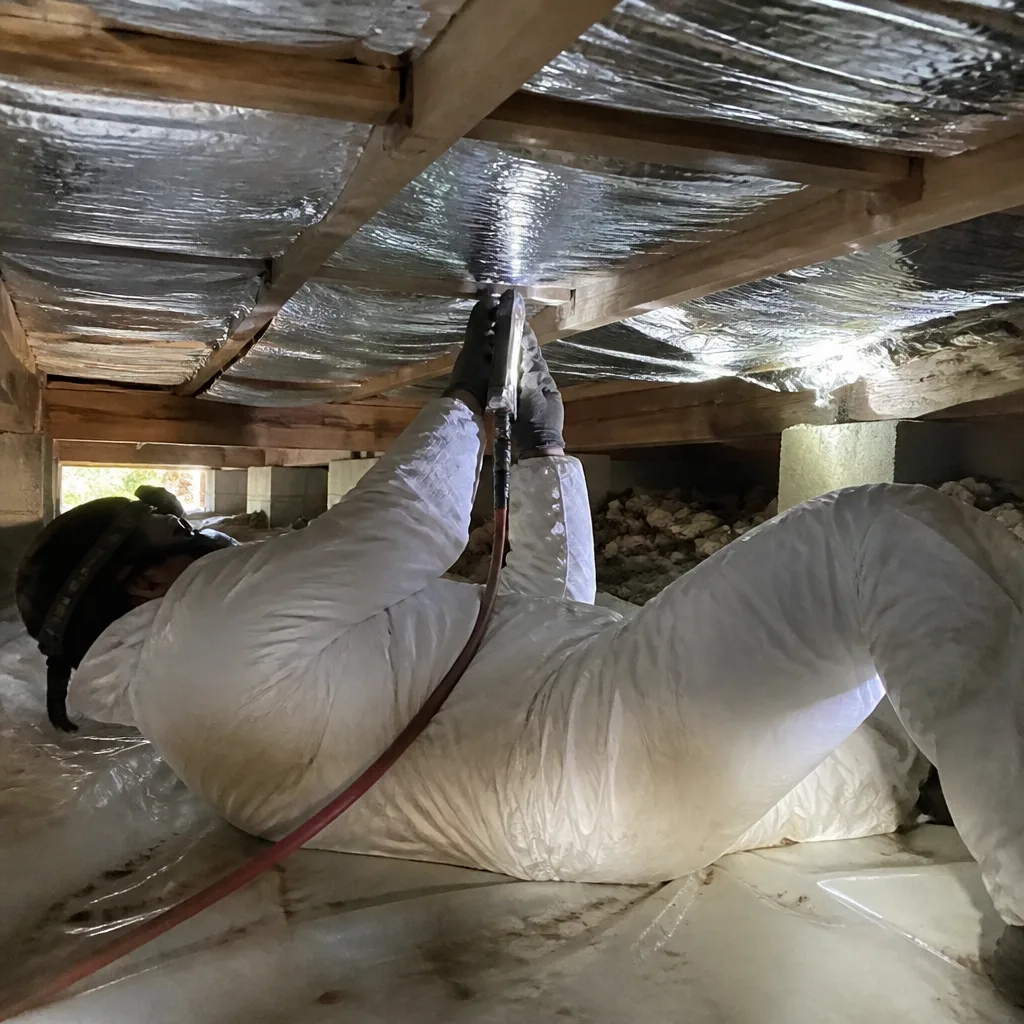
The blower-door test is a pressurization reading that shows, in one number, how much air your building envelope is losing. It’s the single most useful metric for verifying air-sealing quality, and it’s the number most commonly missing from low bids.
Here’s what blower-door testing costs and who should do it:
| Provider Type | Typical Cost | Independence | Credibility for Rebates |
|---|---|---|---|
| Installing contractor (in-house) | $150 to $300, often waived if bundled | Not independent, potential conflict of interest | Accepted by some rebate programs, not all |
| Independent HERS rater | $300 to $500 | Fully independent, no financial stake in results | Required by most utility rebate and new construction programs |
| Home energy audit (comprehensive) | $400 to $700 | Independent, includes thermal imaging and combustion safety | Gold standard for rebate eligibility and diagnostic depth |
The independence distinction matters because the installing contractor has an incentive to show improvement. An in-house test isn’t fraudulent, but it’s like grading your own exam. We’ve seen competitors report blower-door reductions that don’t match the visual scope, a sealed attic that somehow still leaks at the same rate as before, which suggests the test was rushed or the baseline was sloppy.
Under The Haven Standard, we provide in-house blower-door testing on every applicable job because it’s essential for our own quality control. We also encourage, and can coordinate, independent HERS verification when the homeowner seeks maximum rebate capture or simply wants third-party confirmation. The written scope specifies which test you’ll receive, and the documentation includes the raw numbers, not just a percentage improvement.
For La Puente homeowners in older neighborhoods like Avocado Heights or the unincorporated pockets near the San Jose Creek wash, we often recommend the comprehensive energy audit first. These homes frequently have multiple envelope issues, foundation-to-attic air leaks, unsealed crawl spaces, single-pane windows, and the audit prioritizes interventions by cost-effectiveness rather than selling a single service.
How to Compare Bids Apples-to-Apples
When you’ve got three quotes in hand, here’s the systematic way to evaluate them. We’ve refined this over years of reviewing competitors’ paperwork with homeowners.
- Verify the R-value and material type. “R-38 equivalent” is not R-38. Spray foam at 5.5 inches in a 2×6 cavity is R-19, not R-38, though its air-sealing performance partially compensates. Insist on explicit material and depth.
- Check for air sealing scope. Look for specific elements: top plates, can lights, duct boots, attic hatch, flue chase. Vague language like “seal penetrations” often means the contractor will foam two obvious holes and call it done.
- Confirm blower-door testing. Is it included? Before and after, or just after? Who performs it? What number constitutes acceptable performance? We target 35 to 50 percent reduction as a minimum; some competitors have no target at all.
- Review debris removal. Old insulation removal adds $0.50 to $1.50 per square foot depending on condition. If your existing insulation is compressed, contaminated, or rodent-damaged, removal is necessary, not optional. Our attic insulation in La Puente page details what we look for during assessment.
- Check permit and HERS fees. Are they included, separate, or omitted? Omitted fees often mean omitted permits.
- Request the written warranty. What does it cover, for how long, and what triggers it? Our 365-Day Done Right Promise, if it’s not done right, we make it right, is backed by a written scope and written warranty delivered before anyone starts. Haven Standard: Have it in writing.
- Ask about documentation. What do you receive when the crew leaves? We deliver a Documented Photo Record on every visit, blower-door readings when applicable, and the written warranty. Some contractors provide nothing but an invoice.
The bid that looks cheapest often fails steps two through seven. The bid that looks most expensive sometimes represents the only scope that will actually deliver the performance you’re paying for. In La Puente’s climate, with its extreme attic temperatures and significant heating demand in winter, the sealed-and-tested approach isn’t premium service. It’s baseline competence.
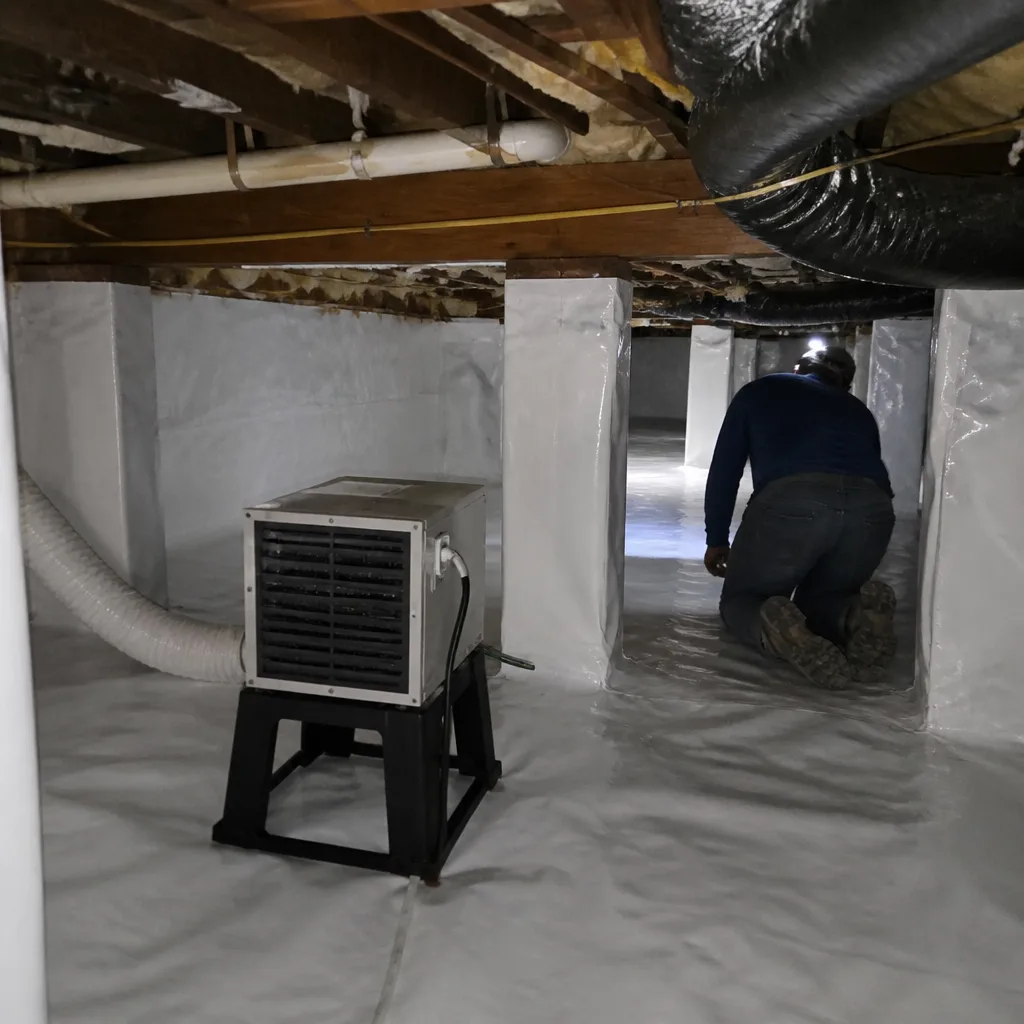
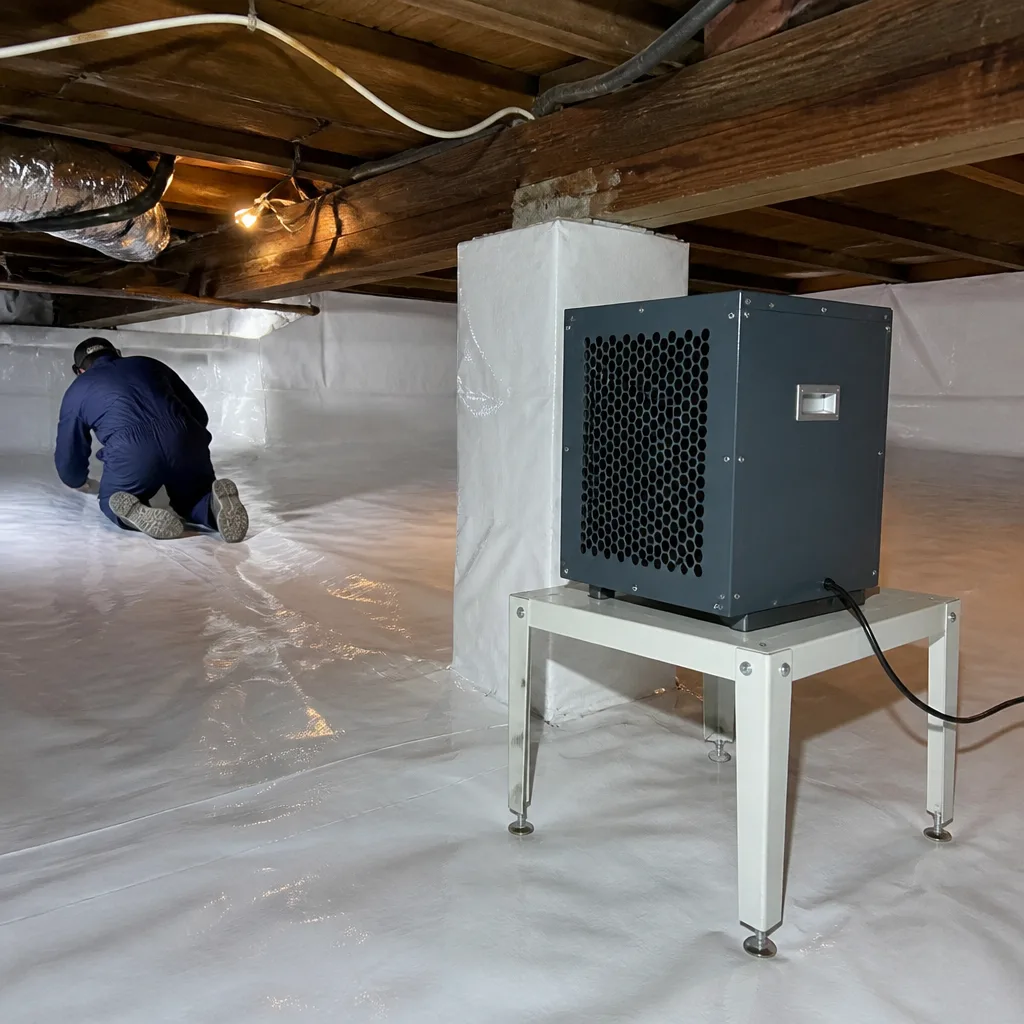
For homes with crawl space moisture issues, which we frequently encounter in the lower-elevation areas near Valley Boulevard where drainage is poor, crawl space encapsulation and vapor barrier in La Puente may be the higher-priority intervention. We assess this during our initial visit and will tell you if your money is better spent below the floor first.
Common Mistakes to Avoid
- Comparing bids by total price alone. A $2,200 bid for insulation-only and a $3,400 bid for insulation plus air sealing plus testing are not comparable services. Normalize by scope, not by dollar amount.
- Assuming all R-38 is equal. R-38 cellulose performs differently than R-38 fiberglass batt, which performs differently than R-38 spray foam, because only foam also air seals. The R-value number captures conductive heat transfer, not air leakage.
- Skipping the pre-work blower-door test. Without a baseline, you cannot verify improvement. Contractors who skip the pre-test often skip meaningful air sealing and rely on the post-test alone, which shows improvement over an unknown starting point.
- Ignoring existing insulation condition. In La Puente’s older neighborhoods, we regularly find insulation contaminated by rodent activity, water staining from roof leaks, or compressed below labeled R-value from storage traffic. Blowing new material over damaged old material wastes money.
- Neglecting rebate program deadlines. SCE and SoCalGas rebate budgets are allocated annually and often exhausted by late summer. A contractor who doesn’t mention rebates may not be familiar with current programs, or may not want the documentation burden HERS verification requires.
- Accepting verbal scope descriptions. Haven Standard Clause 1 exists because verbal promises evaporate. Every element of the job, material, depth, sealing details, testing, documentation, should appear in writing before work starts.
- Hiring based on speed of availability alone. A crew that can start tomorrow may be available because their last job canceled due to quality complaints. Reasonable lead times, one to three weeks in peak season, suggest consistent demand and stable operations.
When to Call a Professional
Call a professional when your energy bills exceed $300 monthly in summer despite reasonable thermostat settings, when rooms have persistent temperature differences of more than five degrees, when your attic insulation is visibly degraded or compressed below joist level, or when you’re considering any insulation work in a home built before 1990 with no prior air sealing-our Insulation Warning Signs: A La Puente Homeowner’s Reference Guide covers additional red flags. These are not DIY assessments. A blower-door test requires specialized equipment, and attic work involves electrical hazards, respiratory exposure to old insulation, and fall risk from joist spans.
Topside Attic Insulation La Puente offers free estimates in La Puente. We’ll review your existing conditions, explain what we find, and provide a written price before any work starts. No voicemail loops, no callback windows measured in business days. A live person answers calls 24/7 at (626) 509-3237. If you have a competing quote, bring it. Our free second opinion means we’ll read it with you and identify what’s actually included.
Frequently Asked Questions
Most attic insulation jobs in La Puente run between $1,800 and $4,500 installed, depending on material, R-value, attic size, and whether air sealing and blower-door testing are included. A properly scoped job for a typical 1,200-square-foot attic with air sealing, R-38 blown cellulose, and documentation typically falls between $2,800 and $3,600. Call (626) 509-3237 for a written price specific to your home, estimates are free.
Repair is rarely cost-effective. Spot-adding insulation to damaged or compressed existing material creates uneven thermal layers and doesn’t address the air leaks that caused the original problem. Full removal and replacement, while more expensive upfront, delivers consistent performance and qualifies for utility rebates that partial repairs do not. In our experience across La Puente homes, replacement pays back faster than repair.
We don’t start work the same day as the estimate. Haven Standard requires a written scope, written price, and written warranty delivered before anyone lifts a tool. That process protects both parties and ensures the crew arrives with correct materials and clear instructions. Most jobs schedule within one to two weeks of estimate approval. Call (626) 509-3237 to schedule an assessment.
Yes, Los Angeles County requires a building permit for most insulation retrofits that alter the thermal envelope. The permit fee runs $150 to $400, and HERS verification may add $300 to $500 if required for rebate participation. We pull permits on every qualifying job and include the fee in our written price. Skipping permits risks insurance coverage voidance and eliminates rebate eligibility.
Demand before-and-after blower-door numbers in writing. A proper air sealing job should reduce CFM50 by 35 to 50 percent minimum. Without a pre-work baseline and post-work verification, you have no evidence the sealing occurred. We publish these numbers on every applicable job and include them in your documentation packet. If your contractor won’t provide them, that absence is itself information.
Blown cellulose offers the best balance of cost, R-value per dollar, and air-sealing compatibility for standard vented attics in La Puente’s hot-summer, mild-winter climate. For cathedral ceilings or conditioned attics where space is limited, spray foam insulation in La Puente provides higher R-value per inch plus inherent air sealing. For fire resistance or sound control, Rockwool excels but at higher cost. We specify material based on your home’s construction, not our inventory.
Cellulose and fiberglass insulation can last 20 to 30 years if protected from moisture and disturbance. In practice, we find La Puente attics need reassessment after 15 to 20 years due to compression from storage traffic, rodent activity, or roof leaks; our Seasonal Insulation Care for La Puente: Year-Round Homeowner’s Guide explains how to protect your investment through the year. Spray foam lasts indefinitely if properly applied, though it can shrink or crack if mixed off-ratio during installation. The documentation from your original job, photos, blower-door numbers, warranty, helps future contractors assess whether replacement or supplement is appropriate.
The Bottom Line
Insulation cost in La Puente is not a single number. It’s a range determined by scope, and the scope that matters most, air sealing and verified performance, is the one most often omitted from low bids. A fair price for a job that actually works runs $2,800 to $3,600 for a typical attic with complete air sealing, R-38 cellulose, debris removal, and before-and-after blower-door documentation. Anything significantly below that likely excludes essential work. Anything significantly above should justify itself with premium materials, complex access, or additional envelope services. The homeowner who understands these line items can evaluate bids with confidence and choose a contractor who delivers measurable results, not just bags of material.
Written by Wes Okafor, Owner at Topside Attic Insulation La Puente, serving La Puente since 2016.